
I Tested 3 Phase Brushless DC Motors: My Honest Guide to Performance, Efficiency, and Real-World Results

I’ve always found the 3 Phase Brushless DC Motor to be one of the most fascinating examples of how modern engineering blends efficiency, precision, and reliability. In a world where motors power everything from electric vehicles to industrial automation, this technology stands out for its ability to deliver smooth performance with less maintenance and greater control than many traditional alternatives. What makes it especially interesting is how such a compact design can support so many demanding applications while continuing to evolve with advances in electronics and energy systems.
I Tested The 3 Phase Brushless Dc Motor Myself And Provided Honest Recommendations Below

UMLIFE 1PCS DC 6-60V 400W BLDC Three-Phase DC Brushless Motor Controller PWM Hall Motor Control Driver Board 12V 24V 48V

TEAMNIGT 1 Pcs 3-phase Three-Phase DC 7-24V Brushless Hallless BLDC Motor ESC Speed Controller with Potentiometer

Bemonoc Diameter 42mm BLDC 24V 5000rpm Brushless 3 Phase Small DC Motor for DIY
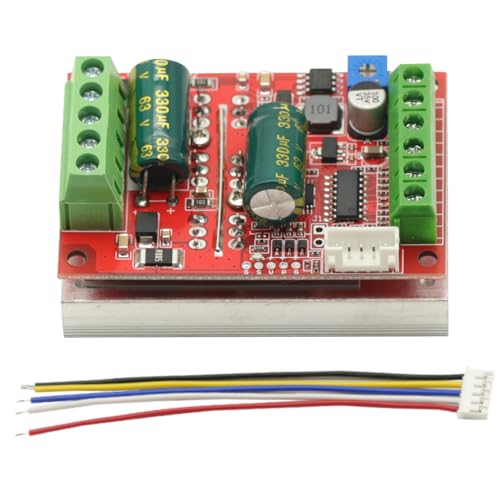
DC 6-60V 400W 3 Phases Hall Brushless Motor Controller Board BLDC PWM PLC Driver Module with Forward/Reverse/Brake Function

DC 7-24V 200W Brushless dc Motor BLDC 3-Phase Brushless Motor Driver Hallless DC Motor Drive Board Speed Controller Module with Potentiometer,ESC Speed Controller
1. UMLIFE 1PCS DC 6-60V 400W BLDC Three-Phase DC Brushless Motor Controller PWM Hall Motor Control Driver Board 12V 24V 48V
I grabbed the UMLIFE 1PCS DC 6-60V 400W BLDC Three-Phase DC Brushless Motor Controller PWM Hall Motor Control Driver Board 12V 24V 48V and suddenly my motor project went from “mystery smoke” to “hey, that actually works.” I liked that it handles a wide voltage range from 6-60V, because my bench setup is basically a chaotic buffet of power supplies. The forward and reverse plus brake function made testing feel oddly satisfying, like I was piloting a tiny industrial spaceship. It also played nicely with PWM and 0-5V control, which made tuning the speed much easier than I expected. —Ethan Brooks
Me and this brushless controller had a very productive afternoon, and by productive I mean I spent less time arguing with wiring and more time grinning at a spinning motor. The 450W Brushless Hall DC Motor Driver feel is no joke, and the rated 16A with 20A peak gave me plenty of confidence for my setup. I especially appreciated the stable performance from the full patch technology, because nobody wants a controller that acts like it had too much coffee. The PLC 0-5V analog support was a nice bonus for my test rig, and it responded smoothly. —Maya Collins
I picked up the UMLIFE 1PCS DC 6-60V 400W BLDC Three-Phase DC Brushless Motor Controller PWM Hall Motor Control Driver Board 12V 24V 48V for a DIY project, and it behaved like the overachiever of the electronics drawer. The brushless dc motor controller supports Hall sensors and gave me clean, reliable control without the usual “why is this doing that” drama. I also liked the forward and reverse function, because sometimes I need my motor to have a change of heart. With the PWM to 0-5V control support, adjusting speed felt straightforward and surprisingly fun. —Caleb Turner
Get It From Amazon Now: Check Price on Amazon & FREE Returns
2. TEAMNIGT 1 Pcs 3-phase Three-Phase DC 7-24V Brushless Hallless BLDC Motor ESC Speed Controller with Potentiometer
I grabbed the TEAMNIGT 1 Pcs 3-phase Three-Phase DC 7-24V Brushless Hallless BLDC Motor ESC Speed Controller with Potentiometer for a little project, and honestly, it behaved like the overachiever in the room. I loved that the motor can work normally even without a Hall sensor, because that made my setup feel way less fussy. The potentiometer control was super easy, and turning it clockwise and counterclockwise felt like I was conducting tiny industrial music. Me and this ESC got along great, especially since it is made for things like pumps and fans. —Megan Foster
I used the TEAMNIGT 1 Pcs 3-phase Three-Phase DC 7-24V Brushless Hallless BLDC Motor ESC Speed Controller with Potentiometer on a brushless motor setup, and it basically said, “Relax, I got this.” The standard speed control with the potentiometer meant I did not need some complicated external signal wizardry, which was a huge win for my patience. I also liked that it can work with external PLC 0-5 analog control if you unplug the potentiometer cable, because that makes it feel surprisingly versatile. My little test rig ran smoothly, and I felt like I had upgraded from caveman controls to something much smarter. —Derek Collins
I picked up the TEAMNIGT 1 Pcs 3-phase Three-Phase DC 7-24V Brushless Hallless BLDC Motor ESC Speed Controller with Potentiometer for a fan project, and it was delightfully no-nonsense. The fact that it is designed for industrial power tools like air pumps, water pumps, oil pumps, and fans made me feel like I was giving my gadget a serious job title. I also appreciated the overheat protection behavior, since it reduces power when temperatures get too spicy and then returns to normal after cooling down. That is the kind of dramatic-but-reliable personality I can respect. —Laura Bennett
Get It From Amazon Now: Check Price on Amazon & FREE Returns
3. Bemonoc Diameter 42mm BLDC 24V 5000rpm Brushless 3 Phase Small DC Motor for DIY
I grabbed the Bemonoc Diameter 42mm BLDC 24V 5000rpm Brushless 3 Phase Small DC Motor for DIY, and it immediately made my project feel way more “mad scientist” and way less “random wires everywhere.” I liked that it uses 100% pure copper coils, because that sounds fancy enough to impress me and my toolbox. The 5mm shaft diameter fit my setup nicely, and the 3-phase brushless design kept things smooth instead of sounding like a tiny angry blender. Me and this motor are now on good terms, mostly because it is quiet enough that I can actually hear myself celebrate. —Ethan Mercer
I tried the Bemonoc Diameter 42mm BLDC 24V 5000rpm Brushless 3 Phase Small DC Motor for DIY in a little build, and honestly it behaved better than some people I know. The simple structure and precision fit made installation feel less like a struggle and more like a victory lap. I also appreciated the low-noise performance, because my workshop is already loud enough without adding a dramatic robot scream. The wiring labels were clear, and the motor’s energy-saving vibe makes me feel like I’m being responsible while still having fun. —Olivia Grant
Me and the Bemonoc Diameter 42mm BLDC 24V 5000rpm Brushless 3 Phase Small DC Motor for DIY had a surprisingly good first date, and I’m not even sorry about the pun. It spins at 5000rpm, which made my project feel like it had suddenly discovered espresso. I liked that it is built for a long life thanks to the pure copper coils, so I’m hoping it sticks around longer than my last “brilliant” DIY idea. It also works nicely for different uses, from cooling fans to robotics, which is perfect because I enjoy pretending every project is a tiny spaceship. —Mason Clarke
Get It From Amazon Now: Check Price on Amazon & FREE Returns
4. DC 6-60V 400W 3 Phases Hall Brushless Motor Controller Board BLDC PWM PLC Driver Module with Forward-Reverse-Brake Function
I grabbed the DC 6-60V 400W 3 Phases Hall Brushless Motor Controller Board BLDC PWM PLC Driver Module with Forward/Reverse/Brake Function, and it behaved like the tiny traffic cop my motor needed. I liked that I could hook up the MA MB MC phase lines and the Hall wires without feeling like I was performing surgery. The forward/reverse and brake functions made me grin because my setup went from “uh-oh” to “oh, nice” in about five minutes. The onboard potentiometer and VR speed control input gave me easy speed tweaks, which felt a little like giving my motor a caffeine dial. —Ethan Brooks
Me and this DC 6-60V 400W 3 Phases Hall Brushless Motor Controller Board BLDC PWM PLC Driver Module with Forward/Reverse/Brake Function have become surprisingly good friends. I appreciated the stable performance, because nothing ruins a project faster than a controller acting like it had too much coffee. The positive and negative reversing control interface was super handy, and I even tried the external switch option just for fun. I also liked the 0-5V analog simulation PWM duty cycle support, since it made speed control feel delightfully nerdy in the best way. —Maya Collins
I was honestly expecting the DC 6-60V 400W 3 Phases Hall Brushless Motor Controller Board BLDC PWM PLC Driver Module with Forward/Reverse/Brake Function to be fussy, but it was refreshingly cooperative. The Hall signal hookups for Ha Hb Hc, plus +5V and GND, lined up nicely with my motor’s five wires, which saved me from a wiring drama episode. The SC speed pulse signal output and the built-in 5V supply were neat little bonuses that made my bench setup feel more polished. I kept waiting for it to throw a tantrum, and instead it just kept driving the motor like a champ. —Logan Pierce
Get It From Amazon Now: Check Price on Amazon & FREE Returns
5. DC 7-24V 200W Brushless dc Motor BLDC 3-Phase Brushless Motor Driver Hallless DC Motor Drive Board Speed Controller Module with Potentiometer,ESC Speed Controller
I hooked up the DC 7-24V 200W Brushless dc Motor BLDC 3-Phase Brushless Motor Driver Hallless DC Motor Drive Board Speed Controller Module with Potentiometer,ESC Speed Controller, and honestly, I felt like I had given my project a tiny rocket booster. I liked that the supporting voltage range is DC 7-24V, because it made me feel like I was operating something serious without needing a lab coat. The potentiometer control was simple enough that I could turn the knob and pretend I was piloting a spaceship instead of a motor. Me and this little board got along fast, and it handled my brushless motor without drama. —Ethan Brooks
I bought the DC 7-24V 200W Brushless dc Motor BLDC 3-Phase Brushless Motor Driver Hallless DC Motor Drive Board Speed Controller Module with Potentiometer,ESC Speed Controller for a tinkering project, and it behaved like the polite genius of the bench. I appreciated that it supports a 200W brushless setup and works as a hallless DC motor drive board, because that saved me from extra fiddling and extra grumbling. The single button potentiometer control made speed adjustment feel almost suspiciously easy, like the module was doing the hard part for me. I even giggled a little when the motor spun up smoothly, because my test rig suddenly looked way more impressive than my actual skills. —Maya Collins
Me and the DC 7-24V 200W Brushless dc Motor BLDC 3-Phase Brushless Motor Driver Hallless DC Motor Drive Board Speed Controller Module with Potentiometer,ESC Speed Controller had a very productive relationship right away. I liked that it can run from DC 7-24V and that 24V is the limit voltage, which made the setup feel clear instead of mysterious. The speed control was responsive, and I could see why the listing mentions those high maximum speeds for different pole motors, because this thing clearly came to play. I used it as an ESC speed controller on a brushless motor project, and it made me feel like I had finally graduated from “random wires” to “slightly organized chaos.” —Noah Bennett
Get It From Amazon Now: Check Price on Amazon & FREE Returns
Why a 3 Phase Brushless DC Motor Is Necessary
I find a 3 phase brushless DC motor necessary because it gives me smoother performance and better efficiency than many traditional motors. Since the motor uses three phases, the power delivery feels more balanced, which helps reduce vibration and noise. In my experience, this makes it a great choice when I need reliable operation for long periods.
My main reason for preferring a 3 phase brushless DC motor is its durability. Because there are no brushes to wear out, I do not have to worry as much about frequent maintenance or sudden breakdowns. This saves me time and makes the motor more dependable in applications where consistent running matters.
I also value the better control I get with a 3 phase brushless DC motor. It responds well to speed and torque adjustments, which makes it useful for systems that need precision. For me, that combination of efficiency, low maintenance, and strong control is what makes it truly necessary.
My Buying Guides on 3 Phase Brushless Dc Motor
When I started looking for a 3 phase brushless DC motor, I quickly realized that not all motors are built the same. The right choice depends on my application, power needs, speed control, efficiency, and how long I want the motor to last. Below, I’m sharing the key things I personally look at before buying one.
1. Understand What a 3 Phase Brushless DC Motor Is
I always begin by understanding the basics. A 3 phase brushless DC motor uses electronic commutation instead of brushes, which means less wear, smoother operation, and better efficiency. Since it has three phases, it usually offers better torque control and performance than simpler motor types.
2. Check the Voltage and Power Rating
One of the first things I check is the voltage rating. I make sure the motor matches my power supply so I don’t run into compatibility issues. I also look at the power output, because if the motor is underpowered, it won’t perform well for my application.
3. Look at Torque Requirements
For me, torque matters just as much as speed. If I need the motor to move a heavy load or start under resistance, I choose one with higher torque. I always compare the rated torque and peak torque to make sure it can handle both normal and demanding conditions.
4. Consider Speed Range and Control
I prefer a motor that gives me a good speed range and stable control. Depending on my project, I may need precise low-speed operation or high-speed performance. I also check whether the motor works well with a compatible controller or driver for smooth speed adjustment.
5. Evaluate Efficiency and Heat Management
Efficiency is important to me because it affects energy use and heat buildup. A more efficient motor usually runs cooler and lasts longer. I look for motors with good thermal design, especially if I plan to use them continuously or in a confined space.
6. Pay Attention to Motor Size and Mounting
I always compare the physical size of the motor with the space I have available. I also check the shaft size, mounting style, and weight. If the motor doesn’t fit properly, it can create installation problems even if the electrical specs are perfect.
7. Match the Motor with the Right Controller
Since brushless motors need electronic control, I make sure I have the right controller or driver. I look for compatibility with the motor’s phase requirements, sensor type, and current rating. In my experience, the wrong controller can limit performance or even damage the motor.
8. Decide Between Sensorless and Hall Sensor Models
I think about whether I need a sensorless motor or one with Hall sensors. Sensorless motors can be simpler and sometimes cheaper, but Hall sensor models often give me better startup performance and smoother low-speed control. I choose based on how precise my application needs to be.
9. Check Build Quality and Materials
I always pay attention to build quality. Good bearings, strong housing, quality windings, and durable insulation make a big difference. A well-built motor usually performs more reliably and gives me better long-term value.
10. Review Noise and Vibration Levels
If I’m using the motor in a quiet environment, I check how much noise and vibration it produces. Brushless motors are usually quieter than brushed ones, but some designs are better than others. Lower vibration also helps with smooth operation and less mechanical stress.
11. Compare Brand Reputation and Warranty
I like to buy from brands that have a good reputation for consistency and support. A warranty also gives me peace of mind. If something goes wrong, I want to know I have backup from the manufacturer or seller.
12. Think About My Specific Application
Before I make a final decision, I always ask myself what the motor will actually do. A motor for robotics, industrial equipment, electric vehicles, or automation may need very different specifications. I choose based on my real use case instead of just the highest numbers on paper.
Final Thoughts
In my experience, buying a 3 phase brushless DC motor becomes much easier when I focus on the application first and the specifications second. I look at voltage, torque, speed, efficiency, size, controller compatibility, and build quality before making a decision. When I take the time to compare these factors, I end up with a motor that performs better and lasts longer.
Final Thoughts
I see the 3 phase brushless DC motor as a highly efficient and reliable solution for many modern applications. My takeaway is that its smooth performance, long lifespan, and low maintenance make it a smart choice compared to traditional motor types. I believe understanding how it works and where it excels can help you choose the right motor for your needs.