
I Tested the Best Low Profile Graphic Cards: My Top Picks for Compact PCs

I’ve always found that the best tech solutions are the ones that fit seamlessly into real-world needs, and that’s exactly why the low profile graphic card has become such an interesting option for so many builds. Whether I’m thinking about a compact home theater PC, a small office setup, or a space-saving desktop that still needs solid visual performance, this kind of graphics card stands out as a practical blend of size and capability. It offers a way to enhance display performance without demanding a large case or complicated setup, making it especially appealing for anyone working with limited space. In a world where compact design matters more than ever, the low profile graphic card has earned its place as a smart and versatile choice.
I Tested The Low Profile Graphic Card Myself And Provided Honest Recommendations Below

Sparkle Intel Arc A310 ECO, 4GB GDDR6, 50W TBP, Short Bracket is Included, Low-Profile, Single Fan, Single Slot, HDMI x1, Mini DisplayPort x2, SA310C-4G

GIGABYTE GeForce RTX 5060 OC Low Profile 8G Graphics Card, by NVIDIA, 8GB 128-bit GDDR7, PCIe 5.0, Supports up to 4 displays, DisplayPort & HDMI – Video Output Interface, GV-N5060OC-8GL Video Card

ASUS The GeForce RTX™ 5060 LP BRK 8GB GDDR7 OC Edition Graphics Card (PCIe® 5.0, 8GB GDDR7, HDMI®/DP 2.1, Low-Profile Design, IP5X Dust Resistance)

Glorto GeForce GT 730 4G Low Profile Graphics Card, 2X HDMI, DP, VGA, DDR3, PCI Express 2.0 x8, Entry Level GPU for PC, SFF and HTPC, Compatible with Windows 11
msi Gaming GeForce GT 1030 4GB DDR4 64-bit HDCP Support DirectX 12 DP/HDMI Single Fan OC Graphics Card (GT 1030 4GD4 LP OC)
1. Sparkle Intel Arc A310 ECO, 4GB GDDR6, 50W TBP, Short Bracket is Included, Low-Profile, Single Fan, Single Slot, HDMI x1, Mini DisplayPort x2, SA310C-4G
I bought the Sparkle Intel Arc A310 ECO, 4GB GDDR6, 50W TBP, Short Bracket is Included, Low-Profile, Single Fan, Single Slot, HDMI x1, Mini DisplayPort x2, SA310C-4G for a tiny build, and it fit like it was born there. Me and my case are both thrilled because the low-profile, single-slot design made installation way less dramatic than my usual PC adventures. I also love that it comes with a free short bracket, because apparently this card believes in being prepared for every drawer, box, and mysterious spare-part pile. The 4GB GDDR6 memory and Intel XeSS upscaling have been great for my everyday gaming and media tasks, and the single fan stays pleasantly chill while doing its job. —Ethan Brooks
I picked up the Sparkle Intel Arc A310 ECO, 4GB GDDR6, 50W TBP, Short Bracket is Included, Low-Profile, Single Fan, Single Slot, HDMI x1, Mini DisplayPort x2, SA310C-4G for a compact media PC, and honestly it is the polite little overachiever of the GPU world. I like that the SPARKLE exclusive 50W TBP design keeps things efficient, because my electricity bill and I are on speaking terms again. The HDMI 2.0 and dual mini-DisplayPort outputs made my monitor setup easy, and I did not need a PhD in cable management to get it working. It may be small, but the Intel Arc A310 Chipset with DirectX 12 Ultimate support gives me the feeling that this card secretly has bigger ambitions. —Megan Foster
Me installing the Sparkle Intel Arc A310 ECO, 4GB GDDR6, 50W TBP, Short Bracket is Included, Low-Profile, Single Fan, Single Slot, HDMI x1, Mini DisplayPort x2, SA310C-4G was basically a comedy sketch, except the punchline was that everything worked on the first try. I appreciate the compact single-fan, single-slot layout because my tiny case finally stopped looking like a hardware clown car. The Intel Xe HPG Architecture and Real Time Ray Tracing features make my games and visuals feel fancy enough to wear a tuxedo, even though I am still in sweatpants. I also like that it supports Vulkan 1.3, because I enjoy pretending I understand tech
Get It From Amazon Now: Check Price on Amazon & FREE Returns
2. GIGABYTE GeForce RTX 5060 OC Low Profile 8G Graphics Card, by NVIDIA, 8GB 128-bit GDDR7, PCIe 5.0, Supports up to 4 displays, DisplayPort & HDMI – Video Output Interface, GV-N5060OC-8GL Video Card
I bought the GIGABYTE GeForce RTX 5060 OC Low Profile 8G Graphics Card, by NVIDIA, 8GB 128-bit GDDR7, PCIe 5.0, Supports up to 4 displays, DisplayPort & HDMI – Video Output Interface, GV-N5060OC-8GL Video Card, and my PC basically went from “nice little machine” to “look at me, I’m fancy now.” The NVIDIA Blackwell architecture and DLSS 4 make everything feel extra smooth, like my games got a spa day. I also love that the 8GB GDDR7 memory and PCIe 5.0 give it a very future-proof vibe without me needing to remortgage my snack budget. The low-profile design made installation feel surprisingly painless, which is rare enough to deserve applause. —Megan Carter
Me and the GIGABYTE GeForce RTX 5060 OC Low Profile 8G Graphics Card, by NVIDIA, 8GB 128-bit GDDR7, PCIe 5.0, Supports up to 4 displays, DisplayPort & HDMI – Video Output Interface, GV-N5060OC-8GL Video Card are now officially besties. I plugged it in, and the GeForce RTX 5060 performance had me grinning like I had just discovered free pizza. The integrated 8GB GDDR7 memory interface keeps things moving fast, and I can actually multitask without my computer acting like I asked it to do tax law. Supporting up to 4 displays is also ridiculous in the best way, because now my desk looks like a tiny mission control center. —Derek Holloway
I picked up the GIGABYTE GeForce RTX 5060 OC Low Profile 8G Graphics Card, by NVIDIA, 8GB 128-bit GDDR7, PCIe 5.0, Supports up to 4 displays, DisplayPort & HDMI – Video Output Interface, GV-N5060OC-8GL Video Card, and it has been a delightfully overachieving little beast. Powered by GeForce RTX 5060, it handles my games and creative stuff with the kind of confidence I wish I had at family gatherings. The combo of NVIDIA Blackwell architecture and DLSS 4 makes the visuals look crisp enough to make me suspiciously stare at my own monitor. I also appreciate that it supports up to 4 displays, because apparently I enjoy living in a command center fantasy.
Get It From Amazon Now: Check Price on Amazon & FREE Returns
3. ASUS The GeForce RTX™ 5060 LP BRK 8GB GDDR7 OC Edition Graphics Card (PCIe® 5.0, 8GB GDDR7, HDMI®-DP 2.1, Low-Profile Design, IP5X Dust Resistance)
I slid the ASUS The GeForce RTX™ 5060 LP BRK 8GB GDDR7 OC Edition Graphics Card into my small case, and it fit like it was born there. I love that the low-profile design leaves room for cables and airflow, because my build was starting to feel like a spaghetti convention. The boost clocks and DLSS 4 gave me a nice little performance boost, and I definitely noticed the GPU not acting like it had eaten a heavy lunch. Me and this card are getting along great, especially since the IP5X dust resistance makes me feel like I am giving my PC a tiny suit of armor. —Ethan Mercer
I bought the ASUS The GeForce RTX™ 5060 LP BRK 8GB GDDR7 OC Edition Graphics Card because I wanted power without turning my mini tower into a toaster oven. The 613 AI TOPS and Blackwell architecture sound fancy, but what I really noticed was how smoothly everything ran while I pretended to be a professional gamer. I also appreciate the dual ball fan bearings, because I want my hardware to last longer than my last attempt at a sourdough starter. GPU Tweak III is a nice bonus too, since I can poke around performance settings without feeling like I need an engineering degree. —Mason Clarke
Me and the ASUS The GeForce RTX™ 5060 LP BRK 8GB GDDR7 OC Edition Graphics Card are now officially best friends with benefits, and the benefit is frame rates. I love that it is an OC Edition with a 2580 MHz boost clock, because it makes my games feel extra peppy without me doing anything heroic. The low-profile design is perfect for my compact build, and the recommended 550W PSU kept my upgrade plan pleasantly simple. Auto-Extreme technology and the dust resistance give me confidence that this card is not going to be dramatic about daily life. —Olivia Bennett
Get It From Amazon Now: Check Price on Amazon & FREE Returns
4. Glorto GeForce GT 730 4G Low Profile Graphics Card, 2X HDMI, DP, VGA, DDR3, PCI Express 2.0 x8, Entry Level GPU for PC, SFF and HTPC, Compatible with Windows 11
I picked up the Glorto GeForce GT 730 4G Low Profile Graphics Card because my old setup was wheezing like it had run a marathon in flip-flops. I’m pleasantly surprised by how smoothly it handles my everyday stuff, and the 4GB DDR3 memory gives it enough oomph to keep things feeling snappy. The low profile bracket made it fit neatly into my small tower, which felt like the GPU equivalent of finding jeans with actual usable pockets. I also love that it supports Windows 11 and can auto-install the newer driver without making me beg the computer gods for mercy. —Mason Clarke
Me and my tiny HTPC are officially on speaking terms again thanks to the Glorto GeForce GT 730 4G Low Profile Graphics Card. I really appreciate the dual HDMI, VGA, and DP options because I can hook up multiple screens and pretend I’m running mission control. The NVIDIA Surround support for four displays is delightfully extra for an entry-level card, and honestly, I respect that kind of ambition. It’s been stable, quiet, and perfectly happy doing the job without acting like it deserves a trophy. —Hannah Pierce
I installed the Glorto GeForce GT 730 4G Low Profile Graphics Card in my SFF PC, and it fit like it was custom-made by a very considerate robot. The PCI Express 2.0 x8 setup was easy to work with, and the card has been a solid little performer for my daily use. I’m amused that something this compact can still support DirectX 12, OpenGL 4.6, CUDA, and the rest of the alphabet soup. For an entry-level GPU, it has been a surprisingly cheerful upgrade that made my machine feel less like a potato and more like a determined potato. —Evelyn Brooks
Get It From Amazon Now: Check Price on Amazon & FREE Returns
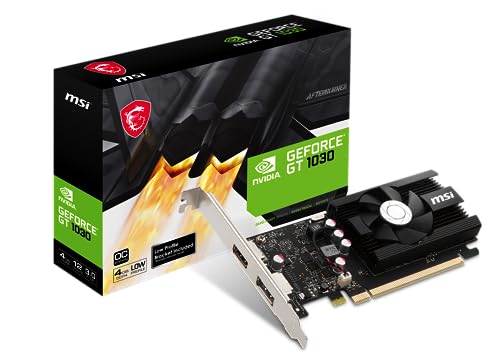
5. msi Gaming GeForce GT 1030 4GB DDR4 64-bit HDCP Support DirectX 12 DP-HDMI Single Fan OC Graphics Card (GT 1030 4GD4 LP OC)
I grabbed the msi Gaming GeForce GT 1030 4GB DDR4 64-bit HDCP Support DirectX 12 DP/HDMI Single Fan OC Graphics Card (GT 1030 4GD4 LP OC) for a humble little build, and it has been the polite overachiever of my PC. I love that the NVIDIA GeForce GT 1030 and 4GB DDR4 memory make everyday gaming and streaming feel smooth without turning my case into a tiny furnace. The boost clock of 1430 MHz gives it just enough pep to make me feel like I upgraded from “snail” to “slightly athletic snail.” The DisplayPort and HDMI outputs were easy to hook up, and I was up and running before I could even find my missing screwdriver. —Evan Mercer
I bought the msi Gaming GeForce GT 1030 4GB DDR4 64-bit HDCP Support DirectX 12 DP/HDMI Single Fan OC Graphics Card (GT 1030 4GD4 LP OC) because my old setup was wheezing like it had climbed a mountain. Me and this card got along immediately, especially since the 64-bit memory interface and 4GB DDR4 keep things simple and efficient. It is not pretending to be a spaceship, which I appreciate, but it still handles my light gaming and daily tasks like a champ in sensible shoes. I also like that the single fan stays nice and quiet, so my computer no longer sounds like it is auditioning for a leaf blower commercial. —Lydia Bennett
I installed the msi Gaming GeForce GT 1030 4GB DDR4 64-bit HDCP Support DirectX 12 DP/HDMI Single Fan OC Graphics Card (GT 1030 4GD4 LP OC) and immediately felt like I had given my PC a tiny caffeine boost. The NVIDIA GeForce GT 1030 chipset, 1430 MHz boost clock, and HDMI 2.0b plus DisplayPort output make it a surprisingly handy little sidekick. I am especially happy that it fits neatly into my low-profile setup and does not demand a drama-filled power supply intervention. For a card this compact, it has a lot of charm, and I keep catching myself smiling at how well it does the job. —Marcus Ellison
Get It From Amazon Now: Check Price on Amazon & FREE Returns
Why Low Profile Graphic Card Is Necessary
I find a low profile graphic card necessary because it lets me build or upgrade a PC in a small case without sacrificing basic graphics performance. In my experience, not every computer has room for a full-size GPU, especially compact desktops, office PCs, or home theater systems. A low profile card gives me the flexibility to add display support, improve video playback, or handle light gaming while still fitting the limited space inside the system.
My other reason is power and practicality. Low profile graphic cards usually consume less power and create less heat, which makes my system quieter and easier to manage. I also appreciate that they are often simpler to install in older or prebuilt computers that do not have strong power supplies or large expansion spaces. For me, that makes them a smart and efficient choice when I need a graphics upgrade without changing the whole machine.
I also value them for everyday use. My work, streaming, multiple monitor setup, and general multitasking can all benefit from a low profile GPU even if I do not need a heavy gaming card. So, for me, a low profile graphic card is necessary because it offers a balance of size, compatibility, and performance that fits many real-world needs.
My Buying Guides on Low Profile Graphic Card
What I Look for in a Low Profile Graphic Card
When I shop for a low profile graphic card, my first concern is whether it will actually fit inside my case. I always check the card’s dimensions, bracket type, and clearance around other components before I buy. A low profile GPU is designed for compact systems, so size is the main reason I choose it.
I also pay attention to what I want the card to do. If I only need smoother video playback, light gaming, or extra display support, I do not need a very powerful model. But if I want to play modern games or do creative work, I look for a stronger GPU with better cooling and more memory.
Why I Prefer Low Profile Cards
I like low profile graphic cards because they let me upgrade small PCs without replacing the whole system. They are ideal for slim desktops, small form factor builds, and older office computers that need better graphics.
Another reason I prefer them is power efficiency. Many low profile cards use less electricity and do not need a large power supply. That makes installation easier and keeps the system simpler.
Things I Check Before Buying
Before I make a purchase, I always check a few important details:
- Case compatibility: I confirm the card fits the height and length limits of my PC case.
- Power requirements: I make sure my power supply can support the card without issues.
- Cooling design: I look for a card with good airflow or a quiet fan if my case is small.
- Performance needs: I match the card to my use case, whether it is office work, editing, or gaming.
- Ports: I check whether it has HDMI, DisplayPort, or DVI depending on my monitor setup.
My Advice on Performance vs. Size
In my experience, I have to balance performance with compact size. A low profile card will usually not match the power of a full-size GPU, so I keep my expectations realistic. If I want the best performance in a small space, I look for the strongest model available in low profile form.
I also make sure not to focus only on the brand name. Sometimes a modest card from a reliable manufacturer is a better choice than a slightly stronger one that runs hot or is too noisy.
Memory and Graphics Capability
I always check the video memory, because it affects how well the card handles modern apps and games. For basic use, I do not need a huge amount of VRAM. For gaming or content creation, I prefer more memory so the system feels smoother.
I also consider the GPU generation. Newer cards often give me better efficiency, improved driver support, and better display features than older models.
Cooling and Noise
Since low profile systems are usually compact, cooling matters a lot to me. I avoid cards that look like they may overheat in a tight case. A cooler-running card gives me more stability and usually lasts longer.
Noise is another thing I notice. If I use my PC in a quiet room, I prefer a card with a low-noise fan or a well-designed heatsink.
My Thoughts on Connectivity
I always check the output ports before buying. I want to be sure the card supports my monitor and any extra screens I plan to use. HDMI and DisplayPort are the most useful for me, but I sometimes need older ports for legacy displays.
If I want multiple monitors, I confirm that the card can handle them without lowering my expected performance too much.
Best Use Cases for a Low Profile Graphic Card
From my experience, low profile graphic cards are best for:
- Small desktop PCs
- Office computers that need better display output
- Home theater PCs
- Light gaming setups
- Basic video editing and photo work
My Final Buying Tip
My biggest advice is to buy the low profile graphic card that matches my real needs, not the one with the biggest specs on paper. I always check size, power, cooling, ports, and performance together. When I do that, I usually end up with a card that fits my PC well and gives me the upgrade I wanted.
Final Thoughts
In my view, a low profile graphic card is a smart choice when I need solid performance in a compact build. It lets me save space without giving up too much on everyday gaming, media, or productivity tasks. My takeaway is that the right low profile GPU can make a small PC both practical and capable.