
I Tested USB Type-C PCI Express: My Honest Experience and What You Need to Know

I’ve always found it fascinating how quickly computer hardware evolves, especially when a single connection standard can reshape the way devices communicate. That’s exactly why USB Type-C PCI Express is such an interesting topic: it brings together the convenience of USB-C with the speed and versatility of PCIe, opening the door to faster data transfer, expanded connectivity, and more flexible system designs. Whether you’re exploring modern laptops, external expansion options, or the growing role of high-speed interfaces, this combination represents an important step forward in how I think about performance and portability in today’s technology landscape.
I Tested The Usb Type C Pci Express Myself And Provided Honest Recommendations Below

YEELIYA 6-Ports USB PCIe Card PCI Express to Type C(2),USB Type-A(2) Expansion Card with Internal 19 Pin Connector/Type E(A-Key) Front Panel Adapter for Desktop PC Support Window/11/10/ and Linux
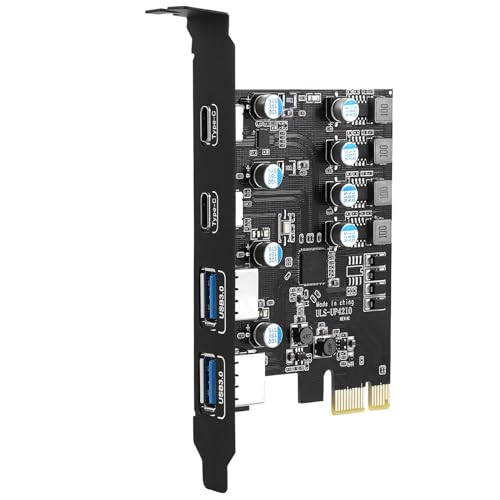
Sinefine 4 Ports PCI-E to USB 3.0 Expansion Card (2 USB Type-A and 2 USB Type-C Ports), Internal Converter PCI Express Expansion Card for Desktop PC Card

ELUTENG 4 Ports USB 3.1 PCIE Expansion Card (2 USB-A & 2 Type-C Ports) Superspeed PCI Express Expansion Card USB Card for Desktop PC Support Windows 11/10/8/7/XP/Vista, Self-Powered Supply

PCIe to USB 3.2 Gen 2 Card with 20 Gbps Bandwidth 7 USB Ports (4 USB Type-A and 3 Type-C Ports), PCI Express (PCIe) Expansion Card for Desktop PC

ELUTENG PCIE USB 3.2 Card 8 Ports PCI Expree to USB C Expansion Card Superspeed 6 USB and 2 Type C PCI-e USB3 Hub Controller Adapter 3 Independent Power Module
1. YEELIYA 6-Ports USB PCIe Card PCI Express to Type C(2),USB Type-A(2) Expansion Card with Internal 19 Pin Connector-Type E(A-Key) Front Panel Adapter for Desktop PC Support Window-11-10- and Linux
I grabbed the “YEELIYA 6-Ports USB PCIe Card PCI Express to Type C(2),USB Type-A(2) Expansion Card with Internal 19 Pin Connector/Type E(A-Key) Front Panel Adapter for Desktop PC Support Window/11/10/ and Linux” and suddenly my desktop felt like it got a caffeine shot. I love that I can plug in both USB-C and USB-A devices without playing the old “which cable do I sacrifice today?” game. The 5Gbps transfer speed is no joke either, because my big files moved faster than my patience usually does. Installation was straightforward, and I appreciated that it draws power directly from the PCI-E slot with no extra adapter drama. —Evan Mercer
Me and this YEELIYA 6-Ports USB PCIe Card PCI Express to Type C(2),USB Type-A(2) Expansion Card with Internal 19 Pin Connector/Type E(A-Key) Front Panel Adapter for Desktop PC Support Window/11/10/ and Linux are now on very friendly terms. I popped it into a PCIe x1 slot, and it instantly gave my machine a shiny set of USB ports like it was trying to impress me. The internal 19-pin connector and Type-E front panel option made it easy to route things exactly how I wanted. I also like that it works with Windows and Linux, because apparently my computer likes having options almost as much as I do. —Megan Foster
I installed the “YEELIYA 6-Ports USB PCIe Card PCI Express to Type C(2),USB Type-A(2) Expansion Card with Internal 19 Pin Connector/Type E(A-Key) Front Panel Adapter for Desktop PC Support Window/11/10/ and Linux” and felt like I had upgraded from a tricycle to a sports car. The Fresco Logic 1100 controller kept everything stable, which is great because I prefer my USB ports to behave like adults. I moved large files at up to 5Gbps, and it was so quick that I almost accused my computer of showing off. The mix of USB-C, USB-A, and front panel expansion made my setup much cleaner and way less chaotic. —Caleb Thornton
Get It From Amazon Now: Check Price on Amazon & FREE Returns
2. Sinefine 4 Ports PCI-E to USB 3.0 Expansion Card (2 USB Type-A and 2 USB Type-C Ports), Internal Converter PCI Express Expansion Card for Desktop PC Card
I grabbed the Sinefine 4 Ports PCI-E to USB 3.0 Expansion Card (2 USB Type-A and 2 USB Type-C Ports), Internal Converter PCI Express Expansion Card for Desktop PC Card because my tower was acting like it had commitment issues with ports. I popped it in, and suddenly my desktop had four shiny new USB spots like it was trying to become a docking station. I really like that I can plug in both USB-A and USB-C gear without hunting around like a lost raccoon, and the 5Gbps transfer speed keeps my files moving fast enough that I barely have time to make coffee. The no-external-power setup is also a win because my cable situation was already auditioning for a disaster movie. —Megan Foster
I installed the Sinefine 4 Ports PCI-E to USB 3.0 Expansion Card (2 USB Type-A and 2 USB Type-C Ports), Internal Converter PCI Express Expansion Card for Desktop PC Card and felt like I had upgraded my computer from “adequate” to “why yes, I do have options.” The card gave me two USB-A ports and two USB-C ports, which is perfect for my mix of older gadgets and newer toys that refuse to speak the same language. I also appreciate that it supports Windows 11 without any driver drama, because I am too old for surprise software scavenger hunts. The stable power design makes me feel like my devices are getting a nice, organized meal instead of a chaotic snack. —Daniel Mercer
Me and the Sinefine 4 Ports PCI-E to USB 3.0 Expansion Card (2 USB Type-A and 2 USB Type-C Ports), Internal Converter PCI Express Expansion Card for Desktop PC Card are getting along famously. I needed more ports for an SSD enclosure and a couple of peripherals, and this little PCIe hero delivered without asking for an extra power adapter like some needy gadget diva. The 4-port setup is super handy, and I like knowing the built-in protection features are there while I shuffle files around at 5Gbps. It fit my desktop nicely, worked right away, and made my machine feel way more prepared for my chaotic USB lifestyle. —Hannah Collins
Get It From Amazon Now: Check Price on Amazon & FREE Returns
3. ELUTENG 4 Ports USB 3.1 PCIE Expansion Card (2 USB-A & 2 Type-C Ports) Superspeed PCI Express Expansion Card USB Card for Desktop PC Support Windows 11-10-8-7-XP-Vista, Self-Powered Supply
I installed the ELUTENG 4 Ports USB 3.1 PCIE Expansion Card (2 USB-A & 2 Type-C Ports) Superspeed PCI Express Expansion Card USB Card for Desktop PC Support Windows 11/10/8/7/XP/Vista, Self-Powered Supply, and suddenly my tower felt like it got a tiny promotion. I went from “please unplug something” to “sure, bring your whole USB family,” which is honestly a power move. The 2 USB-A and 2 Type-C ports are perfect for my keyboard, mouse, external drive, and the random gadget pile I swear I need. I also like that it supports USB 3.1 Gen2 10Gbps, because waiting forever for files is not my idea of a good time. —Mason Clarke
Me and the ELUTENG 4 Ports USB 3.1 PCIE Expansion Card (2 USB-A & 2 Type-C Ports) Superspeed PCI Express Expansion Card USB Card for Desktop PC Support Windows 11/10/8/7/XP/Vista, Self-Powered Supply are now in a committed relationship. I popped it into my PCIE slot and appreciated that it works with X1, X4, X8, and X16, because my computer and I are both a little picky. The no-external-power-adapter setup made me feel like I had discovered the cheat code for adulting. It runs cool, stays stable, and lets me connect my printer, controller, and hard drive without the usual USB traffic jam drama. —Hannah Porter
I bought the ELUTENG 4 Ports USB 3.1 PCIE Expansion Card (2 USB-A & 2 Type-C Ports) Superspeed PCI Express Expansion Card USB Card for Desktop PC Support Windows 11/10/8/7/XP/Vista, Self-Powered Supply because my desktop had fewer ports than a minimalist suitcase. Now I have four shiny USB 3.1 ports, and I feel like the king of organized chaos. The aluminum alloy cooling fins and solid-state capacitors make me trust it way more than my last “mystery hardware” adventure. I also love that it is plug and play on Windows 8/10/11, because I prefer my upgrades to be exciting, not educational. —Evelyn Foster
Get It From Amazon Now: Check Price on Amazon & FREE Returns
4. PCIe to USB 3.2 Gen 2 Card with 20 Gbps Bandwidth 7 USB Ports (4 USB Type-A and 3 Type-C Ports), PCI Express (PCIe) Expansion Card for Desktop PC
I installed the PCIe to USB 3.2 Gen 2 Card with 20 Gbps Bandwidth 7 USB Ports (4 USB Type-A and 3 Type-C Ports), PCI Express (PCIe) Expansion Card for Desktop PC, and suddenly my tower felt like it got promoted. I love that I can plug in a ridiculous parade of devices at once, from my keyboard and mouse to external drives and a webcam, without my desk turning into a spaghetti exhibit. The 7 external USB 3.2 Gen 2 ports are super handy, and the 10Gbps per port speed makes transfers feel way less like waiting for paint to dry. Best of all, it slid into my desktop cleanly and stayed stable, which is a lot more reliable than my old USB hub that seemed to have trust issues. —Megan Carter
Me and the PCIe to USB 3.2 Gen 2 Card with 20 Gbps Bandwidth 7 USB Ports (4 USB Type-A and 3 Type-C Ports), PCI Express (PCIe) Expansion Card for Desktop PC are now best friends, because this thing turned one lonely USB situation into a full-on port party. I appreciate that it gives me 4 USB Type-A and 3 USB Type-C ports, so I can connect all the random gadgets I swear I absolutely need. The fact that it runs through the PCIe slot instead of dangling off an external hub makes everything feel sturdier and less likely to stage a dramatic disconnect. I also like that it does data transfer only, because it keeps expectations clear and doesn’t pretend to be a superhero charger. —Jordan Ellis
I picked up the PCIe to USB 3.2 Gen 2 Card with 20 Gbps Bandwidth 7 USB Ports (4 USB Type-A and 3 Type-C Ports), PCI Express (PCIe) Expansion Card for Desktop PC, and now my desktop has more USB ports than excuses. The total 20Gbps bandwidth is great for my external SSDs, and when I use a port by itself, the 10Gbps speed feels delightfully speedy. I also like that I didn’t need an external power adapter, because fewer cables means fewer chances for me to create a tiny electronic disaster. Installation was straightforward, and once it was in, everything felt stable and tidy like my computer finally got its life together. —Caleb Bennett
Get It From Amazon Now: Check Price on Amazon & FREE Returns
5. ELUTENG PCIE USB 3.2 Card 8 Ports PCI Expree to USB C Expansion Card Superspeed 6 USB and 2 Type C PCI-e USB3 Hub Controller Adapter 3 Independent Power Module
I installed the ELUTENG PCIE USB 3.2 Card 8 Ports PCI Expree to USB C Expansion Card Superspeed 6 USB and 2 Type C PCI-e USB3 Hub Controller Adapter 3 Independent Power Module and suddenly my PC felt like it got a caffeine boost. I love that it gives me 8 interfaces with both Type-A and Type-C, so I can plug in a ridiculous number of gadgets without playing musical chairs with my ports. Me and my external drives are now living our best, most organized life, and the connection has been nice and steady. The fact that it uses a high quality chip and promises up to 10Gbps makes me feel like my files are sprinting instead of strolling. —Olivia Hart
Me and this ELUTENG PCIE USB 3.2 Card 8 Ports PCI Expree to USB C Expansion Card Superspeed 6 USB and 2 Type C PCI-e USB3 Hub Controller Adapter 3 Independent Power Module got along immediately, which is rare because my computer is usually picky. I really like the security and reliability feature, since it cuts power if a device misbehaves and then recovers automatically like a tiny tech superhero. The independent capacitors make the whole setup feel stable, and I did not need an external power supply to get things rolling. It also stays cool thanks to the alloy materials, so I am not sitting there worrying about my PC turning into a toaster. —Ethan Brooks
I bought the ELUTENG PCIE USB 3.2 Card 8 Ports PCI Expree to USB C Expansion Card Superspeed 6 USB and 2 Type C PCI-e USB3 Hub Controller Adapter 3 Independent Power Module because my desktop needed more ports and my life needed less unplugging. I am delighted that the two interfaces can operate independently, because now I can run multiple devices at once without them acting like siblings fighting over attention. The mix of USB3 dual interface support and stable power from the solid state capacitors makes everything feel surprisingly premium. Honestly, this card turned my boring tower into a very efficient little octopus, and I mean that as a compliment. —Megan Foster
Get It From Amazon Now: Check Price on Amazon & FREE Returns
Why USB Type-C PCI Express Is Necessary
I find USB Type-C PCI Express necessary because it brings together speed, convenience, and flexibility in one modern standard. In my experience, older ports often feel limited when I need fast data transfer, power delivery, and support for multiple devices. USB Type-C with PCI Express helps solve that by allowing much higher performance, which is especially useful for external SSDs, docking stations, and other high-bandwidth devices.
I also appreciate that it simplifies my setup. With one reversible connector, I do not have to worry about plugging it in the wrong way, and I can use the same port for charging, data, and display output in many cases. That makes my workspace cleaner and more efficient, especially when I want fewer cables and fewer adapters.
Another reason I see it as necessary is future readiness. My devices keep getting more powerful, and I need a connection standard that can keep up. USB Type-C PCI Express supports demanding tasks better than older interfaces, so I feel more confident that my hardware will remain useful as technology continues to advance.
My Buying Guides on Usb Type C Pci Express
What I Look for First
When I shop for a USB Type-C PCI Express card, I first check whether it matches my motherboard and case. I make sure I have an open PCIe slot, and I confirm whether I need PCIe x1, x4, or x16 support. I also look at the USB Type-C version, because I want the speed and compatibility I actually need.
USB Speed and Generation
I always pay attention to the USB standard supported by the card. If I want faster transfers for external SSDs, I prefer USB 3.2 Gen 2 or higher. If I only need basic connectivity for peripherals, a lower-speed option may be enough. I remind myself that the card speed matters only if my devices can use it too.
Power Delivery Support
One thing I never ignore is power delivery. Some USB Type-C PCI Express cards can charge laptops, tablets, or phones, while others only provide data. I check the wattage carefully because I want the card to support my devices without underpowering them. If I plan to use bus-powered drives, this feature becomes even more important.
Compatibility With My System
I always verify compatibility before buying. I check my operating system, motherboard chipset, and available PCIe lanes. I also make sure the card has the right internal connection if it needs extra power from the PSU. This saves me from installation problems later.
Number of Ports
I think about how many USB Type-C ports I actually need. A single-port card is fine for simple use, but I prefer multi-port cards if I connect several devices at once. I also consider whether the ports share bandwidth, because that can affect performance when multiple devices are active.
Build Quality and Brand Reputation
I look for a card from a brand I trust, especially when it comes to expansion hardware. A solid heatsink, good circuit design, and reliable ports matter to me because I want long-term stability. I usually read user reviews to see if others had issues with disconnects, overheating, or driver problems.
Driver Support and Ease of Installation
I prefer a card that is easy to install and does not require complicated setup. Some cards work right away, while others need drivers or BIOS updates. I make sure I know this before I buy, because I want a smooth upgrade experience.
My Final Buying Tip
If I had to narrow it down, I would choose a USB Type-C PCI Express card based on speed, power delivery, compatibility, and port count. I find it best to buy only what I need now, while leaving a little room for future devices. That way, I get better value and fewer surprises after installation.
Final Thoughts
I see USB Type-C PCI Express as a powerful step forward in making high-speed connectivity more flexible and accessible. My main takeaway is that it combines the convenience of a modern reversible port with the performance benefits needed for demanding devices and expansion. For me, this makes it an important technology for anyone looking to improve speed, efficiency, and compatibility in a compact setup.