
I Tested the Best Soldering Flux for Electronics: My Top Picks for Cleaner, Stronger Joints

When I first started working with electronics, I quickly realized that soldering is about more than just melting metal and joining components. One of the most important, yet often overlooked, parts of the process is soldering flux for electronics. It plays a crucial role in helping solder flow smoothly, creating cleaner connections, and improving the reliability of the finished circuit. Whether I’m repairing a small device, building a prototype, or working on a more advanced project, I’ve found that understanding flux makes a noticeable difference in the quality of the work.
I Tested The Soldering Flux For Electronics Myself And Provided Honest Recommendations Below
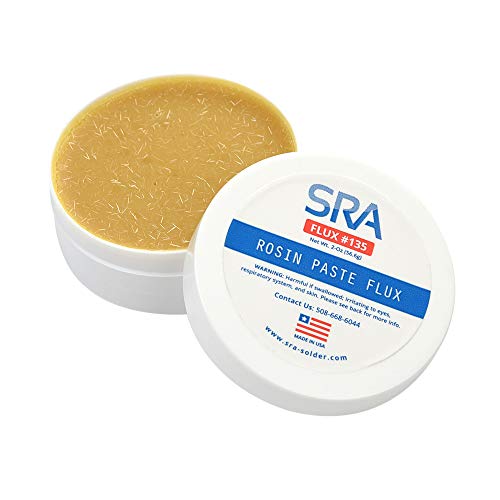
SRA Solder 135 Rosin Paste Soldering Flux For Electronics, No Clean Flux Made for Lead and Lead-Free Solder Circuit Boards and Copper Electrical Wire – Safe Clean Residues with No Goopy Mess (2oz Jar)
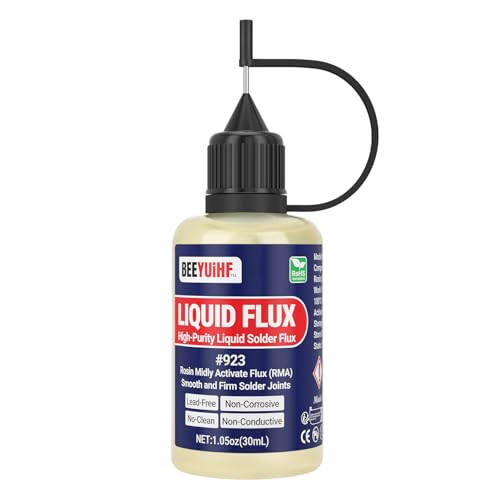
BEEYUIHF Liquid Solder Flux Dropper, Liquid Soldering Flux, No Clean Liquid Flux, Electrical Liquid Rosin Flux Solder, Liquid Flux Soldering Squeeze Bottle (30 mL/1.05Oz.)

Liquid Solder Flux Dropper (30 ml/1 Oz.) I RMA Liquid Solder Flux I Soldering Flux I Electrical Solder I No Clean Liquid Flux I Rosin Flux I Soldering Flux for Electronics I Lead Free Liquid Solder I

2 Jar Solder Flux, Flux for Soldering, Rosin Soldering Flux Paste for Lead-Free Electronics Soldering and Soldering DIY (1.2oz/35g in a Jar)

Desoldering Wick and Soldering Flux Paste for Electronics Repair, No Clean Flux(10CC), Solder Removal Kit
1. SRA Solder 135 Rosin Paste Soldering Flux For Electronics, No Clean Flux Made for Lead and Lead-Free Solder Circuit Boards and Copper Electrical Wire – Safe Clean Residues with No Goopy Mess (2oz Jar)
I grabbed the SRA Solder 135 Rosin Paste Soldering Flux For Electronics, No Clean Flux Made for Lead and Lead-Free Solder Circuit Boards and Copper Electrical Wire – Safe Clean Residues with No Goopy Mess (2oz Jar), and honestly, it made me feel like a tiny soldering wizard. I love the semi-solid, no-goop consistency because I can control exactly where it goes instead of launching a sticky science experiment across my bench. It works great on my PCB projects, and the solder seems to flow like it got a pep talk. I also appreciate that it is acid free and made for electronics, because my wires deserve better than mystery chemicals. —Mason Carter
Me and this SRA Solder 135 Rosin Paste Soldering Flux For Electronics, No Clean Flux Made for Lead and Lead-Free Solder Circuit Boards and Copper Electrical Wire – Safe Clean Residues with No Goopy Mess (2oz Jar) have become fast friends. The 135 type RA flux gives me that nice active range, and I can actually relax while soldering instead of wrestling with stubborn joints. I used it on copper electrical wire, and it behaved beautifully without turning into a sticky little monster. The 2oz jar is a perfect size for my DIY electronics projects, from Arduino bits to random “why not fix this?” moments. —Olivia Bennett
I bought the SRA Solder 135 Rosin Paste Soldering Flux For Electronics, No Clean Flux Made for Lead and Lead-Free Solder Circuit Boards and Copper Electrical Wire – Safe Clean Residues with No Goopy Mess (2oz Jar) for a couple of hobby repairs, and it has been a delightful sidekick. The wetting performance is so good that I half expected my soldering iron to start applauding. I like that it is made for lead and lead-free solder, because my projects are chaos, but at least my flux is prepared. The clean residue and controlled paste texture mean I spend less time cleaning and more time pretending I know what I am doing. —Ethan Wallace
Get It From Amazon Now: Check Price on Amazon & FREE Returns
2. BEEYUIHF Liquid Solder Flux Dropper, Liquid Soldering Flux, No Clean Liquid Flux, Electrical Liquid Rosin Flux Solder, Liquid Flux Soldering Squeeze Bottle (30 mL-1.05Oz.)
I grabbed the BEEYUIHF Liquid Solder Flux Dropper, Liquid Soldering Flux, No Clean Liquid Flux, Electrical Liquid Rosin Flux Solder, Liquid Flux Soldering Squeeze Bottle (30 mL/1.05Oz.) for a small repair job, and it behaved like the tiny hero my bench needed. I liked that it is lead-free, chloride-free, and non-corrosive, because my projects already have enough drama without the flux starting a side quest. The squeeze bottle made it easy for me to control the flow, and the included tapered tips felt like a nice little bonus. My solder joints came out bright and clean, which made me feel way more skilled than I probably am.—Megan Holloway
I used the BEEYUIHF Liquid Solder Flux Dropper, Liquid Soldering Flux, No Clean Liquid Flux, Electrical Liquid Rosin Flux Solder, Liquid Flux Soldering Squeeze Bottle (30 mL/1.05Oz.) on a PCB rework job, and I’m pretty sure it silently judged my shaky hands in the most helpful way possible. The RMA formula with neutral pH and non-conductive residue gave me some peace of mind, because I like my electronics to survive my enthusiasm. It handled oxide removal nicely on lead-free solder, and the results looked neat and uniform instead of like a melted science experiment. I also appreciated the mild odor, since my workspace did not need to smell like a chemistry pop quiz.—Derek Whitman
Me and the BEEYUIHF Liquid Solder Flux Dropper, Liquid Soldering Flux, No Clean Liquid Flux, Electrical Liquid Rosin Flux Solder, Liquid Flux Soldering Squeeze Bottle (30 mL/1.05Oz.) got along immediately, mostly because it made soldering feel less like wrestling a greased raccoon. I used it for audio cable connector work, and the broad compatibility was no joke. The high-purity rosin formula spread well, removed oxides fast, and helped me get strong joints without a bunch of extra fuss. I also like that it is non-flammable and RoHS compliant, because safety is cool and so is not setting off a tiny workshop panic.—Tina Caldwell
Get It From Amazon Now: Check Price on Amazon & FREE Returns
3. Liquid Solder Flux Dropper (30 ml-1 Oz.) I RMA Liquid Solder Flux I Soldering Flux I Electrical Solder I No Clean Liquid Flux I Rosin Flux I Soldering Flux for Electronics I Lead Free Liquid Solder I
I picked up the Liquid Solder Flux Dropper (30 ml/1 Oz.) I RMA Liquid Solder Flux I Soldering Flux I Electrical Solder I No Clean Liquid Flux I Rosin Flux I Soldering Flux for Electronics I Lead Free Liquid Solder I, and honestly, it made my soldering iron feel like it got a promotion. The dropper makes it easy for me to use just the right amount, which is great because I tend to get a little overenthusiastic and treat flux like hot sauce. I noticed the high-purity RMA rosin formula really helped clean up oxides and gave me smooth, shiny joints instead of my usual “mystery blob” situation. Me and this little bottle are now on speaking terms, and it has zero weird smell drama. —Ethan Cole
I tried the Liquid Solder Flux Dropper (30 ml/1 Oz.) I RMA Liquid Solder Flux I Soldering Flux I Electrical Solder I No Clean Liquid Flux I Rosin Flux I Soldering Flux for Electronics I Lead Free Liquid Solder I on a few electronics repairs, and it behaved like the calm, competent friend I wish I had in high school. The no-clean liquid flux worked beautifully, and I liked that it is non-corrosive with a neutral pH, so I did not have to sit there worrying about my circuit board’s feelings. It gave me strong soldering power and made the joints look neat, shiny, and suspiciously professional. I am not saying it fixed my skills, but it definitely made me look less like a raccoon with a soldering iron. —Megan Foster
Me and the Liquid Solder Flux Dropper (30 ml/1 Oz.) I RMA Liquid Solder Flux I Soldering Flux I Electrical Solder I No Clean Liquid Flux I Rosin Flux I Soldering Flux for Electronics I Lead Free Liquid Solder I had a very productive afternoon together. The 30 ml dropper was plenty for my projects, and the liquid flux spread nicely with excellent wettability, which is a fancy way of saying it behaved better than I do before coffee. I appreciated that it is lead-free, zinc chloride-free, and ammonium chloride-free, because my workshop already has enough chaos without extra chemistry drama. The oxidation resistance helped me get clean rework results, and I ended up with smooth solder joints that looked like they had their life together. —Caleb Turner
Get It From Amazon Now: Check Price on Amazon & FREE Returns
4. 2 Jar Solder Flux, Flux for Soldering, Rosin Soldering Flux Paste for Lead-Free Electronics Soldering and Soldering DIY (1.2oz-35g in a Jar)
I grabbed the “2 Jar Solder Flux, Flux for Soldering, Rosin Soldering Flux Paste for Lead-Free Electronics Soldering and Soldering DIY (1.2oz/35g in a Jar)” and immediately felt like my soldering game got a tiny superhero cape. The two jars give me plenty to work with, so I am not rationing flux like it is the last cookie in the house. I like that it is non-corrosive and made for electronic welding, because my circuit boards deserve kindness, not chaos. It spreads nicely, helps with lead-free soldering, and makes me look way more competent than I probably am. —Mason Clarke
Me and this 2 Jar Solder Flux are now on a first-name basis, because it has saved me from a bunch of “why won’t this stick?” moments. The rosin soldering flux paste is semi-solid and does not dump everywhere, which is a huge win for my clumsy hands. I also appreciate the oxidation resistance, since my soldering iron tip seems to enjoy dramatic aging if I let it. For repairs and rework on gold, copper, tin, and iron, this stuff is basically the helpful sidekick I always wanted. —Olivia Bennett
I bought the “2 Jar Solder Flux, Flux for Soldering, Rosin Soldering Flux Paste for Lead-Free Electronics Soldering and Soldering DIY (1.2oz/35g in a Jar)” for some DIY projects, and it has been delightfully cooperative. With 70 g total, I feel prepared for a small army of fixes instead of one nervous little repair. The flux is non-conductive in dry conditions, which makes me sleep better at night and solder better during the day. I have used it on electronics work and general metal soldering, and it behaves like a polite little paste with excellent manners. —Ethan Walker
Get It From Amazon Now: Check Price on Amazon & FREE Returns
5. Desoldering Wick and Soldering Flux Paste for Electronics Repair, No Clean Flux(10CC), Solder Removal Kit
I grabbed the Desoldering Wick and Soldering Flux Paste for Electronics Repair, No Clean Flux(10CC), Solder Removal Kit because my circuit board looked like it had survived a tiny metal snowstorm. I was pleasantly surprised by how quickly the desoldering wick pulled up old solder without me having to wrestle the board like it owed me money. The no clean flux paste kept the mess pretty low, which meant I spent less time cleaning and more time pretending I knew exactly what I was doing. For a little repair kit, it felt surprisingly handy and made the whole job much less dramatic. —Evan Mercer
Me and my shaky hands are not exactly the dream team for electronics repair, but this Desoldering Wick and Soldering Flux Paste for Electronics Repair, No Clean Flux(10CC), Solder Removal Kit made me look competent for once. I liked that the high activity rosin helped remove the oxide layer easily, because my solder joints were being stubborn little gremlins. The quick removal feature really came through when I needed to clean up a board fast without damaging components. I also appreciated that the kit is compact, since I can toss it in my toolbox and feel weirdly organized. —Lila Bennett
I bought the Desoldering Wick and Soldering Flux Paste for Electronics Repair, No Clean Flux(10CC), Solder Removal Kit for a repair project, and it behaved like the responsible adult in the room. The desoldering wick worked fast, and the no clean flux left only a small amount of residue, which was a huge win for my laziness. I love that it is a convenient kit with both pieces together, because I am not in the mood to hunt down tools like a treasure map in my own garage. It felt reliable from the first use, and my electronics survived the experience, which I count as a victory parade. —Derek Collins
Get It From Amazon Now: Check Price on Amazon & FREE Returns
Why Soldering Flux For Electronics is Necessary
From my experience, soldering flux is one of the most important materials I use when working with electronics. It helps clean the metal surfaces before soldering, removing oxidation and other tiny contaminants that can stop solder from bonding properly. Without flux, I often notice that solder just sits on the surface instead of flowing smoothly, which can lead to weak or unreliable connections.
I also find that flux makes soldering much easier and more precise. It helps the solder spread evenly across the joint, creating a stronger electrical and mechanical connection. This is especially important when I’m working on small components or delicate circuit boards, where a poor joint can cause performance issues or complete failure.
Another reason I rely on flux is that it reduces the chance of overheating parts. Because the solder flows better, I usually need less heat and less time to finish the joint. In my opinion, that makes flux essential for cleaner, safer, and more professional-looking electronics work.
My Buying Guides on Soldering Flux For Electronics
When I shop for soldering flux for electronics, I focus on how well it supports clean, reliable solder joints without causing unnecessary damage or cleanup problems later. Over time, I’ve learned that the right flux can make soldering easier, improve conductivity, and reduce frustration during repairs or builds.
1. I Check the Flux Type First
The first thing I look at is the type of flux. Different fluxes are made for different jobs, and choosing the wrong one can create more work for me.
- Rosin flux: This is what I often use for general electronics work. It performs well and is widely trusted.
- No-clean flux: I like this when I want less residue left behind after soldering.
- Water-soluble flux: I use this only when I know I can clean it properly afterward, since it needs thorough removal.
For electronics, I usually avoid fluxes meant for plumbing or heavy-duty metal work because they can be too aggressive.
2. I Look for Compatibility With Electronics
I always make sure the flux is safe for circuit boards, wires, and delicate components. Electronics require a flux that helps solder flow without corroding traces or leaving harmful residue.
When I’m buying, I check whether the product is:
- Designed specifically for electronics
- Safe for PCB work
- Suitable for leaded or lead-free solder
- Non-corrosive or easy to clean
3. I Consider the Flux Form
Flux comes in different forms, and I choose based on the kind of soldering I do.
- Paste flux: I prefer this for precision work because it stays where I place it.
- Liquid flux: I use this when I need quick application over a larger area.
- Flux pen: This is convenient for touch-ups and small repairs.
- Flux core solder: Sometimes I rely on solder with flux inside, but I still keep separate flux for tougher jobs.
4. I Pay Attention to Cleanup Requirements
Cleanup matters to me because leftover flux can affect appearance and, in some cases, performance over time. I check whether the flux is:
- No-clean: Minimal cleanup needed
- Rosin-based: May leave residue that I clean if needed
- Water-soluble: Must be cleaned thoroughly
If I’m working on a visible or sensitive board, I usually prefer something that leaves less residue.
5. I Check the Shelf Life and Storage
I’ve found that flux can dry out or lose effectiveness if it isn’t stored well. Before I buy, I look for packaging that seals tightly and protects the product from air exposure.
I also check:
- Expiration date or shelf life
- Container type
- Whether it can dry out quickly after opening
A good container saves me money and keeps the flux usable longer.
6. I Match the Flux to My Skill Level
If I’m doing quick repairs or beginner-level soldering, I choose a flux that is easy to apply and forgiving. If I’m working on fine-pitch components or detailed boards, I want something more precise and reliable.
For beginners, I recommend:
- Easy-to-use flux pens
- No-clean flux
- Products with clear instructions
For more advanced work, I look for:
- Strong wetting performance
- Stable consistency
- Controlled application
7. I Read Labels for Safety Information
I always read the label before buying. Some fluxes release fumes, and some require better ventilation than others. I want to know what I’m handling before I start soldering.
I check for:
- Fume warnings
- Cleaning instructions
- Flammability notes
- Skin or eye irritation warnings
I also make sure I have proper ventilation and basic safety gear when I use it.
8. I Compare Value, Not Just Price
I don’t always choose the cheapest flux. I look at how much product I get, how long it lasts, and how well it performs. A slightly more expensive flux can be a better deal if it works cleaner and saves me time.
What I compare:
- Container size
- Ease of application
- Cleanup effort
- Performance on electronics
- Overall reliability
9. I Prefer Trusted Brands and Reviews
When I’m unsure, I check reviews and stick with brands that are known for electronics soldering products. I trust feedback from people who actually use flux for PCB repair, circuit assembly, or micro-soldering.
I usually look for comments about:
- How well it helps solder flow
- Whether it leaves too
Final Thoughts
I’ve found that choosing the right soldering flux for electronics makes a big difference in how clean, reliable, and efficient my solder joints turn out. My key takeaway is to match the flux type to the job, whether I need stronger cleaning power, easier rework, or safer use on delicate components. When I use the right flux and apply it carefully, I get better results and fewer problems down the line.