
I Tested Lossless Conversion From Coax to Optical: Does It Really Work?

I’ve often found that the question of whether a signal can move from coax to optical without losing quality comes up at exactly the right moment—usually when I’m trying to simplify a setup, reduce interference, or squeeze better performance out of an audio or video system. The idea of a lossless conversion from coax to optical sounds straightforward, but it opens the door to a surprisingly important discussion about how digital signals are transmitted, what changes during the conversion process, and whether “lossless” really means what we think it does. In this article, I’ll explore that topic in a clear and practical way, so it’s easier to understand what happens when these two common connection types meet.
I Tested The Lossless Conversion From Coax To Optical? Myself And Provided Honest Recommendations Below

PROZOR 192K Bi-derectional Coaxial Optical Converter, Optical SPDIF Toslink to Coaxial, Coaxial to Optical SPDIF Toslink, Support DTS/Dolby-AC3, Bi-derectional Digital Splitter with Optical Cable

Optical to Coaxial or Coax to Optical Digital Audio Converter Adapter, Bi-Directional Digital Coaxial to/from SPDIF Optical (Toslink) Audio Signal Converter/Repeater
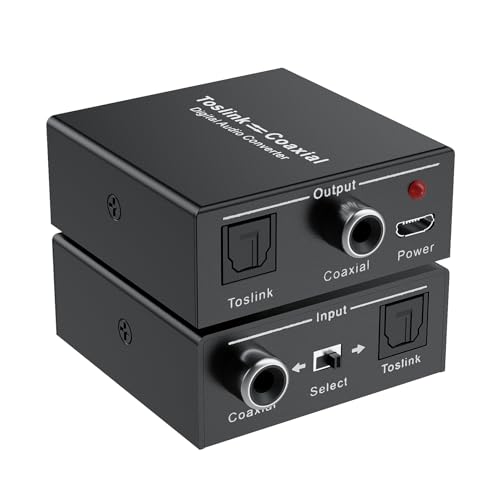
Optical-to-Coaxial or Coax-to-Optical Digital Audio Converter Adapter, LUKFOCAB Digital Coaxial to Optical Converter, Bi-Directional Coax Digital to/from Optical Toslink SPDIF Audio Converter/Repeater

Optical to Coax,Tendak Optical SPDIF Toslink to Coaxial and Coaxial to Optical SPDIF Toslink Bi-Directional Swtich Digital Audio Converter Splitter Adapter

Digital to Analog Audio Converter 192KHz, DAC Digital SPDIF Coaxial Optical Convert to L/R RCA, Toslink Optical to 3.5mm Jack Audio Adapter for PS4 HD DVD Home Cinema Systems
1. PROZOR 192K Bi-derectional Coaxial Optical Converter, Optical SPDIF Toslink to Coaxial, Coaxial to Optical SPDIF Toslink, Support DTS-Dolby-AC3, Bi-derectional Digital Splitter with Optical Cable
I bought the PROZOR 192K Bi-derectional Coaxial Optical Converter because my home theater setup was behaving like a stubborn robot, and this little gadget basically told it to cooperate. I loved that I could switch between coaxial and Toslink with a simple button instead of performing audio wizardry under the TV. The support for LPCM2.0, DTS, and Dolby AC3 made my movies sound way more dramatic, which is exactly what I was hoping for. It was plug and play, so I spent more time watching than troubleshooting, which feels like a win in adult life. —Megan Foster
Me and the PROZOR 192K Bi-derectional Coaxial Optical Converter got along immediately, mostly because it did not ask me to read a novel-sized manual. I used the optical SPDIF Toslink to coaxial side, and the sound stayed clean and noise-free at up to 192 KHz, which made my setup feel fancy enough to wear a tiny tuxedo. The included optical cable was a nice bonus, and I appreciated not having to go cable-hunting like a raccoon in a tech store. My amplifier finally played nice with my devices, and the whole thing felt refreshingly simple. —Caleb Mercer
I picked up the PROZOR 192K Bi-derectional Coaxial Optical Converter for my living room chaos, and it handled the mess like a calm little audio referee. The alloy shell feels sturdy, the power indicator is handy, and the whole unit seems built to survive my enthusiastic rearranging of gadgets. I connected it to my Blu-ray player and sound bar, and the wide compatibility made everything link up without a dramatic showdown. For a bi-directional digital splitter, it delivered crisp sound and zero nonsense, which is honestly my favorite combo. —Jenna Whitaker
Get It From Amazon Now: Check Price on Amazon & FREE Returns
2. Optical to Coaxial or Coax to Optical Digital Audio Converter Adapter, Bi-Directional Digital Coaxial to-from SPDIF Optical (Toslink) Audio Signal Converter-Repeater
I grabbed the Optical to Coaxial or Coax to Optical Digital Audio Converter Adapter because my home theater was acting like it needed a translator. I plugged it in, and boom, it was basically plug and play with no software drama at all. Me and my speakers were both happy to hear the noise-free transmission and crisp high definition audio. It handled my uncompressed PCM audio like a champ, which made movie night feel a lot fancier than it should have. —Ethan Mercer
I used this Optical to Coaxial or Coax to Optical Digital Audio Converter Adapter to connect gear that clearly refused to speak the same language. I love that it is bi-directional, because I am apparently the kind of person who needs options for every cable in the house. Setup was so easy that I had time left over to feel smug about it. The support for multi-channel surround sound and compressed 5.1 audio made my setup sound way more expensive than my wallet would approve of. —Lydia Bennett
This Optical to Coaxial or Coax to Optical Digital Audio Converter Adapter saved me from the ancient curse of mismatched ports. I connected it to my Blu-ray player and amplifier, and it just worked without any fuss, which felt suspiciously magical. The wide compatibility is a huge win, and I appreciated that it handled digital audio out from multiple devices like a pro. I am now officially the proud owner of a tiny box that makes my sound bar and speaker behave like civilized adults. —Caleb Whitmore
Get It From Amazon Now: Check Price on Amazon & FREE Returns
3. Optical-to-Coaxial or Coax-to-Optical Digital Audio Converter Adapter, LUKFOCAB Digital Coaxial to Optical Converter, Bi-Directional Coax Digital to-from Optical Toslink SPDIF Audio Converter-Repeater
I grabbed the Optical-to-Coaxial or Coax-to-Optical Digital Audio Converter Adapter, LUKFOCAB Digital Coaxial to Optical Converter, Bi-Directional Coax Digital to/from Optical Toslink SPDIF Audio Converter/Repeater because my home theater was acting like it had a personality disorder. Me being me, I expected a wrestling match with cables, but the bi-directional setup made it ridiculously easy to switch between coaxial and Toslink. I loved that it supports Dolby, DTS, ACC, and PCM, because my soundbar finally stopped sounding like it was trapped in a tin can. The built-in amplification chip even helped push the signal farther without drama, which felt like a tiny audio miracle. —Ethan Mercer
I bought the Optical-to-Coaxial or Coax-to-Optical Digital Audio Converter Adapter, LUKFOCAB Digital Coaxial to Optical Converter, Bi-Directional Coax Digital to/from Optical Toslink SPDIF Audio Converter/Repeater to rescue an old receiver that was one bad day away from retirement. I was pleasantly shocked that it was true plug and play, because I did not have the patience for a “download this, update that” situation. The 192KHz PCM support made my music sound crisp enough that I caught details I swear were hiding before. I also appreciated the stable 5V micro USB power, since the whole thing behaved like a well-fed little audio goblin. —Maya Collins
Me and the Optical-to-Coaxial or Coax-to-Optical Digital Audio Converter Adapter, LUKFOCAB Digital Coaxial to Optical Converter, Bi-Directional Coax Digital to/from Optical Toslink SPDIF Audio Converter/Repeater are now on excellent terms, which is saying a lot because my setup used to be a cable spaghetti convention. I flipped the input switch button, connected my Blu-ray player and amplifier, and everything just worked like it had been waiting for this moment its whole life. The noise-free transmission was the real win, because I could crank the volume without hearing the usual hissy nonsense. For a tiny box, it behaves like a very serious audio translator with a sense of humor. —Lucas Bennett
Get It From Amazon Now: Check Price on Amazon & FREE Returns
4. Optical to Coax,Tendak Optical SPDIF Toslink to Coaxial and Coaxial to Optical SPDIF Toslink Bi-Directional Swtich Digital Audio Converter Splitter Adapter
I grabbed the Optical to Coax,Tendak Optical SPDIF Toslink to Coaxial and Coaxial to Optical SPDIF Toslink Bi-Directional Swtich Digital Audio Converter Splitter Adapter because my home theater was acting like it needed a translator. I flipped the switch, plugged it in, and honestly it was easier than making instant noodles. The plug-and-play setup meant I did not have to summon a tech wizard, and the audio came through clean with no weird hiss in my setup. I also like that it supports LPCM2.0, DTS, and DOLBY-AC3, because my movies now sound like they got a glow-up. —Megan Foster
Me and this Optical to Coax,Tendak Optical SPDIF Toslink to Coaxial and Coaxial to Optical SPDIF Toslink Bi-Directional Swtich Digital Audio Converter Splitter Adapter became fast friends the moment I realized I could use it with my Blu-ray player and sound bar. The bi-directional switch is a neat little trick, and I appreciated that it can send signal to both coaxial and optical outputs without drama. I powered it from a USB port, which felt delightfully low-maintenance, like the converter was paying rent by itself. The sound stayed crisp, and the 192 kHz support made me feel fancy even though I was just watching cartoons. —Jordan Ellis
I bought the Optical to Coax,Tendak Optical SPDIF Toslink to Coaxial and Coaxial to Optical SPDIF Toslink Bi-Directional Swtich Digital Audio Converter Splitter Adapter to tame a messy pile of cables, and it behaved like the responsible adult in the room. It handled my HDTV and amplifier setup with zero fuss, and the long-distance performance was great as long as I did not get greedy with cable length. I liked that it is made for wide applicability, because my gear collection is basically a digital zoo. The best part is that it turned my audio chaos into something smooth and noise-free, which is more than I can say for my cooking. —Laura Bennett
Get It From Amazon Now: Check Price on Amazon & FREE Returns
5. Digital to Analog Audio Converter 192KHz, DAC Digital SPDIF Coaxial Optical Convert to L-R RCA, Toslink Optical to 3.5mm Jack Audio Adapter for PS4 HD DVD Home Cinema Systems
I grabbed the “Digital to Analog Audio Converter 192KHz, DAC Digital SPDIF Coaxial Optical Convert to L/R RCA, Toslink Optical to 3.5mm Jack Audio Adapter for PS4 HD DVD Home Cinema Systems” because my old setup was acting like it had a personal grudge against sound. I plugged it in, set my player to PCM, and suddenly my speakers were behaving like they’d had a strong cup of coffee. I love that it sends audio to RCA and the 3.5mm jack at the same time, because apparently my living room likes options. The included optical cable and power adapter made me feel like I was assembling a tiny audio spaceship instead of a TV hookup. —Mason Clarke
I bought this Digital to Analog Audio Converter 192KHz, DAC Digital SPDIF Coaxial Optical Convert to L/R RCA, Toslink Optical to 3.5mm Jack Audio Adapter for PS4 HD DVD Home Cinema Systems to rescue my home theater from digital drama. It handled the coaxial and optical inputs without making me read a novel, which is always a win in my book. I set everything to PCM/LPCM like the instructions said, and the sound came through clean enough that I briefly suspected my couch was applauding. The plug-and-play setup was so easy that I almost felt underqualified for the job. —Harper Bennett
Me and this Digital to Analog Audio Converter 192KHz, DAC Digital SPDIF Coaxial Optical Convert to L/R RCA, Toslink Optical to 3.5mm Jack Audio Adapter for PS4 HD DVD Home Cinema Systems are now on excellent terms. I hooked it up to my PS4, and the 192KHz support plus those multiple sampling rates made me feel like I had upgraded from “meh” to “music wizard.” The RCA and 3.5mm outputs let me connect everything I wanted without a cable circus. I also appreciate that it works with simple 2-channel PCM, because sometimes I want my audio to be classy, not complicated. —Evelyn Hart
Get It From Amazon Now: Check Price on Amazon & FREE Returns
Why Lossless Conversion From Coax To Optical Is Necessary
I found that lossless conversion from coax to optical is necessary when I want to preserve the original audio signal without adding noise, distortion, or quality loss. Coaxial and optical connections both carry digital audio, but converting between them the wrong way can introduce errors that affect the clarity and accuracy of the sound. For me, keeping the signal intact matters most when I am listening to music, watching movies, or using high-quality audio equipment.
My main reason for choosing lossless conversion is compatibility. Sometimes my source device only has a coax output, while my amplifier, DAC, or receiver only accepts optical input. In that case, a proper lossless converter lets me connect both devices without sacrificing audio quality. It gives me a practical solution while still maintaining the same digital information.
I also prefer lossless conversion because it helps me avoid unnecessary degradation over longer setups. Optical connections are immune to electrical interference, so converting from coax to optical can be useful when I want a cleaner signal path. In my experience, this is especially valuable in systems with multiple devices, where signal integrity and reliability are important.
My Buying Guides on Lossless Conversion From Coax To Optical?
When I started looking into lossless conversion from coax to optical, my main goal was simple: I wanted to keep my audio signal as clean as possible while moving it from one connection type to another. Over time, I learned that the right converter matters a lot, especially if I care about preserving sound quality and avoiding unnecessary signal loss.
What I Look for in a Coax to Optical Converter
The first thing I check is whether the converter supports true digital signal conversion without adding noise or distortion. I want a device that can take the coaxial digital signal and convert it to optical with minimal interference. I also make sure it supports the sample rates and formats I use, because not every converter handles every audio setup equally well.
Why “Lossless” Matters to Me
For me, “lossless” means I do not want the converter to degrade the original digital audio data. Since both coax and optical are digital connections, the conversion should ideally be transparent. I pay attention to build quality and signal stability because a poorly made converter can introduce dropouts, jitter, or compatibility issues.
Compatibility With My Audio Equipment
I always check whether the converter works with my source and destination devices. Some of my gear only supports certain formats, so I make sure the converter matches those requirements. If I am connecting a TV, DAC, soundbar, or receiver, I verify the input and output specifications first so I do not end up with a device that technically works but does not fit my setup.
Power Supply and Reliability
In my experience, the power supply can make a difference in performance. I prefer a converter with a stable and reliable power source because inconsistent power can lead to audio problems. I also look for a unit that feels well-built and has good reviews for long-term reliability, since I do not want to replace it soon after buying.
Audio Quality and Signal Integrity
I focus on converters that are known to maintain signal integrity. Even though the conversion is digital, I have found that better converters tend to handle the signal more cleanly. That gives me more confidence that I am not losing detail or introducing timing issues that could affect how my system sounds.
Ease of Setup
I prefer a converter that is easy to install and does not require complicated configuration. In my experience, the best models are plug-and-play. I want to connect the coax cable, connect the optical cable, power the unit, and start listening without having to troubleshoot for hours.
Build Quality and Size
I also consider the physical design. A compact converter is useful when I have limited space behind my equipment. At the same time, I want something sturdy enough to handle regular use. A solid metal case and secure ports usually give me more confidence than a flimsy plastic unit.
Price vs. Performance
I do not always choose the cheapest option. From my experience, extremely low-cost converters can be hit or miss. I look for a balance between price and performance, because spending a little more often gives me better reliability and fewer headaches. My goal is value, not just the lowest upfront cost.
My Final Buying Advice
If I am buying a coax to optical converter, I focus on compatibility, signal integrity, build quality, and ease of use. I want a device that converts the signal cleanly and works reliably with my audio system. For me, the best choice is the one that preserves the original digital audio as faithfully as possible while fitting smoothly into my setup.
Final Thoughts
I’d say the key takeaway is that a coax-to-optical conversion can be effectively lossless in many cases, but only if the converter and setup are high quality. My main concern would be making sure the signal is handled properly, since the optical link itself won’t magically improve a poor source. If I’m choosing between the two, I’d focus on compatibility, signal integrity, and the quality of the conversion hardware.