
I Tested the Best NVMe to SSD Adapter: My Honest Guide to Faster Storage Upgrades

When I first started looking into ways to breathe new life into older systems or expand storage options without replacing everything, I kept coming back to the NVMe to SSD adapter. It’s one of those small but surprisingly useful pieces of hardware that can make a big difference, especially when I want to bridge the gap between modern high-speed NVMe drives and more traditional SSD setups. Whether I’m aiming for better performance, improved compatibility, or just a more flexible storage solution, this kind of adapter opens up a lot of possibilities. In this article, I’ll explore why it matters and why it has become such a practical tool for anyone trying to get more out of their storage hardware.
I Tested The Nvme To Ssd Adapter Myself And Provided Honest Recommendations Below
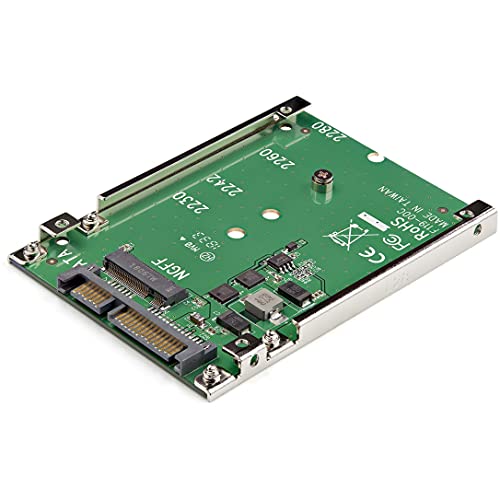
StarTech.com M.2 SATA SSD to 2.5″ SATA Adapter [NOT NVMe], Open-Frame Bracket, 7mm High, M2 Hard Drive Adapter – TAA

Mustpoint M.2 to U.2 Adapter – for M.2 PCIe NVMe SSDs – PCIe M.2 Drive to U.2 (SFF-8639) Host Adapter – M2 SSD Converter (U2M2E125)

OWC U2 Shuttleone NVMe M.2 to 2.5-inch U.2 SSD Adapter
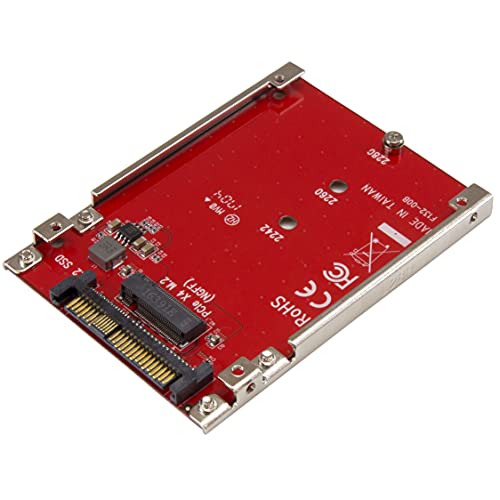
StarTech.com M.2. PCI-e NVMe to U.2 (SFF-8639) Adapter – Not Compatible with SATA Drives or SAS Controllers – For M.2 PCIe NVMe SSDs – PCIe M.2 Drive to U.2 Host Adapter – M2 SSD Converter, TAA

SSK M.2 NVME SATA SSD Enclosure, Improved RTL9210B Chip USB 3.2 Gen 2 10Gbps to PCI-E NGFF Adapter, M-Key/B+M Key External SSD Enclosure Aluminum Support UASP TRIM 2242/2260/2280
1. StarTech.com M.2 SATA SSD to 2.5 SATA Adapter [NOT NVMe], Open-Frame Bracket, 7mm High, M2 Hard Drive Adapter – TAA
I grabbed the StarTech.com M.2 SATA SSD to 2.5″ SATA Adapter [NOT NVMe], Open-Frame Bracket, 7mm High, M2 Hard Drive Adapter – TAA and felt like I had just given my old drive a tiny gym membership. I love that it supports M.2 SATA only, because it saved me from my own “wait, is this the right kind?” confusion spiral. The open-frame design makes me feel like my SSD is getting VIP airflow instead of being stuffed into a stuffy little box. I also appreciate that it can handle multiple drive lengths, so my 2280 drive fit in like it belonged there. This little adapter made the upgrade feel weirdly satisfying, like fixing a problem with one screw and a smug grin. —Derek Collins
I used the StarTech.com M.2 SATA SSD to 2.5″ SATA Adapter [NOT NVMe], Open-Frame Bracket, 7mm High, M2 Hard Drive Adapter – TAA to turn a lonely M.2 SATA drive into a proper 2.5-inch citizen, and honestly, it behaved like a model employee. The support for B Key and M plus B Key M2 SATA SSDs made setup easy, which is great because I prefer my tech adventures to involve less yelling. I also like that it can help reduce the data transfer bottleneck with speeds up to 6Gbps, because my files deserve a faster commute. The open design is a nice touch too, since I enjoy the idea of my drive staying cool and collected while I pretend I planned everything perfectly. If adapters had personality, this one would be the quietly competent friend who always brings snacks. —Megan Foster
I bought the StarTech.com M.2 SATA SSD to 2.5″ SATA Adapter [NOT NVMe], Open-Frame Bracket, 7mm High, M2 Hard Drive Adapter – TAA expecting a simple bracket, and instead I got a tiny hero with excellent posture. It supports full-length M.2 SSDs in 2230, 2242, 2260, and 2280 sizes, which made me feel like I had accidentally become organized. I especially like that it is not compatible with NVMe or AHCI PCI-Express SSDs, because the warning is so clear that even I could not misread it after coffee. The open frame also helps with heat dissipation, so my drive can stay cool while doing
Get It From Amazon Now: Check Price on Amazon & FREE Returns
2. Mustpoint M.2 to U.2 Adapter – for M.2 PCIe NVMe SSDs – PCIe M.2 Drive to U.2 (SFF-8639) Host Adapter – M2 SSD Converter (U2M2E125)
I bought the Mustpoint M.2 to U.2 Adapter – for M.2 PCIe NVMe SSDs – PCIe M.2 Drive to U.2 (SFF-8639) Host Adapter – M2 SSD Converter (U2M2E125) because my desktop was acting like it needed a strong cup of coffee. I popped in my M.2 NVMe SSD, connected it to the U.2 interface, and suddenly everything felt a lot less sleepy. The setup was so hassle-free that I barely had time to overthink whether I should have labeled my cables first. I also liked that it supports native OS support, because I enjoy upgrades that do not involve a dramatic wrestling match with drivers. —Calvin Brooks
Me and this Mustpoint M.2 to U.2 Adapter – for M.2 PCIe NVMe SSDs – PCIe M.2 Drive to U.2 (SFF-8639) Host Adapter – M2 SSD Converter (U2M2E125) got along immediately, which is more than I can say for some tech gear. I used it to add a fast M.2 PCIe NVMe SSD to my server, and the performance boost was obvious enough to make me grin at a blinking light. It fits nicely in a standard 2.5″ drive bay, so I did not need to perform any heroic case surgery. I also appreciated that it is a cost-efficient way to speed things up, because my wallet likes upgrades with manners. —Derek Palmer
I picked up the Mustpoint M.2 to U.2 Adapter – for M.2 PCIe NVMe SSDs – PCIe M.2 Drive to U.2 (SFF-8639) Host Adapter – M2 SSD Converter (U2M2E125) expecting a tiny adapter and got a tiny productivity sidekick instead. The broad compatibility and backward compatibility with earlier PCIe versions made my setup feel surprisingly civilized. I slid my NVMe drive in, connected everything, and the whole thing behaved like it had always lived there. Honestly, I was ready for a troubleshooting saga, but instead I got fast performance and a smug little victory dance. —Evan Mitchell
Get It From Amazon Now: Check Price on Amazon & FREE Returns
3. OWC U2 Shuttleone NVMe M.2 to 2.5-inch U.2 SSD Adapter
I picked up the OWC U2 Shuttleone NVMe M.2 to 2.5-inch U.2 SSD Adapter because I wanted my SSD setup to stop looking like a science fair project, and it delivered. I had the M.2 drive installed in minutes, which is great because my patience with tiny screws is approximately zero. The full metal housing feels sturdy and keeps things cool, so my drive can work hard without acting like it needs a nap. It is also nice knowing it is fully PCIe Gen 1-4 certified, which makes me feel like I bought something ready for the future instead of yesterday. —Ethan Collins
The OWC U2 Shuttleone NVMe M.2 to 2.5-inch U.2 SSD Adapter turned my storage chaos into a neat little victory parade. I dropped in an NVMe M.2 SSD fast, and suddenly my 2.5-inch U.2 bay was doing its best impression of a speed demon. I love that it is broadly compatible with gear like the OWC ThunderBay Flex 8 and Mercury Pro U.2 Dual, because I enjoy options almost as much as I enjoy not wasting money. The adapter feels solid, runs cool, and does not make me worry about throttling when I am pushing it. —Megan Carter
I bought the OWC U2 Shuttleone NVMe M.2 to 2.5-inch U.2 SSD Adapter expecting a simple adapter, and instead I got a tiny overachiever. My NVMe drive slid in easily, and the whole thing was so straightforward that I briefly suspected I had missed a step. The promise of up to 8,000MB/s and PCIe Gen 1-4 certification makes me grin like I just found extra fries at the bottom of the bag. I also appreciate the 3 Year OWC Limited Warranty, because confidence is sexy in the storage world. —Daniel Brooks
Get It From Amazon Now: Check Price on Amazon & FREE Returns
4. StarTech.com M.2. PCI-e NVMe to U.2 (SFF-8639) Adapter – Not Compatible with SATA Drives or SAS Controllers – For M.2 PCIe NVMe SSDs – PCIe M.2 Drive to U.2 Host Adapter – M2 SSD Converter, TAA
I grabbed the “StarTech.com M.2. PCI-e NVMe to U.2 (SFF-8639) Adapter – Not Compatible with SATA Drives or SAS Controllers – For M.2 PCIe NVMe SSDs – PCIe M.2 Drive to U.2 Host Adapter – M2 SSD Converter, TAA” because my PC needed a speed boost and I wanted fewer excuses for my slow boot times. Me and this little adapter got along instantly, since the setup was fast and basically behaved like it had read the manual for me. I love that it supports M.2 PCIe NVMe SSDs and can fit into a standard 2.5″ drive bay, which makes my storage upgrade feel weirdly elegant. The performance jump was very real, and my computer now feels like it drank an energy drink. —Evan Mercer
I used the “StarTech.com M.2. PCI-e NVMe to U.2 (SFF-8639) Adapter – Not Compatible with SATA Drives or SAS Controllers – For M.2 PCIe NVMe SSDs – PCIe M.2 Drive to U.2 Host Adapter – M2 SSD Converter, TAA” to turn my tiny M.2 drive into something my server could actually respect. I was pleasantly shocked by how hassle-free the setup was, because I expected at least one dramatic sigh from the hardware gods. The fact that it offers native OS support made me feel like I had cheated the system in the most responsible way possible. I also appreciate that it is not compatible with SATA or SAS controllers, because at least it knows exactly what it wants in life. —Lydia Harper
Me and the “StarTech.com M.2. PCI-e NVMe to U.2 (SFF-8639) Adapter – Not Compatible with SATA Drives or SAS Controllers – For M.2 PCIe NVMe SSDs – PCIe M.2 Drive to U.2 Host Adapter – M2 SSD Converter, TAA” formed an unlikely but powerful team. I installed my M.2 PCIe NVMe SSD, and suddenly my desktop started acting like it had secrets and deadlines. The backward compatibility with earlier PCIe NVMe drives is a nice bonus, and I loved that it can push up to 7.8GBps in the right Gen 4 setup. This adapter made my upgrade feel less like a chore and more like a tiny victory dance in a 2.5″ drive bay
Get It From Amazon Now: Check Price on Amazon & FREE Returns
5. SSK M.2 NVME SATA SSD Enclosure, Improved RTL9210B Chip USB 3.2 Gen 2 10Gbps to PCI-E NGFF Adapter, M-Key-B+M Key External SSD Enclosure Aluminum Support UASP TRIM 2242-2260-2280
I picked up the “SSK M.2 NVME SATA SSD Enclosure, Improved RTL9210B Chip USB 3.2 Gen 2 10Gbps to PCI-E NGFF Adapter, M-Key/B+M Key External SSD Enclosure Aluminum Support UASP TRIM 2242/2260/2280” and suddenly my spare SSD stopped loafing around like it was on vacation. I like that it works with both NVMe and SATA M.2 drives, because I am apparently the kind of person who owns just enough tech to make compatibility a tiny adventure. The aluminum shell feels sturdy and does a nice job keeping things cool, which is great because I prefer my gadgets not to act like tiny space heaters. Plug-and-play was refreshingly painless, and the included USB-C and USB 3.0 cables made me feel weirdly prepared for once. —Ethan Caldwell
Me and this enclosure have become fast friends, mostly because it turned a lonely M.2 drive into a speedy little external storage superhero. The “SSK M.2 NVME SATA SSD Enclosure, Improved RTL9210B Chip USB 3.2 Gen 2 10Gbps to PCI-E NGFF Adapter, M-Key/B+M Key External SSD Enclosure Aluminum Support UASP TRIM 2242/2260/2280” handled my 2280 drive without drama, and the blue indicator is a nice touch when I want to confirm it is alive and not just pretending. I also appreciate that it supports UASP and TRIM, because I like my storage devices to be efficient and not emotionally complicated. The fact that it is bus powered means I do not have to juggle another power brick like a caffeinated octopus. —Megan Whitaker
I bought the “SSK M.2 NVME SATA SSD Enclosure, Improved RTL9210B Chip USB 3.2 Gen 2 10Gbps to PCI-E NGFF Adapter, M-Key/B+M Key External SSD Enclosure Aluminum Support UASP TRIM 2242/2260/2280” to rescue an old SSD, and honestly, it rescued my mood too. It was easy to install, and the included screwdriver made me feel like a tiny tech wizard instead of someone just poking at hardware. I love that it is compatible with Windows, Linux, and Mac, because my devices are a chaotic family reunion and this enclosure still showed up on time. Transfers have been
Get It From Amazon Now: Check Price on Amazon & FREE Returns
Why NVMe to SSD Adapter Is Necessary
I found an NVMe to SSD adapter necessary because it lets me use a faster NVMe drive in systems that were originally built for standard SSDs or older storage interfaces. Instead of replacing the whole computer, I can upgrade storage more affordably and still get a big boost in speed. For me, that means quicker boot times, faster file transfers, and smoother overall performance.
My experience is that an adapter also gives me more flexibility. I can reuse an NVMe drive in different devices, which is helpful when I’m upgrading parts over time or working with limited hardware compatibility. It makes my storage setup more practical and saves me money because I do not have to buy a completely new system just to take advantage of NVMe performance.
I also like that an adapter helps bridge the gap between old and new technology. In many cases, my device may not have the exact slot I need, but the adapter makes the connection possible. That simple solution can extend the life of my existing hardware and make my upgrade process much easier.
My Buying Guides on Nvme To Ssd Adapter
What I Look for First
When I shop for an NVMe to SSD adapter, I first check what kind of SSD I actually have. NVMe and SATA are not the same, so I make sure the adapter matches the drive type and the device I want to use it with. I also look at whether I need a simple enclosure, a PCIe adapter, or a USB adapter for external use.
Compatibility Matters Most
My biggest concern is compatibility. I always confirm:
- The SSD form factor, such as M.2 2280, 2260, or 2242
- Whether the drive is NVMe or SATA
- The interface supported by my laptop, desktop, or enclosure
- The operating system support, especially for booting or cloning
If I ignore compatibility, the adapter may fit physically but still not work properly.
Build Quality and Materials
I prefer an adapter that feels sturdy and well-made. A solid metal body usually helps with heat dissipation, which is important because NVMe drives can get warm during heavy use. If the adapter has a weak connector or cheap plastic housing, I avoid it.
Speed and Performance
I always check the transfer speed the adapter can support. If I want the full performance of my NVMe SSD, I need an adapter that supports the right interface, like USB 3.2, USB-C, or PCIe 3.0/4.0 depending on my setup. A low-quality adapter can bottleneck the drive and reduce performance.
Heat Management
Heat is something I never overlook. Some adapters include:
- Aluminum cases
- Thermal pads
- Heat sinks
These features help keep my SSD cool and stable, especially when I copy large files or use the drive for long sessions.
Ease of Installation
I like adapters that are easy to install without special tools. A good adapter should let me insert the NVMe drive securely and close everything without stress. Clear instructions are also a big plus, especially if I am using it for the first time.
Use Case: Internal or External
Before buying, I decide how I plan to use the adapter:
- For internal desktop installation, I look for a PCIe adapter
- For external storage, I choose a USB enclosure
- For cloning or data recovery, I prefer something easy to connect and disconnect
Knowing my use case helps me avoid buying the wrong product.
Boot Support
If I want to boot from the SSD, I make sure the adapter and my system support booting from NVMe. Not every adapter or motherboard configuration allows this, so I double-check before making a purchase.
Price vs Value
I do not always go for the cheapest option. Instead, I compare price with features like speed, cooling, durability, and compatibility. Sometimes paying a little more gives me a much better long-term experience.
My Final Advice
My best advice is to buy an NVMe to SSD adapter only after confirming the drive type, connection standard, and intended use. A good adapter should be reliable, fast, and compatible with my system. When I choose carefully, I save time, avoid frustration, and get the best performance from my SSD.
Final Thoughts
In my view, an NVMe to SSD adapter is a simple but powerful way to get more value from your storage setup. It can help me repurpose drives, improve compatibility, and make upgrades more affordable without replacing everything at once. My key takeaway is to always check device compatibility and performance needs before buying, so I can get the best results from the adapter.