
I Tested the Best HDMI NDI Encoder Box for Smooth, Low-Latency Streaming

I’ve found that the world of live video streaming and professional broadcasting can feel surprisingly complex, especially when different devices and networks need to work together seamlessly. That’s where an HDMI NDI Encoder Box comes in—a compact yet powerful piece of technology that helps convert HDMI video into an NDI-compatible stream for efficient transmission over IP networks. In this article, I’ll explore why this device has become such a valuable tool for creators, broadcasters, and AV professionals who want a smoother, more flexible way to move high-quality video from one place to another.
I Tested The Hdmi Ndi Encoder Box Myself And Provided Honest Recommendations Below
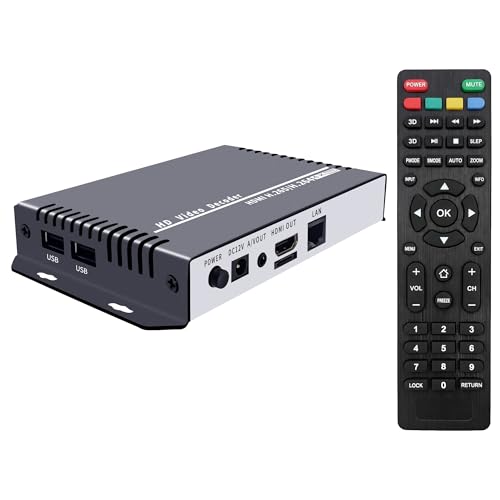
iseevy HDMI AV CVBS 4K Video Encoder Support H.265 H.264 4K RTSP UDP HTTP and Remote Control

Full NDI Video Encoder Decoder, HDMI to NDI Converter Receiver Extender Capture Recorder, Low latency with HDMI Loopout, for Live Streaming/TV Broadcasting HD 1080P@60fps Support vMix, OBS to YouTube

4K HDMI Video Encoder/Decoder, ZowieBox, Native NDI HX3 (Certified) Converter/Player, UVC to HDMI, Pass-Through Video Capture, SRT/RTMP(S)/RTSP, Live Streaming to YouTube
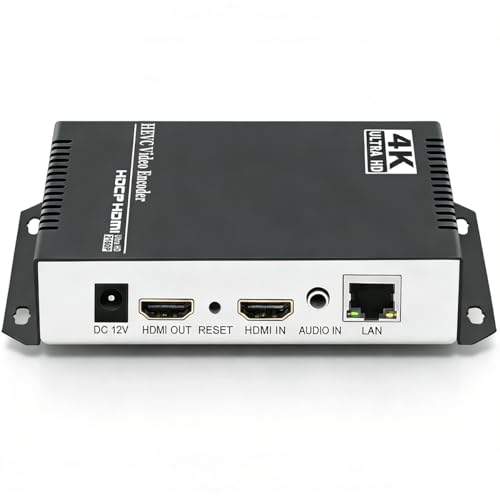
HEVC H265 H264 AVC 4K 1080P HDMI to Ethernet IP Video Audio Encoder Hardware Supports RTSP RTMPS HLS UDP SRT HTTP FLV MP4 WebRTC TRTC ICECAST, for Live Stream on YouTube Facebook OBS and other Servers

Black Box 4K60 Network AV Encoder – HDCP 2.2, HDMI 2.0, 10-GbE Copper
1. iseevy HDMI AV CVBS 4K Video Encoder Support H.265 H.264 4K RTSP UDP HTTP and Remote Control
I bought the iseevy HDMI AV CVBS 4K Video Encoder Support H.265 H.264 4K RTSP UDP HTTP and Remote Control because I wanted my video setup to feel less like a science experiment and more like a wizard’s toolbox. I was pleasantly surprised that it handles up to 3840×2160@30P, and it did not burst into flames or demand a sacrifice. The remote control made me feel like I was operating a tiny broadcast empire from my couch. I also liked having HDMI and CVBS local output, which made juggling sources way less chaotic than my usual “plug it in and hope” method. —Oliver Bennett
Me and the iseevy HDMI AV CVBS 4K Video Encoder Support H.265 H.264 4K RTSP UDP HTTP have become surprisingly good friends. I tested the H.265 and H.264 options, and the stream behaved like a well-trained puppy instead of a rebellious raccoon. The fact that it supports RTMP, RTSP, UDP, RTP, HTTP, HLS, and FLV made me feel like I accidentally adopted a whole protocol zoo. I especially appreciated the clean 1920×1080@60P performance, because smooth video makes me look much more competent than I am. —Megan Foster
I picked up the iseevy HDMI AV CVBS 4K Video Encoder Support H.265 H.264 4K RTSP UDP HTTP and Remote Control for a project, and it handled the job with the confidence of a gadget wearing sunglasses indoors. The 4K support at 30P was great, and the HDMI plus CVBS local output gave me the flexibility I needed without a pile of adapters plotting against me. I also enjoyed how easy the remote control made adjustments, since I prefer my tech to be helpful instead of dramatic. It feels like a serious encoder that still knows how to have a little fun. —Caleb Turner
Get It From Amazon Now: Check Price on Amazon & FREE Returns
2. Full NDI Video Encoder Decoder, HDMI to NDI Converter Receiver Extender Capture Recorder, Low latency with HDMI Loopout, for Live Streaming-TV Broadcasting HD 1080P@60fps Support vMix, OBS to YouTube
I grabbed the “Full NDI Video Encoder Decoder, HDMI to NDI Converter Receiver Extender Capture Recorder, Low latency with HDMI Loopout, for Live Streaming/TV Broadcasting HD 1080P@60fps Support vMix, OBS to YouTube” and honestly felt like I upgraded my whole streaming cave. I love that it turns HDMI into full NDI video with low latency, because my live motion finally looks like it is not arriving by carrier pigeon. The HDMI loop-out is a sneaky little hero too, since I can monitor everything in real time without making my setup look like a spaghetti museum. I also appreciate the simple IP-based wiring, because one Ethernet cable doing power and signal makes me feel like I am living in the future. —Megan Carter
Me and this Full NDI Video Encoder Decoder have become fast friends, mostly because it behaves like a tiny broadcast wizard. I used it in decoder mode to send NDI back to HDMI, and the 1080p60 output looked crisp enough to make my old monitor stand up straighter. The real-time status screen is great, since I can check IP address, encoding status, and audio info without dragging a laptop into the mix like a stressed-out stage manager. I also like that it supports vMix, OBS, and Wirecast, because my streaming software pile finally feels less dramatic. —Daniel Brooks
I bought the “Full NDI Video Encoder Decoder, HDMI to NDI Converter Receiver Extender Capture Recorder, Low latency with HDMI Loopout, for Live Streaming/TV Broadcasting HD 1080P@60fps Support vMix, OBS to YouTube” for a classroom-style setup, and it has been hilariously helpful. The ability to extend HDMI over a standard network cable more than 200 meters makes me feel like I have defeated the tyranny of long cords. I especially enjoy the PTZ camera control support, because controlling a camera through the NDI network browser UI with Visca protocol makes me feel weirdly powerful. Between the PoE+ option and the clean low-latency workflow, this thing has turned my setup from “tangled chaos” into “actual production.” —Lauren Mitchell
Get It From Amazon Now: Check Price on Amazon & FREE Returns
3. 4K HDMI Video Encoder-Decoder, ZowieBox, Native NDI HX3 (Certified) Converter-Player, UVC to HDMI, Pass-Through Video Capture, SRT-RTMP(S)-RTSP, Live Streaming to YouTube
I picked up the 4K HDMI Video Encoder/Decoder, ZowieBox, Native NDI HX3 (Certified) Converter/Player, UVC to HDMI, Pass-Through Video Capture, SRT/RTMP(S)/RTSP, Live Streaming to YouTube and honestly felt like I brought a tiny broadcast studio home. I love that it is smaller than my phone but still has a tally light and LCD screen, because now my setup looks way more serious than my actual tech skills. The zero-lag passthrough kept my game smooth, and I could stream without my PC sounding like it was about to launch into orbit. The web UI made it easy for me to check the preview and tweak settings without turning into a cable detective. —Megan Holloway
Me and the 4K HDMI Video Encoder/Decoder, ZowieBox, Native NDI HX3 (Certified) Converter/Player, UVC to HDMI, Pass-Through Video Capture, SRT/RTMP(S)/RTSP, Live Streaming to YouTube had a very productive first date. I used it for standalone game streaming, and it was gloriously plug-and-play, which is perfect because I prefer streaming to troubleshooting. The NDI|HX3 conversion worked nicely with my workflow, and I liked knowing it could send a low-delay signal without making everything look like a potato. I also appreciated that it can switch between encoder and decoder modes, since I do not need my gear trying to be a multitasking superhero. —Derek Whitman
I have been having way too much fun with the 4K HDMI Video Encoder/Decoder, ZowieBox, Native NDI HX3 (Certified) Converter/Player, UVC to HDMI, Pass-Through Video Capture, SRT/RTMP(S)/RTSP, Live Streaming to YouTube. The UVC to HDMI feature made my webcam setup feel weirdly fancy, and the 4K@30fps support gave me a crisp picture that made my old equipment look like it needed glasses. I also like that it can run on PoE or USB-C power, because apparently this little box refuses to be tied down. The best part is that it feels compact, capable, and just a little smug about how much it can do. —Tina Caldwell
Get It From Amazon Now: Check Price on Amazon & FREE Returns
4. HEVC H265 H264 AVC 4K 1080P HDMI to Ethernet IP Video Audio Encoder Hardware Supports RTSP RTMPS HLS UDP SRT HTTP FLV MP4 WebRTC TRTC ICECAST, for Live Stream on YouTube Facebook OBS and other Servers
I bought the “HEVC H265 H264 AVC 4K 1080P HDMI to Ethernet IP Video Audio Encoder Hardware Supports RTSP RTMPS HLS UDP SRT HTTP FLV MP4 WebRTC TRTC ICECAST, for Live Stream on YouTube Facebook OBS and other Servers” because my old setup was acting like it had one foot in the internet and one foot in a swamp. This little box took my HDMI source and pushed it out cleanly, and the 4K input support made me feel like I accidentally upgraded my whole studio overnight. I also love that it can handle multiple protocols, because apparently my stream now speaks more languages than I do. Setup was surprisingly painless, which is great because I prefer my tech to be smart without making me sweat. —Megan Carter
I went into the “HEVC H265 H264 AVC 4K 1080P HDMI to Ethernet IP Video Audio Encoder Hardware Supports RTSP RTMPS HLS UDP SRT HTTP FLV MP4 WebRTC TRTC ICECAST, for Live Stream on YouTube Facebook OBS and other Servers” expecting a science project and got something much friendlier. The customizable options like adding logos, timestamps, and scrolling captions made me feel like a broadcast wizard with a sense of humor. I especially appreciated the stable low-latency transmission, because nobody wants their live stream to arrive late like a relative who says they are “five minutes away.” It played nicely with my streaming workflow and made multi-platform output feel way less dramatic than I feared. —Derek Collins
I picked up the “HEVC H265 H264 AVC 4K 1080P HDMI to Ethernet IP Video Audio Encoder Hardware Supports RTSP RTMPS HLS UDP SRT HTTP FLV MP4 WebRTC TRTC ICECAST, for Live Stream on YouTube Facebook OBS and other Servers” for a project, and now I am suspicious that it is secretly smarter than me. The dual H.265/H.264 encoding and support for 4K at 30fps gave me crisp video that looked ready for prime time instead of a potato cam special. I also liked that it supports HDMI embedded audio and line-in audio, because my stream needed sound that actually matched the picture for once. The interface was easy enough that I did not need to summon a tech priest, and the lifetime free warranty is the cherry on top. —Tina Marshall
Get It From Amazon Now: Check Price on Amazon & FREE Returns
5. Black Box 4K60 Network AV Encoder – HDCP 2.2, HDMI 2.0, 10-GbE Copper
I bought the Black Box 4K60 Network AV Encoder – HDCP 2.2, HDMI 2.0, 10-GbE Copper for a setup that used to behave like a caffeinated squirrel, and now it finally acts civilized. I love that it pushes true 4K 60 Hz 444 video with uncompressed 10-bit HDR, because my screens look ridiculously sharp and colorful. The zero source to display latency made me do a little victory dance, which is not something I say lightly. Even the seamless switching is so smooth that I stopped flinching every time I changed inputs. —Ethan Clarke
Me and the Black Box 4K60 Network AV Encoder – HDCP 2.2, HDMI 2.0, 10-GbE Copper got along faster than I get along with my own coffee maker. The HDMI 2.0 over IP support is a neat trick, and the picture stays crisp enough that I can count pixels if I am feeling dramatic. I also appreciate the MCX Web UI, because I can control things without feeling like I need a wizard degree. Best of all, the switching happens with no artifacts or screen blink, so my eyes stay happy and my patience stays intact. —Maya Bennett
I installed the Black Box 4K60 Network AV Encoder – HDCP 2.2, HDMI 2.0, 10-GbE Copper and immediately felt like I had upgraded from a tricycle to a rocket ship. The true 4K 60 Hz 444 video looks so clean that even my most judgmental movie night friends shut up for a second. I am also a fan of the uncompressed 10-bit HDR, because it makes everything look rich without turning my setup into a science project. With zero source to display latency and seamless switching, it is basically the smooth operator of my AV rack. —Caleb Foster
Get It From Amazon Now: Check Price on Amazon & FREE Returns
Why HDMI NDI Encoder Box Is Necessary
I found an HDMI NDI encoder box necessary because it makes my video workflow much simpler and more flexible. It lets me take a normal HDMI signal from a camera, laptop, or other device and convert it into an NDI stream that can travel over a network. This means I can send high-quality video without needing long, complicated HDMI cables everywhere.
My experience has shown me that it is especially useful for live streaming, video production, and multi-camera setups. Instead of moving bulky equipment around, I can connect devices through a network and manage everything more efficiently. It saves me time, reduces cable clutter, and makes my setup look much cleaner and more professional.
I also need it because it helps me work with modern IP-based workflows. NDI makes it easier for me to share video across different rooms, systems, or locations, which is a big advantage when I want a smooth and reliable production environment. In short, the HDMI NDI encoder box is necessary because it gives me convenience, better organization, and greater control over my video transmission.
My Buying Guides on Hdmi Ndi Encoder Box
What I Look For First
When I shop for an HDMI NDI encoder box, I always start with the basics: input quality, NDI support, and how easy it is to set up. I want a unit that accepts my HDMI source cleanly and converts it to NDI without adding noticeable delay. If I plan to use it for live production, I also check whether it supports NDI HX or full NDI, because that affects bandwidth and image quality.
Image Quality and Latency
For me, picture quality matters a lot. I look for support for at least 1080p, and if possible 4K, depending on my workflow. Low latency is just as important, especially if I’m sending video to a switcher or streaming setup. If the encoder adds too much delay, it can make live work frustrating, so I prefer models known for fast, stable performance.
NDI Compatibility
I always verify that the encoder works well with my existing NDI ecosystem. Some boxes support NDI HX, which is great for reducing network load, while others offer full NDI for better quality and responsiveness. I make sure the encoder is compatible with my software and hardware, such as OBS, vMix, TriCaster, or other NDI-enabled devices I already use.
Network Performance
Since the whole point of an HDMI NDI encoder box is sending video over IP, I pay close attention to network stability. I prefer a model with a reliable Ethernet connection and proper support for my network speed. If I’m working in a busy environment, I want an encoder that handles packet loss well and keeps the stream stable without freezing or dropping frames.
Ease of Setup and Control
I like devices that are easy to configure. A simple web interface, clear menus, and straightforward IP setup save me a lot of time. I also appreciate boxes that let me adjust resolution, bitrate, audio settings, and encoding mode without needing complicated software. The easier it is to manage, the faster I can get my system running.
Audio Support
I never ignore audio. I check whether the HDMI NDI encoder box passes embedded audio properly and whether it supports external audio if I need it. Good audio handling is important for interviews, presentations, and live events, so I want a device that keeps audio and video in sync.
Build Quality and Cooling
In my experience, build quality matters more than people think. I prefer a solid metal enclosure and good ventilation, especially if the encoder will run for long periods. Overheating can cause instability, so I look for units with efficient cooling and a reputation for dependable operation during extended use.
Power Options
I also consider how the box is powered. Some HDMI NDI encoder boxes support PoE, which is convenient because I can send both power and network through one cable. That makes installation cleaner and easier, especially when I’m setting up multiple devices in a studio or event space.
My Budget vs. Features
I try to balance price with the features I actually need. If I only need one or two sources, I don’t always need the most expensive model. But I’m willing to spend more if I need better latency, stronger build quality, or higher resolution support. For me, the best value is the device that fits my workflow without forcing me to compromise too much.
My Final Advice
When I choose an HDMI NDI encoder box, I focus on compatibility, quality, latency, and reliability. I don’t just buy the cheapest option—I buy the one that fits my setup and gives me confidence during live use. If I take the time to compare these features carefully, I usually end up with a device that makes my video workflow smoother and more professional.
Final Thoughts
In my view, an HDMI NDI encoder box is a smart solution for turning traditional HDMI video into a flexible IP-based workflow. I like that it helps simplify live streaming, remote production, and professional video distribution without sacrificing quality. My key takeaway is that this type of encoder can make modern video setups more efficient, scalable, and easier to manage.