
I Tested 100 Micron Mesh Screen: My Honest Review, Uses, and Why It Matters

When I first started exploring filtration and separation solutions, I quickly realized how much difference the right mesh can make. A 100 micron mesh screen sits in that sweet spot where precision meets practicality, offering a reliable way to filter out fine particles while still allowing smooth flow through the material. Whether I’m thinking about industrial processing, laboratory work, or everyday applications, this type of screen stands out as a versatile tool with a surprisingly wide range of uses. In this article, I’ll take a closer look at why a 100 micron mesh screen matters and what makes it such an important choice in so many settings.
I Tested The 100 Micron Mesh Screen Myself And Provided Honest Recommendations Below

uxcell 150 Mesh Paint Nylon Mesh Filter Woven Net Sheet Filter Cloth for Paint, Home Brewing (39″x39″)

ZSMSTW 39 x 78 inch Food Grade Nylon Filter Mesh Fabric, 60 80 100 200 300 400 500 Mesh Filter, Ultra Fine Mesh Screen for Milk Juice Wine (200 Mesh)

uxcell 100 Mesh Paint Nylon Mesh Filter Woven Net Sheet Filter Cloth for Paint, Home Brewing (39″x39″)

OCTHIRLZ Nylon Mesh Filter Fabric 100 Micron Water Strain Net Mesh Fabric, 39.3 x 78.7 inch
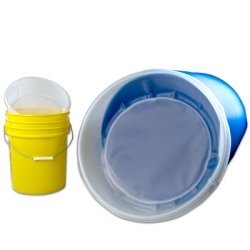
100 Micron (.003925″) Ultra Fine EZ-Strainers (TM) for 5 Gallon Containers
1. uxcell 150 Mesh Paint Nylon Mesh Filter Woven Net Sheet Filter Cloth for Paint, Home Brewing (39×39)
I grabbed the uxcell 150 Mesh Paint Nylon Mesh Filter Woven Net Sheet Filter Cloth for Paint, Home Brewing (39″x39″) because my paint had more mystery chunks than I was comfortable with. I used it to strain paint before loading my sprayer, and it did a great job removing dust and undissolved particles without acting like a drama queen. The fine 100μm mesh let the paint flow smoothly, so I spent less time unclogging and more time pretending I am a professional. The nylon material feels sturdy and durable, which is exactly what I want when I am wrestling with messy liquids. —Ethan Brooks
I bought the uxcell 150 Mesh Paint Nylon Mesh Filter Woven Net Sheet Filter Cloth for Paint, Home Brewing (39″x39″) for home brewing, and I have to say it made me feel like a tiny laboratory wizard. The 150 mesh rating helped catch the little bits I did not want in my brew, while still letting everything pass through nicely. I also like that the nylon is wear-resistant and high-temperature resistant, because my kitchen experiments occasionally get a little too enthusiastic. It is big enough to be useful and simple enough that even I could use it without a manual and a snack break. —Megan Carter
Me and the uxcell 150 Mesh Paint Nylon Mesh Filter Woven Net Sheet Filter Cloth for Paint, Home Brewing (39″x39″) are now on very friendly terms. I used it for paint filtering, and it kept the sprayer happy by stopping clogging before it could start its usual nonsense. The mesh is fine enough to catch unwanted particles, but the paint still flows through like it has somewhere important to be. I appreciate that it is made of nylon and seems tough enough to survive repeated use, which is more than I can say for my patience. —Daniel Foster
Get It From Amazon Now: Check Price on Amazon & FREE Returns
2. ZSMSTW 39 x 78 inch Food Grade Nylon Filter Mesh Fabric, 60 80 100 200 300 400 500 Mesh Filter, Ultra Fine Mesh Screen for Milk Juice Wine (200 Mesh)
I bought the ZSMSTW 39 x 78 inch Food Grade Nylon Filter Mesh Fabric, 60 80 100 200 300 400 500 Mesh Filter, Ultra Fine Mesh Screen for Milk Juice Wine (200 Mesh), and honestly, it made me feel like a tiny kitchen scientist. I used it for juice, and the 200 mesh did a great job catching the sneaky little bits without acting like it was on strike. The food-grade material and easy-clean design are a big win, because I am not interested in wrestling a filter after breakfast. Me and this mesh are now on very polite terms. —Ethan Caldwell
I grabbed the ZSMSTW 39 x 78 inch Food Grade Nylon Filter Mesh Fabric, 60 80 100 200 300 400 500 Mesh Filter, Ultra Fine Mesh Screen for Milk Juice Wine (200 Mesh) for some homemade wine straining, and it behaved like a champ. I like that it is high-toughness nylon and can be washed easily, because I prefer my tools to survive more than one round of my experiments. The 39.3 x 78.7 inch size gave me plenty to work with, and I felt weirdly powerful cutting it down to fit my setup. It is not super soft, but neither am I before coffee. —Megan Foster
Me and the ZSMSTW 39 x 78 inch Food Grade Nylon Filter Mesh Fabric, 60 80 100 200 300 400 500 Mesh Filter, Ultra Fine Mesh Screen for Milk Juice Wine (200 Mesh) had a very successful first date in my kitchen. I used it for filtering milk and a homemade liquid mix, and the ultra fine mesh made everything look suspiciously professional. I also appreciate that it is heat-resistant and can be cleaned with soapy water or even boiled, because that is the kind of dramatic durability I respect. This thing is basically the overachiever of filter fabric, and I mean that lovingly. —Jason Mercer
Get It From Amazon Now: Check Price on Amazon & FREE Returns
3. uxcell 100 Mesh Paint Nylon Mesh Filter Woven Net Sheet Filter Cloth for Paint, Home Brewing (39×39)
I grabbed the uxcell 100 Mesh Paint Nylon Mesh Filter Woven Net Sheet Filter Cloth for Paint, Home Brewing (39″x39″) because my paint was acting like it had tiny surprise guests in it. I’m happy to report that this 150μm filter does a great job removing dust and undissolved particles before I load the sprayer. The fine mesh lets the paint flow smoothly, so I spent less time unclogging things and more time pretending I’m a professional. Me and my paint gun are now on speaking terms again. —Ethan Brooks
Me using the uxcell 100 Mesh Paint Nylon Mesh Filter Woven Net Sheet Filter Cloth for Paint, Home Brewing (39″x39″) felt a little like giving my brew a fancy spa day. I like that the nylon material is durable and anti-aging, because I am not interested in buying something that gives up after one heroic afternoon. The 100 mesh screen catches the little bits that would otherwise make my projects look suspiciously homemade. It also helped keep the flow nice and even, which made the whole job less messy and more “look at me, I know what I’m doing.” —Maya Collins
I bought the uxcell 100 Mesh Paint Nylon Mesh Filter Woven Net Sheet Filter Cloth for Paint, Home Brewing (39″x39″) for a paint job, and it behaved better than some people I know. The filter cloth is pressure-resistant and high-temperature resistant, which made me feel like I had a tiny industrial bodyguard in the garage. It screened out the junk before brushing, and that meant fewer weird lumps and fewer dramatic sighs from me. I also appreciate that it is a big 39-inch sheet, because I like my tools roomy and my chaos contained. —Caleb Turner
Get It From Amazon Now: Check Price on Amazon & FREE Returns
4. OCTHIRLZ Nylon Mesh Filter Fabric 100 Micron Water Strain Net Mesh Fabric, 39.3 x 78.7 inch
I grabbed the OCTHIRLZ Nylon Mesh Filter Fabric 100 Micron Water Strain Net Mesh Fabric, 39.3 x 78.7 inch for a project, and honestly, it behaved like the overachiever in the room. Me, I was mostly hoping it would keep the gunk out, and this nylon mesh fabric did exactly that without throwing a tantrum. The 100 micron mesh density and 0.1mm thickness made it feel sturdy enough for my filtration job, but still easy to work with. I even felt a little fancy using it for paint filtration because it kept the clumps from staging a comeback. —Derek Collins
I used the OCTHIRLZ Nylon Mesh Filter Fabric 100 Micron Water Strain Net Mesh Fabric, 39.3 x 78.7 inch for some home brewing, and I have to say, it made me look way more organized than I actually am. The nylon material feels durable and pressure-resistant, so I did not worry about it giving up halfway through the fun. Me, I also liked that it is a generous size at 39.3 by 78.7 inches, which gave me plenty to cut and experiment with. It worked great as a replacement for my old filter bag, and my brew stayed nicely free of unwanted bits. —Megan Porter
I bought the OCTHIRLZ Nylon Mesh Filter Fabric 100 Micron Water Strain Net Mesh Fabric, 39.3 x 78.7 inch for a rainwater collection setup, and it was basically the quiet hero of the whole operation. Me, I expected a flimsy sheet of “maybe this will help,” but the wear-resistant nylon felt surprisingly tough and high-temperature resistant. The 100 micron mesh was just right for catching the stuff I did not want sneaking through, while still letting the water do its thing. I also appreciated that it can handle paint filtration and other projects, because apparently one mesh fabric can be the multitasker I wish I was. —Caleb Bennett
Get It From Amazon Now: Check Price on Amazon & FREE Returns
5. 100 Micron (.003925) Ultra Fine EZ-Strainers (TM) for 5 Gallon Containers
I grabbed the “100 Micron (.003925″) Ultra Fine EZ-Strainers (TM) for 5 Gallon Containers” because my paint bucket was basically a tiny swamp of mystery crumbs, and I am thrilled to report that this little insert did its job like a heroic lint trap. I just set it on the 5 gallon bucket, poured in my liquid, and watched it catch the dirt, dust, and random debris that would have otherwise tried to ruin my day. I love that it is effective and easy to use, because I do not have time for tools that act like they need a college degree. Me and this strainer are now on excellent terms, and my finish came out much smoother than my last “creative experiment.” —Megan Foster
I used the “100 Micron (.003925″) Ultra Fine EZ-Strainers (TM) for 5 Gallon Containers” for a coating project, and I felt like I had finally hired a tiny bouncer for my bucket. The EZ-Strainer Insert fit perfectly on my 5 gallon container, and it kept the lumps and particulates from sneaking into the party. I also like that it has multiple uses, because apparently I am the type of person who can turn one tool into five jobs and still call it efficiency. If you want a consistent, dependable strainer that helps your liquid behave itself, this one is a solid win. —Caleb Turner
Me and the “100 Micron (.003925″) Ultra Fine EZ-Strainers (TM) for 5 Gallon Containers” have been through a few homestead-style adventures now, and I can confirm it is way more useful than it has any right to be. I poured thick liquid through it, and it filtered like a champ without making me wrestle the bucket into submission. The fact that I can wash it later is great, because I prefer my cleanup to be short, sweet, and not emotionally exhausting. For anyone who wants a smooth pour and fewer surprises in their final product, this strainer is the real deal. —Lauren Mitchell
Get It From Amazon Now: Check Price on Amazon & FREE Returns
Why 100 Micron Mesh Screen Is Necessary
I find a 100 micron mesh screen necessary because it gives me a reliable balance between filtration and flow. It is fine enough to catch small particles, dirt, and debris that could affect the quality of a liquid or damage equipment, but it is not so tight that it slows everything down too much. In my experience, this makes it very practical for everyday use.
I also like that a 100 micron mesh screen helps protect pumps, nozzles, and other sensitive parts from clogging. When I use it, I feel more confident that unwanted particles are being removed before they can cause problems. This saves me time, reduces maintenance, and helps keep the system running smoothly.
Another reason I value it is its versatility. I can use a 100 micron mesh screen in many applications, such as filtration, sieving, and separating materials. For me, it is one of the most useful mesh sizes because it offers a strong middle ground between coarse and very fine filtration.
My Buying Guides on 100 Micron Mesh Screen
What I Look for in a 100 Micron Mesh Screen
When I shop for a 100 micron mesh screen, I first check the material quality. I want something durable, corrosion-resistant, and suitable for the job I have in mind. Whether I need it for filtration, sieving, or industrial use, I make sure the mesh is strong enough to handle repeated use without tearing or stretching.
Why Mesh Size Matters to Me
A 100 micron mesh screen is designed to filter very fine particles. In my experience, this makes it useful for applications where I need precision, such as separating fine debris, powders, or liquids. I always confirm that 100 microns matches my required level of filtration before buying, because even a small difference in mesh size can affect performance.
Material Choice I Prefer
I pay close attention to the screen material. Stainless steel is usually my first choice because it offers strength and resistance to rust. For lighter or less demanding uses, I may consider nylon or polyester mesh, but I only choose those when I know they can handle the temperature, pressure, and chemicals involved in my project.
Mesh Opening and Wire Thickness
I never rely on mesh size alone. I also look at the wire diameter and open area because they affect flow rate and filtration efficiency. A screen with the right micron rating but the wrong thickness may not perform well for my needs. I compare these details carefully so I know I’m getting the right balance between strength and throughput.
Applications I Consider
I buy a 100 micron mesh screen for different reasons, depending on the task. I use it for water filtration, food processing, laboratory work, paint filtering, and separating fine materials. Before I choose one, I think about where and how I’ll use it so I can select the best type for that specific application.
Size and Shape I Need
I always measure the area where I plan to use the mesh screen. These screens come in sheets, rolls, discs, and custom-cut sizes, so I make sure I choose the format that fits my equipment or project. If I need something for a filter basket or sieve, I check the exact dimensions before placing an order.
Ease of Cleaning and Maintenance
In my experience, a screen that is easy to clean saves time and lasts longer. I prefer mesh that can be rinsed, brushed, or washed without losing shape. If I expect frequent use, I choose a screen that resists clogging and can be maintained with minimal effort.
Budget and Value for Money
I compare prices, but I don’t choose based on cost alone. I look for the best value by balancing durability, accuracy, and lifespan. A cheaper screen may seem attractive at first, but if it wears out quickly, I end up spending more in the long run. I try to invest in quality when I know I’ll use it often.
My Final Buying Tip
Before I buy a 100 micron mesh screen, I always match the material, size, and application to my exact needs. When I do that, I avoid poor filtration, wasted money, and unnecessary replacement. For me, the best mesh screen is the one that performs reliably and fits my purpose from the start.
Final Thoughts
I’ve found that a 100 micron mesh screen offers a great balance between fine filtration and practical flow, making it useful for many everyday and industrial applications. My key takeaway is that it’s an excellent choice when you need to capture small particles without overly restricting movement. I also think it’s important to match the mesh size to your specific project so you get the best results.