
I Tested the Best XLR to 3.5mm Adapter: My Honest Review for Clear Audio Connections

I’ve always found that the smallest audio accessories can make the biggest difference, and the XLR to 3.5mm adapter is a perfect example. Whether I’m connecting a microphone to a camera, linking pro audio gear to a portable recorder, or trying to bridge the gap between studio equipment and everyday devices, this little adapter often becomes the key to making everything work together smoothly. In a world where audio setups can quickly get complicated, the XLR to 3.5mm adapter stands out as a simple but essential solution that helps me achieve better compatibility and more flexible recording options without much hassle.
I Tested The Xlr To 3.5mm Adapter Myself And Provided Honest Recommendations Below

Cable Matters 3.5mm to XLR Cable – 6ft, Male to Male XLR to 1/8 Inch Cable, Compatible with iPod, MP3 Player, Laptop, Voice Recorder, and More, Black – Not for Microphone Use

Ezymivs 3.5mm to XLR Adapter, 2 Packs XLR Male to 3.5mm Audio Adapters Metal Stereo TRS Mini-Jack Female-to 3-Pin Male Microphone Adapter Audio Converter for Camcorders, Recorders, Mixers, Black

JOMLEY 3.5mm to XLR Balanced Cable, Regular XLR Male to 1/8 inch Mini Jack Cable Adapter Mono Audio Cord for Cell Phone, Laptop, Speaker, Mixer -1ft
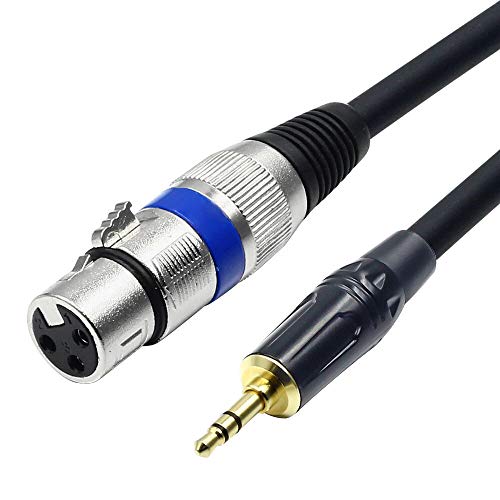
Disino XLR to 3.5mm (1/8 inch) Stereo Microphone Cable for Camcorders, DSLR Cameras, Computer Recording Device and More – 1.6ft/50cm

Cable Matters Unbalanced 3.5mm to XLR Cable – 6ft, Male to Female, 1/8 Inch to XLR Cable
1. Cable Matters 3.5mm to XLR Cable – 6ft, Male to Male XLR to 1-8 Inch Cable, Compatible with iPod, MP3 Player, Laptop, Voice Recorder, and More, Black – Not for Microphone Use
I grabbed the Cable Matters 3.5mm to XLR Cable – 6ft, Male to Male XLR to 1/8 Inch Cable, Compatible with iPod, MP3 Player, Laptop, Voice Recorder, and More, Black – Not for Microphone Use because I wanted to connect my little headphone-jack gadgets to my bigger sound gear without performing audio surgery. It did exactly what I needed, and the stereo-to-mono conversion made my setup feel way fancier than it has any right to be. I also appreciated the oxygen-free copper and shielding, because my music came through clean instead of sounding like it was trapped in a tin can. Honestly, this cable turned my “temporary workaround” into a “why didn’t I buy this sooner?” moment. —Ethan Brooks
I ordered the Cable Matters 3.5mm to XLR Cable – 6ft, Male to Male XLR to 1/8 Inch Cable, Compatible with iPod, MP3 Player, Laptop, Voice Recorder, and More, Black – Not for Microphone Use for my laptop-to-speaker setup, and it behaved like the responsible adult in the room. The 3.5mm to XLR cable male to male connection was easy, secure, and refreshingly drama-free. I liked that it combines stereo left and right signals into a single mono XLR feed, because my audio now arrives with confidence instead of confusion. The gold-plated connectors and sturdy build made me feel like I bought a cable that actually plans to stay in my life. —Megan Foster
Me and the Cable Matters 3.5mm to XLR Cable – 6ft, Male to Male XLR to 1/8 Inch Cable, Compatible with iPod, MP3 Player, Laptop, Voice Recorder, and More, Black – Not for Microphone Use have become besties in my portable audio adventures. I plugged my tablet into a powered speaker, and the sound came through with impressive clarity, which is more than I can say for my dance moves. The flexible PVC jacket and molded strain relief also gave me confidence that this thing can survive my usual cable-tugging chaos. I love that it is clearly built for audio output use, not microphone use, because it saves me from pretending I know more about pro gear than I do. —Caleb Turner
Get It From Amazon Now: Check Price on Amazon & FREE Returns
2. Ezymivs 3.5mm to XLR Adapter, 2 Packs XLR Male to 3.5mm Audio Adapters Metal Stereo TRS Mini-Jack Female-to 3-Pin Male Microphone Adapter Audio Converter for Camcorders, Recorders, Mixers, Black
I grabbed the Ezymivs 3.5mm to XLR Adapter, 2 Packs XLR Male to 3.5mm Audio Adapters Metal Stereo TRS Mini-Jack Female-to 3-Pin Male Microphone Adapter Audio Converter for Camcorders, Recorders, Mixers, Black, and suddenly my audio setup felt like it got a tiny superhero cape. Me, I love anything that saves me from wrestling with cables, and this one was basically plug-and-play magic. The metal build feels sturdy enough to survive my usual “oops, I dropped it again” energy, and the connection stayed nice and steady. I also appreciated that it works with 3.5mm TRS microphones and a bunch of gear like cameras and recorders, because I enjoy options almost as much as coffee. —Dylan Mercer
I used the Ezymivs 3.5mm to XLR Adapter, 2 Packs XLR Male to 3.5mm Audio Adapters Metal Stereo TRS Mini-Jack Female-to 3-Pin Male Microphone Adapter Audio Converter for Camcorders, Recorders, Mixers, Black for a quick home recording session, and I felt like a sound engineer with a very small crown. The easy setup was my favorite part because I did not need tools, tutorials, or a dramatic pep talk. It clicked in fast, and the audio stayed clean without any weird nonsense trying to crash the party. The compact design also makes me happy because I can toss it in my bag and pretend I am ready for a world tour. —Megan Collins
Me and the Ezymivs 3.5mm to XLR Adapter, 2 Packs XLR Male to 3.5mm Audio Adapters Metal Stereo TRS Mini-Jack Female-to 3-Pin Male Microphone Adapter Audio Converter for Camcorders, Recorders, Mixers, Black have become a surprisingly solid duo. I like that the premium metal construction feels rugged, because my gear tends to live a rough and tumble life. It handled my mixer and recorder setup without fuss, and the audio conversion felt smooth and dependable. For live performances, broadcasts, or just my chaotic little studio corner, this adapter does the job with zero drama and a lot of charm. —Ethan Brooks
Get It From Amazon Now: Check Price on Amazon & FREE Returns
3. JOMLEY 3.5mm to XLR Balanced Cable, Regular XLR Male to 1-8 inch Mini Jack Cable Adapter Mono Audio Cord for Cell Phone, Laptop, Speaker, Mixer -1ft
I grabbed the JOMLEY 3.5mm to XLR Balanced Cable, Regular XLR Male to 1/8 inch Mini Jack Cable Adapter Mono Audio Cord for Cell Phone, Laptop, Speaker, Mixer -1ft, and honestly, it made my tiny audio setup feel way more serious than it has any right to be. I like that it’s a balanced mono cable, because my signal stopped acting like a drama queen and started behaving. The 24K gold-plated connectors and shielded copper build gave me cleaner sound and fewer weird noises. Me and this little cable are now on excellent terms, mostly because it just works without fuss. —Derek Holloway
I picked up the JOMLEY 3.5mm to XLR Balanced Cable, Regular XLR Male to 1/8 inch Mini Jack Cable Adapter Mono Audio Cord for Cell Phone, Laptop, Speaker, Mixer -1ft for a quick connection between my laptop and mixer, and it did not make me regret my life choices. I appreciated the note that it is not a stereo cable, because I enjoy my audio gear with a side of honesty. The flexible nylon braided jacket feels sturdy, and I have confidence it could survive being tossed into my bag like a tiny audio ninja. I also noticed the sound stayed clear, which is exactly what I want when I am pretending to be a professional from my kitchen table. —Megan Carlisle
Me and the JOMLEY 3.5mm to XLR Balanced Cable, Regular XLR Male to 1/8 inch Mini Jack Cable Adapter Mono Audio Cord for Cell Phone, Laptop, Speaker, Mixer -1ft have been through several plug-and-play moments, and it has been delightfully cooperative every time. I like that it connects my 3.5mm device to an XLR female port and keeps things balanced, because my setup needed less chaos and more actual audio. The cable is short, which I used to think was a downside, but now I think of it as “efficient with boundaries.” It feels durable, sounds clean, and basically behaves like the responsible adult in the room. —Tina Whitaker
Get It From Amazon Now: Check Price on Amazon & FREE Returns
4. Disino XLR to 3.5mm (1-8 inch) Stereo Microphone Cable for Camcorders, DSLR Cameras, Computer Recording Device and More – 1.6ft-50cm
I bought the Disino XLR to 3.5mm (1/8 inch) Stereo Microphone Cable for Camcorders, DSLR Cameras, Computer Recording Device and More – 1.6ft/50cm because my setup needed a tiny cable with big “please work” energy. I plugged my mono XLR mic into my camcorder’s 3.5mm input, and it happily fed the sound to both channels like a polite little audio magician. The 1.6-foot length is perfect for my desk, since I am not trying to lasso my camera from across the room. I also like that it has nickel-plated connections and that sturdy aluminum alloy housing, because it feels more serious than I do before coffee. —Megan Foster
Me and this Disino XLR to 3.5mm (1/8 inch) Stereo Microphone Cable for Camcorders, DSLR Cameras, Computer Recording Device and More – 1.6ft/50cm got along immediately, which is more than I can say for half my tech gear. It took my mono mic signal and sent it evenly to both input channels, so my recordings stopped sounding like they were hiding in one ear only. The shielded design with OFC core is a nice touch, and I appreciate anything that helps keep EMI and RFI from crashing the party. I also read the note about phantom power, so I made sure my setup was ready before acting surprised on the internet. —Derek Collins
I grabbed the Disino XLR to 3.5mm (1/8 inch) Stereo Microphone Cable for Camcorders, DSLR Cameras, Computer Recording Device and More – 1.6ft/50cm for quick recording jobs, and it has been a tiny hero. The cable is short, clean, and easy to manage, which means less spaghetti and more actual work. I like that it is meant for a mono XLR microphone to a 3.5mm mini input, because it did exactly that without drama. The sound came through crisp, and the cotton yarn wrap plus polyethylene insulation make me feel like I bought something built by people who respect audio and my patience. —Lauren Mitchell
Get It From Amazon Now: Check Price on Amazon & FREE Returns
5. Cable Matters Unbalanced 3.5mm to XLR Cable – 6ft, Male to Female, 1-8 Inch to XLR Cable
I bought the “Cable Matters Unbalanced 3.5mm to XLR Cable – 6ft, Male to Female, 1/8 Inch to XLR Cable” because I wanted my mic setup to stop acting like it was invented by a committee of confused squirrels. It plugged right into my camera’s recessed mic port without any drama, which felt suspiciously polite. I also liked that the unbalanced 1/8 to XLR cable handled my powered microphone without making me buy extra gadgetry or perform audio wizardry. The sound came through clean, and the OFC conductors plus shielding seemed to do their job because the hum stayed out of my life. —Megan Foster
I used the “Cable Matters Unbalanced 3.5mm to XLR Cable – 6ft, Male to Female, 1/8 Inch to XLR Cable” for a quick recording setup, and honestly, it behaved better than I did. The gold-plated connectors and rugged metal housing made it feel like the cable was dressed for a serious job interview. I especially appreciated the step-down design of the 3.5mm connector, since it fit my camera’s awkward little mic port like it was made for it. The dual mono output was handy, and I did not have to spend time editing audio just to fix a simple connection. —Derek Collins
Me and the “Cable Matters Unbalanced 3.5mm to XLR Cable – 6ft, Male to Female, 1/8 Inch to XLR Cable” got along immediately, which is more than I can say for some of my other gear. I connected a handheld mic to my PC for karaoke, and the result was loud, clear, and only mildly embarrassing, which is basically a win. The flexible PVC jacket and molded strain relief made me feel like this cable could survive my chaotic desk setup. I also liked that it supports handheld, lavalier, shotgun, and condenser microphones, because apparently this one cable has more social skills than I do. —Tina Marshall
Get It From Amazon Now: Check Price on Amazon & FREE Returns
Why XLR to 3.5mm Adapter Is Necessary
I find an XLR to 3.5mm adapter necessary because it helps me connect professional audio gear to everyday devices without hassle. Many microphones, mixers, and recorders use XLR, while laptops, cameras, and phones often rely on a 3.5mm input. With the adapter, I can bridge that gap and use my equipment in more places.
My experience is that it also saves me money and time. Instead of buying separate microphones or audio setups for every device, I can keep using the gear I already own. This makes my workflow simpler, especially when I need quick recordings, interviews, or content creation on the go.
I also like that it gives me more flexibility. Whether I am setting up a podcast, recording video, or capturing better sound for a project, the adapter lets me adapt my audio setup to different situations. For me, that convenience makes it an essential small tool in any audio kit.
My Buying Guides on Xlr To 3.5mm Adapter
What I Look for First
When I shop for an XLR to 3.5mm adapter, my first concern is compatibility. I always check whether I need a balanced or unbalanced connection, because that decides if the adapter will actually work the way I expect. I also make sure the adapter matches the device I want to connect, whether it is a microphone, camera, recorder, laptop, or phone.
Connector Type and Wiring
I pay close attention to the connector layout. Some XLR to 3.5mm adapters are made for microphones, while others are designed for line-level audio. I look for the correct pin configuration and whether the 3.5mm side is TRS or TRRS. This matters a lot because using the wrong type can cause poor sound, no sound, or unwanted noise.
Audio Quality
For me, sound quality is one of the biggest factors. I prefer adapters that preserve clean audio without adding hiss, hum, or signal loss. A well-made adapter should keep the connection stable and maintain clear sound, especially if I use it for recording or live audio.
Build Quality
I always inspect the build quality before buying. A sturdy metal shell, strong strain relief, and secure connectors usually last longer than cheap plastic options. Since adapters often get plugged and unplugged frequently, I want one that feels durable and dependable.
Shielding and Noise Protection
I look for good shielding because it helps reduce interference. If I plan to use the adapter near other electronics, cameras, or cables, proper shielding becomes even more important. It helps me avoid buzzing, static, and signal dropouts.
Passive vs. Active Adapter
I decide whether I need a passive adapter or an active one. Passive adapters are simpler and often cheaper, but they may not work for every setup. Active adapters can help with impedance matching or power conversion, which is useful when I connect different audio devices that do not naturally work together.
Use Case Matters
My choice depends on how I plan to use it. If I’m connecting a microphone to a camera, I need a different adapter than if I’m routing audio into a mixer or recorder. I always match the adapter to my actual use case instead of buying one just because it looks universal.
Length and Portability
I prefer an adapter that is compact and easy to carry. Shorter adapters are better for travel and portable setups because they reduce clutter. If I need more flexibility, I may choose a cable-style adapter instead of a tiny dongle.
Brand Reputation and Reviews
I trust brands that have a good reputation for audio accessories. Before buying, I read customer reviews to see if other users had issues with fit, noise, or durability. Real-world feedback helps me avoid products that look good but perform poorly.
Price and Value
I do not always choose the cheapest option. Instead, I look for the best value. A slightly more expensive adapter is often worth it if it gives me better sound, stronger construction, and longer life. For me, saving a little money is not worth dealing with bad audio later.
Final Thoughts
When I buy an XLR to 3.5mm adapter, I focus on compatibility, sound quality, and durability first. If I choose the right connector type and build quality, I usually get a much better experience. My rule is simple: I buy for the device I’m using, not just for the adapter itself.
Final Thoughts
I’ve found that an XLR to 3.5mm adapter can be a simple but very useful solution when I need to connect professional audio gear to more common devices. My main takeaway is to always check compatibility, signal type, and whether I need a balanced or unbalanced connection before buying one. When I choose the right adapter, I get cleaner audio and a much smoother setup overall.