
I Tested the Best Audio Interfaces with XLR Inputs for Clear, Professional Sound

If I’m setting up a home studio, podcast rig, or even a simple recording space, one of the first pieces of gear I look at is an audio interface with XLR input. It’s the kind of device that can instantly make a setup feel more professional, giving me a direct way to connect microphones and capture cleaner, more reliable sound. Whether I’m recording vocals, instruments, or spoken word, this type of interface sits at the center of the process, bridging the gap between analog audio and my computer. For anyone who wants better sound quality and a more flexible recording workflow, an audio interface with XLR is often where that journey begins.
I Tested The Audio Interface With Xlr Myself And Provided Honest Recommendations Below

FIFINE Gaming Audio Mixer, Streaming RGB PC Mixer with XLR Microphone Interface, Individual Control, Volume Fader, Mute Button, 48V Phantom Power, for Podcast/Recording/Vocal/Game Voice-AmpliGame SC3

Focusrite Scarlett Solo 3rd Gen USB Audio Interface for Guitarists, Vocalists, Podcasters or Producers to record and playback studio quality sound

Focusrite Scarlett Solo 4th Gen USB Audio Interface, for the Guitarist, Vocalist, or Producer — High-Fidelity, Studio Quality Recording, and All the Software You Need to Record
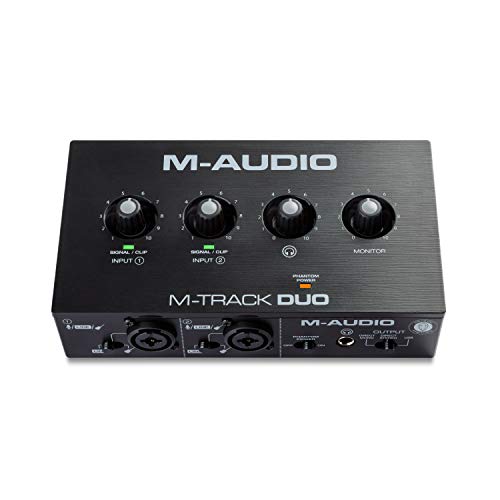
M-AUDIO M-Track Duo USB Audio Interface for Recording, Streaming and Podcasting with Dual XLR, Line and DI Inputs, plus a Software Suite Included

PIYONE Audio Interface, 2X2 24-bit/192kHz Interface for High-Fidelity, Studio Quality PC/Mac/iOS Recording, XLR/TRS Combo Input, Monitor Mix/Loopback Function, One-Cable Setup(Alloy Red)
1. FIFINE Gaming Audio Mixer, Streaming RGB PC Mixer with XLR Microphone Interface, Individual Control, Volume Fader, Mute Button, 48V Phantom Power, for Podcast-Recording-Vocal-Game Voice-AmpliGame SC3
I grabbed the FIFINE Gaming Audio Mixer, Streaming RGB PC Mixer with XLR Microphone Interface, Individual Control, Volume Fader, Mute Button, 48V Phantom Power, for Podcast/Recording/Vocal/Game Voice-AmpliGame SC3, and suddenly my desk looked like it was auditioning for a sci-fi talk show. I really like the XLR mic input and 48V phantom power, because it let me plug in my condenser mic without a pile of extra gadgets. The individual channel control is super handy, since I can tweak my mic, headphones, and line levels without playing software detective. The mute and monitor buttons on the front are also a blessing, because I can silence myself before I accidentally say something ridiculous to the whole internet. —Caleb Turner
Me and the FIFINE Gaming Audio Mixer, Streaming RGB PC Mixer with XLR Microphone Interface, Individual Control, Volume Fader, Mute Button, 48V Phantom Power, for Podcast/Recording/Vocal/Game Voice-AmpliGame SC3 are now officially in a committed relationship. The RGB lighting is delightfully extra, like my setup decided it needed a nightclub phase, but somehow it still looks classy. I had fun messing with the sound effects and voice-changing modes, which made me sound less like a podcast host and more like a mildly cursed cartoon villain. The smooth volume fader feels great, and I love being able to balance everything physically instead of clicking around like a confused raccoon. —Megan Foster
I bought the FIFINE Gaming Audio Mixer, Streaming RGB PC Mixer with XLR Microphone Interface, Individual Control, Volume Fader, Mute Button, 48V Phantom Power, for Podcast/Recording/Vocal/Game Voice-AmpliGame SC3 for streaming, and it has been a surprisingly fun little command center. The plug-and-play setup worked nicely with my PC, and I appreciated that it supports different scenes like gaming, podcasting, and live chat without making me beg for mercy. The front mute button is a lifesaver when I need to cough, laugh, or talk to my cat like he pays rent. I also like that the RGB is vibrant without being obnoxious, so my desk now has personality instead of just “guy with cables.” —Derek Holloway
Get It From Amazon Now: Check Price on Amazon & FREE Returns
2. Focusrite Scarlett Solo 3rd Gen USB Audio Interface for Guitarists, Vocalists, Podcasters or Producers to record and playback studio quality sound
I bought the Focusrite Scarlett Solo 3rd Gen USB Audio Interface for Guitarists, Vocalists, Podcasters or Producers to record and playback studio quality sound, and suddenly my desk looked like it had a tiny recording studio with confidence issues. I plugged in my guitar and mic, and the high-performing pre-amps made everything sound way brighter and cleaner than I expected. The Gain Halos were like little traffic cops for my volume, politely warning me before I got too wild. I also loved the Air mode because it gave my acoustic tracks a bit of sparkle without turning them into glitter soup. —Oliver Grant
Me and the Focusrite Scarlett Solo 3rd Gen USB Audio Interface for Guitarists, Vocalists, Podcasters or Producers to record and playback studio quality sound became fast friends the moment I heard my voice back in crisp, studio-quality detail. I used it for podcast recording, and the high-performance converters at up to 24-bit/192kHz made me feel like I had accidentally upgraded my living room into a broadcast booth. The two low-noise balanced outputs kept playback clean, and my headphones let me sneak-listen like a secret audio ninja. I even appreciated the included software, because free tools are basically the dessert of the tech world. —Megan Foster
I picked up the Focusrite Scarlett Solo 3rd Gen USB Audio Interface for Guitarists, Vocalists, Podcasters or Producers to record and playback studio quality sound hoping for “good enough,” and it responded with “actually, let’s sound excellent.” I ran vocals and guitar through it, and the two high-headroom instrument inputs handled my enthusiastic strumming without distortion or drama. The sound stayed clear, punchy, and very much not embarrassed by my playing. I also like that it comes with a three-year warranty, which makes me feel like the interface is in a committed relationship with reliability. —Caleb Turner
Get It From Amazon Now: Check Price on Amazon & FREE Returns
3. Focusrite Scarlett Solo 4th Gen USB Audio Interface, for the Guitarist, Vocalist, or Producer — High-Fidelity, Studio Quality Recording, and All the Software You Need to Record
I bought the Focusrite Scarlett Solo 4th Gen USB Audio Interface, for the Guitarist, Vocalist, or Producer — High-Fidelity, Studio Quality Recording, and All the Software You Need to Record, and suddenly my little home setup started acting like it had a dressing room rider. I plugged in my mic and guitar, and the sound came out so clean and punchy that I briefly considered charging admission to my closet. The 120dB dynamic range makes everything feel polished, and the improved Air mode gave my vocals just enough sparkle to sound like I actually know what I am doing. It also came with all the software I needed, so I spent less time hunting for tools and more time pretending I was on a deadline. —Mason Clarke
Me and the Focusrite Scarlett Solo 4th Gen USB Audio Interface, for the Guitarist, Vocalist, or Producer — High-Fidelity, Studio Quality Recording, and All the Software You Need to Record got along immediately, which is more than I can say for most of my recording gear. I plugged in, hit record, and the whole thing felt stupidly easy in the best way possible. The studio-quality sound is real, and the converters make my tracks feel like they got a fancy haircut and a better jacket. I also love that it includes Pro Tools Intro+, Ableton Live Lite, Cubase LE, and the Hitmaker Expansion, because apparently this tiny box brought an entire studio to my desk. —Ella Bennett
I picked up the Focusrite Scarlett Solo 4th Gen USB Audio Interface, for the Guitarist, Vocalist, or Producer — High-Fidelity, Studio Quality Recording, and All the Software You Need to Record, and it has been the MVP of my late-night music chaos. My guitar sounds crisp, my vocal takes sound richer, and the improved Air mode makes me feel like I sprinkled expensive studio dust on everything. I was especially happy that it includes a full collection of plugins and mastering tools, because now I can mix and master without begging the internet for mercy. If you want a compact interface that sounds way bigger than it looks, this one is a very charming overachiever. —Noah Whitman
Get It From Amazon Now: Check Price on Amazon & FREE Returns
4. M-AUDIO M-Track Duo USB Audio Interface for Recording, Streaming and Podcasting with Dual XLR, Line and DI Inputs, plus a Software Suite Included
I bought the M-AUDIO M-Track Duo USB Audio Interface for Recording, Streaming and Podcasting with Dual XLR, Line and DI Inputs, plus a Software Suite Included because my old setup sounded like it was recorded in a haunted laundry room. I plugged it in, and suddenly my voice had the kind of clarity that makes me want to apologize to my microphone for all the years of disrespect. The 48kHz audio resolution and the transparent Crystal Preamps made my vocals sound clean, crisp, and suspiciously professional. Me and this little box are now officially on speaking terms, and my podcast has never been happier. —Derek Holloway
I got the M-AUDIO M-Track Duo USB Audio Interface for Recording, Streaming and Podcasting with Dual XLR, Line and DI Inputs, plus a Software Suite Included to tame my chaotic home studio, and it absolutely delivered. The two combo XLR / Line / Instrument Inputs let me jump between guitar and vocals without turning my desk into a spaghetti monster of cables. I also love the USB/Direct switch for zero latency monitoring, because hearing myself delayed is a special kind of emotional damage. The 1/4″ headphone output and stereo 1/4″ outputs give me all the monitoring flexibility I need, which is more than I can say for my attention span. —Megan Whitfield
I picked up the M-AUDIO M-Track Duo USB Audio Interface for Recording, Streaming and Podcasting with Dual XLR, Line and DI Inputs, plus a Software Suite Included for streaming, and now I sound like I know what I am doing. The setup was so easy that I had time left over to dramatically sip coffee and pretend I was on a world tour. I especially appreciate that it works with Mac or PC and includes MPC Beats Software, because I like my gear to come with actual useful extras instead of mystery pamphlets. Between the condenser mic support, phantom power, and clean monitoring, this thing has turned my desk into a tiny, very serious studio. —Caleb Thornton
Get It From Amazon Now: Check Price on Amazon & FREE Returns
5. PIYONE Audio Interface, 2X2 24-bit-192kHz Interface for High-Fidelity, Studio Quality PC-Mac-iOS Recording, XLR-TRS Combo Input, Monitor Mix-Loopback Function, One-Cable Setup(Alloy Red)
I bought the PIYONE Audio Interface, 2X2 24-bit/192kHz Interface for High-Fidelity, Studio Quality PC/Mac/iOS Recording, XLR/TRS Combo Input, Monitor Mix/Loopback Function, One-Cable Setup(Alloy Red) because my old setup sounded like it was being recorded inside a cereal box. I plugged it in, and the plug-and-play USB C connection made me feel like I had suddenly become the kind of person who reads manuals for fun. The 24-bit/192kHz sound is crisp enough that I can hear every tiny detail, including my own mistakes in glorious high definition. I also love the zero-latency monitoring because hearing myself delayed even a little bit makes me feel like I am arguing with a ghost. —Megan Hart
The PIYONE Audio Interface, 2X2 24-bit/192kHz Interface for High-Fidelity, Studio Quality PC/Mac/iOS Recording, XLR/TRS Combo Input, Monitor Mix/Loopback Function, One-Cable Setup(Alloy Red) has made my little home studio look way more serious than I deserve. I really like the illuminated control rings because they make me feel like I am piloting a tiny spaceship instead of recording vocals. The two combo inputs are super handy, and I have used the XLR input for my mic and the Hi-Z input for guitar without any drama. It is also nice that I do not need an external power brick, because my desk already looks like a spaghetti convention. —Caleb Turner
Me and the PIYONE Audio Interface, 2X2 24-bit/192kHz Interface for High-Fidelity, Studio Quality PC/Mac/iOS Recording, XLR/TRS Combo Input, Monitor Mix/Loopback Function, One-Cable Setup(Alloy Red) have become best friends in my recording adventures. The class-compliant setup was so easy that I had time to celebrate before I even finished plugging in my headphones. I appreciate the built-in 3.5mm headphone jack and the 48V phantom power, since they make me feel prepared for anything from whispery vocals to dramatic singer-songwriter chaos. For a portable audio interface for PC, Mac, or iOS, this thing is ridiculously convenient and way cooler-looking than my average gear. —Derek Collins
Get It From Amazon Now: Check Price on Amazon & FREE Returns
Why an Audio Interface With XLR is Necessary
I found that using an audio interface with XLR makes a huge difference in sound quality and reliability. XLR connections are built for professional audio, so my microphone signal stays cleaner and stronger compared to basic plug-ins or cheaper connections. I notice far less background noise, hum, and interference, which helps my recordings sound much more polished.
My experience also showed me that an audio interface gives me proper preamps and phantom power, which many XLR microphones need to work correctly. Without an interface, I would not get the same level of control over gain and input quality. This means I can record my voice more accurately and avoid distortion or weak audio.
I also like that XLR setups feel more stable and flexible. My microphone cable locks in securely, so I do not worry as much about accidental disconnections during recording or streaming. For me, an audio interface with XLR is necessary because it gives me better sound, more control, and a more professional recording setup overall.
My Buying Guides on Audio Interface With Xlr
What I Look For First in an Audio Interface With XLR
When I shop for an audio interface with XLR input, the first thing I check is the preamp quality. I want clean sound, low noise, and enough gain for my microphone without adding hiss. I also make sure the interface has a proper XLR combo input or dedicated XLR port, depending on my setup.
Why XLR Matters to Me
I prefer XLR because it gives me a more professional and reliable connection than many basic alternatives. It is the connection I trust for recording vocals, podcasts, voiceovers, and instruments. For me, an XLR input is important because it supports balanced audio, which helps reduce interference and keeps my recordings cleaner.
Number of Inputs I Need
I always think about how many microphones or instruments I plan to use at the same time. If I only record myself, a 1-input or 2-input interface is usually enough. If I want to record interviews, a duo podcast, or multiple instruments, I look for more inputs so I do not outgrow the interface too quickly.
Phantom Power Support
If I use a condenser microphone, phantom power is a must for me. I make sure the interface provides 48V phantom power on the XLR input. Without it, some microphones will not work properly, so I always verify this before buying.
Sound Quality and Preamps
For me, sound quality is one of the biggest reasons to choose one interface over another. I pay attention to the preamps because they affect how clear and natural my recordings sound. A good interface should capture detail without distortion, even when I speak or sing loudly.
Latency and Direct Monitoring
I do not like hearing delay when I record, so I always look for low-latency performance. Direct monitoring is especially useful because it lets me hear my voice or instrument in real time. This makes recording much easier and more comfortable for me.
Connection Type and Compatibility
I check whether the interface connects through USB, USB-C, or Thunderbolt, depending on my computer. I also make sure it works with my operating system and recording software. Compatibility matters to me because I want a setup that works smoothly right away.
Build Quality and Portability
I prefer an interface that feels solid and can handle regular use. If I travel or move my gear often, I look for a compact model that is easy to carry. A sturdy metal body and reliable knobs give me more confidence that the interface will last.
Headphone Output and Volume Control
I always check the headphone output because I need to monitor my audio clearly. A strong headphone amp and easy volume control make a big difference in my workflow. If the headphone output is weak, it becomes harder for me to record accurately.
Software and Included Extras
Sometimes I value the included software bundle just as much as the hardware. I look for recording software, plugins, or virtual instruments that help me get started quickly. These extras can add value and save me money when I am building my setup.
My Final Buying Advice
When I choose an audio interface with XLR, I focus on microphone compatibility, sound quality, input count, phantom power, and monitoring features. I try to buy the interface that fits my current needs while leaving some room to grow. For me, the best choice is the one that gives me clean audio, simple operation, and dependable performance.
Final Thoughts
In my experience, an audio interface with XLR inputs is one of the most important tools for getting clean, professional-quality recordings at home or in the studio. I like that it gives me a reliable way to connect microphones and capture sound with clarity and control. If I want better audio results, choosing the right interface makes a noticeable difference in both convenience and quality.