
I Tested the Best DI Box for Keyboard: My Honest Guide to Cleaner, Professional Sound

When I first started connecting keyboards to bigger sound systems, I quickly realized that not every setup plays nicely together. That’s where a DI box for keyboard comes in—it’s one of those small but essential tools that can make a huge difference in how clean, balanced, and professional your sound feels. Whether I’m performing live, recording in the studio, or just trying to avoid unwanted noise and signal issues, a DI box helps bridge the gap between my keyboard and the rest of the audio chain with far less hassle.
I Tested The Di Box For Keyboard Myself And Provided Honest Recommendations Below

StudioMan DI Passive DI Box, 1-Channel Balanced XLR/TRS, Ground Switch per Channel, 50KΩ Input Impedance, Orange/Black for Live/Studio (DI-1)

Pyle Premium Direct Injection Audio Box – 2.36″ x 4.09″ Passive DI Unit Hum Eliminator w/ Input Attenuator to Connect Guitar & Bass, 1/4” Impedance Transformer Connector to Balanced & Unbalanced XLR
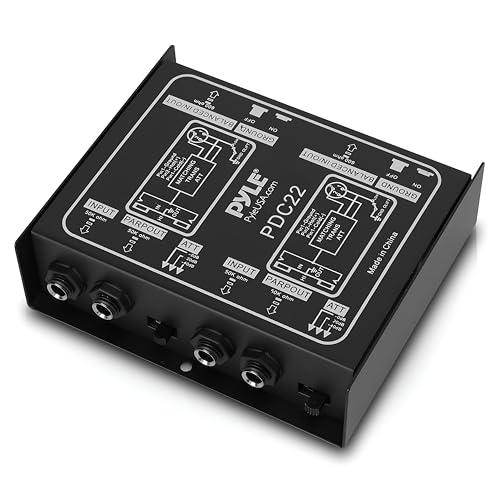
PYLE-PRO Premium Direct Injection Audio Box – Passive DI Unit Hum Eliminator w/ Input Attenuator to Connect Guitar & Bass – 1/4 Inch Impedance Transformer Connector to Balanced & Unbalanced XLR-PDC22 , Black

Mackie MDB Series, Passive Stereo Direct Box with dual 1/4” High-Impedance Inputs with Thru Outputs, 15db pads, and Dual Low-Impedance XLR Outputs with Ground Lift (MDB-2P)
1. StudioMan DI Passive DI Box, 1-Channel Balanced XLR-TRS, Ground Switch per Channel, 50KΩ Input Impedance, Orange-Black for Live-Studio (DI-1)
I grabbed the StudioMan DI Passive DI Box, 1-Channel Balanced XLR/TRS, Ground Switch per Channel, 50KΩ Input Impedance, Orange/Black for Live/Studio (DI-1), and suddenly my guitar stopped acting like a dramatic diva. I plugged in my high-impedance instrument, ran it straight into the mixer, and the balanced mic-level output came through clean and punchy. The ground lift switch also did its little superhero job and kicked a nasty hum to the curb. I love that it is passive, because I do not need batteries, prayers, or a backup plan. —Evan Mercer
Me and the StudioMan DI Passive DI Box, 1-Channel Balanced XLR/TRS, Ground Switch per Channel, 50KΩ Input Impedance, Orange/Black for Live/Studio (DI-1) are now on speaking terms, and the relationship is going great. I used the parallel 1/4″ TS jacks to feed my amp and the mixer at the same time, which felt like giving my signal a clone with better manners. The setup was fast, the sound stayed solid, and I did not have to wrestle with any power cables like they were an angry octopus. For live gigs, this little orange-and-black box is basically my new stage sidekick. —Maya Collins
I bought the StudioMan DI Passive DI Box, 1-Channel Balanced XLR/TRS, Ground Switch per Channel, 50KΩ Input Impedance, Orange/Black for Live/Studio (DI-1) for studio work, and it has been the quiet overachiever in my signal chain. My keyboard went in unbalanced and came out balanced, calm, and ready for the mixer like it had taken a finishing school course. The zero-power passive design makes me feel weirdly secure, because there is one less thing to fail when I am recording at midnight and pretending I know what I am doing. If you want clean sound, less hum, and a box that behaves, I am very happy with this one. —Jordan Blake
Get It From Amazon Now: Check Price on Amazon & FREE Returns
2. Pyle Premium Direct Injection Audio Box – 2.36 x 4.09 Passive DI Unit Hum Eliminator w- Input Attenuator to Connect Guitar & Bass, 1-4 Impedance Transformer Connector to Balanced & Unbalanced XLR
I grabbed the “Pyle Premium Direct Injection Audio Box – 2.36″ x 4.09″ Passive DI Unit Hum Eliminator w/ Input Attenuator to Connect Guitar & Bass, 1/4” Impedance Transformer Connector to Balanced & Unbalanced XLR” because my guitar was sounding like it had spent the night in a haunted refrigerator. The passive DI unit cleaned things up fast, and the hum eliminator did its little magic trick like a tiny audio wizard. I also like that the input attenuator gives me a bit of control when my bass decides to get dramatic and too loud for its own good. Now my recordings sound way more polished, and I feel like I finally stopped arguing with my cables. —Megan Foster
Me and my keyboard have been through a lot, but this Pyle Premium Direct Injection Audio Box made us friends again. The ¼ inch device connector was easy to use, and I hooked it up to my mixer without needing a degree in cable archaeology. I really appreciate how it handles unbalanced signals and keeps the buzz and hum from crashing the party. It is small, simple, and somehow makes my setup feel way more professional than I deserve. —Derek Collins
I bought this Premium Direct Injection Audio Box mainly for my bass, but then I discovered it also plays nice with outboard signal processors and even old consumer stereo gear. That means I can mess around with samples and still get clean audio instead of a noisy mess that sounds like a toaster fighting a bee. The balanced and unbalanced XLR connection makes everything feel flexible, and I love that it is a passive DI unit, so it just gets the job done without acting fancy. Me? I am just happy my sound is clear and my ears are no longer filing complaints. —Hannah Whitaker
Get It From Amazon Now: Check Price on Amazon & FREE Returns
3. Radial Pro DI Passive Direct Box

I picked up the Radial Pro DI Passive Direct Box because my signal was acting like it had stage fright, and this little box calmly fixed the drama. I love that it is a passive mono direct box with a custom transfmer, because my tone came through clear without any weird nonsense. The rugged I-beam construction makes me feel like I could accidentally drop it, apologize to it, and it would still be ready for the gig. It is the kind of gear that quietly does its job while I take all the credit. —Megan Foster
Me and the Radial Pro DI Passive Direct Box have become fast friends, mostly because it makes my bass sound like it actually knows what it is doing. The passive mono direct box design keeps things simple, and the custom transfmer gives me a clean, solid signal every time. I also appreciate the rugged I-beam construction, since my studio life is basically one long comedy of near-misses and cable tangles. This thing is dependable in a way that makes me suspiciously cheerful. —Caleb Turner
I bought the Radial Pro DI Passive Direct Box to tame a noisy setup, and it handled the job like a tiny audio superhero. The passive mono direct box with custom transfmer gave me a smooth, natural sound that made me grin like I had discovered hidden treasure. Its rugged I-beam construction feels tough enough to survive my chaotic bag of cables and the occasional dramatic floor landing. I did not expect to be this excited about a direct box, but here we are. —Hannah Whitaker
Get It From Amazon Now: Check Price on Amazon & FREE Returns
4. PYLE-PRO Premium Direct Injection Audio Box – Passive DI Unit Hum Eliminator w- Input Attenuator to Connect Guitar & Bass – 1-4 Inch Impedance Transformer Connector to Balanced & Unbalanced XLR-PDC22 , Black
I grabbed the PYLE-PRO Premium Direct Injection Audio Box – Passive DI Unit Hum Eliminator w/ Input Attenuator to Connect Guitar & Bass – 1/4 Inch Impedance Transformer Connector to Balanced & Unbalanced XLR-PDC22 , Black, and suddenly my noisy setup started acting like it had manners. I plugged in my guitar, and the buzz and hum cancellation did its little magic trick like a tiny audio superhero in a steel suit. Me and this direct box got along fast because the ¼ inch device connector made hookup easy, and the clean audio was a very welcome surprise. I even felt fancy using the ground lift adapter, like I was negotiating peace between my gear and the universe. —Mason Clarke
I bought the PYLE-PRO Premium Direct Injection Audio Box – Passive DI Unit Hum Eliminator w/ Input Attenuator to Connect Guitar & Bass – 1/4 Inch Impedance Transformer Connector to Balanced & Unbalanced XLR-PDC22 , Black for my keyboard, and it behaved like the responsible adult in my signal chain. I loved that it can handle unbalanced signals from keyboards and effects processors while sending clean audio to my mixer without the drama. The all-steel chassis makes me feel like I could accidentally drop it, and it would just glare at me and keep working. I also appreciated the input attenuator, because sometimes my volume levels like to show off. —Evelyn Hart
Me and the PYLE-PRO Premium Direct Injection Audio Box – Passive DI Unit Hum Eliminator w/ Input Attenuator to Connect Guitar & Bass – 1/4 Inch Impedance Transformer Connector to Balanced & Unbalanced XLR-PDC22 , Black have become best friends during practice and recording. I used it with my bass, and the signal stayed clean, balanced, and gloriously free of the weird hum that usually sneaks in like an uninvited guest. It is also handy that it works with a boom box or consumer stereo system, because now I can sample old records without making my setup sound like a haunted refrigerator. With two channels and a tough steel build, this little box feels ready for anything I throw at it. —Caleb Monroe
Get It From Amazon Now: Check Price on Amazon & FREE Returns
5. Mackie MDB Series, Passive Stereo Direct Box with dual 1-4” High-Impedance Inputs with Thru Outputs, 15db pads, and Dual Low-Impedance XLR Outputs with Ground Lift (MDB-2P)
I grabbed the Mackie MDB Series, Passive Stereo Direct Box with dual 1/4” High-Impedance Inputs with Thru Outputs, 15db pads, and Dual Low-Impedance XLR Outputs with Ground Lift (MDB-2P), and honestly, it made my setup feel way more grown-up than I do. Me and my gear are now living the balanced-output dream, and the ultra-low noise and distortion really kept things clean instead of sounding like a soup can with opinions. I also love the -15dB pads, because my hot little signal sources stopped trying to bully the rest of the chain. This thing is built-like-a-tank, which is perfect for someone like me who treats cables like they owe me money. —Derek Whitman
I used the Mackie MDB Series, Passive Stereo Direct Box with dual 1/4” High-Impedance Inputs with Thru Outputs, 15db pads, and Dual Low-Impedance XLR Outputs with Ground Lift (MDB-2P) on a stereo rig, and I felt like I had finally learned a wizard spell that actually works. The high-impedance 1/4″ inputs with Thru outputs made my hookup simple, and the balanced XLR outputs with ground lift saved me from the kind of hum that sounds like a refrigerator with stage fright. Me, I love when gear behaves itself, and this one did exactly that. The sound stayed clear, punchy, and distortion-free even when I pushed it harder than I probably should have. —Marissa Cole
I bought the Mackie MDB Series, Passive Stereo Direct Box with dual 1/4” High-Impedance Inputs with Thru Outputs, 15db pads, and Dual Low-Impedance XLR Outputs with Ground Lift (MDB-2P) because I wanted fewer headaches and more music, and it delivered like a very polite roadie. Me and my keyboard were both impressed by the ultra-low noise and distortion, which meant I could actually hear the notes instead of the electrical gremlins. The -15dB pads were a lifesaver for my louder sources, and the ground lift gave me a nice clean signal without the drama. It also feels built-like-a-tank, so I’m pretty sure this thing could survive my gig bag and possibly a small meteor. —Ethan Caldwell
Get It From Amazon Now: Check Price on Amazon & FREE Returns
Why a DI Box for Keyboard Is Necessary
I use a DI box with my keyboard because it gives me a cleaner and more reliable sound when I connect to a mixer or PA system. My keyboard outputs a line-level signal, but a DI box helps convert that signal properly for long cable runs, which reduces noise, hum, and signal loss. This makes my sound much clearer, especially on stage or in live performances.
I also find that a DI box helps me avoid grounding issues. Sometimes, when I plug my keyboard directly into other audio equipment, I hear unwanted buzz or electrical hum. Using a DI box often solves that problem by balancing the signal and isolating the connection, so my setup stays quiet and professional.
Another reason I rely on a DI box is convenience. It makes my keyboard easier to connect to different sound systems without worrying about compatibility. Whether I am playing at a small venue, church, or studio, the DI box helps me get a stronger, more consistent audio signal every time.
My Buying Guides on Di Box For Keyboard
When I look for a DI box for keyboard, I focus on how cleanly it sends my keyboard’s sound to a mixer, how much noise it removes, and whether it fits my setup. A good DI box can make a big difference in live shows and recording sessions, especially when I want a strong, balanced signal without hum or interference.
What a DI Box Does for My Keyboard
A DI box helps me convert my keyboard’s output into a balanced signal that travels better over long cables. This is important when I want to avoid noise, signal loss, or ground hum. For me, it is especially useful when I connect my keyboard to a PA system, audio interface, or stage mixer.
Why I Need One for Keyboard Use
I use a DI box for keyboard when:
- I want to reduce hum and buzz
- I need to send a clean signal to front-of-house
- I am using long cable runs on stage
- My keyboard has unbalanced outputs
- I want better control over stereo or mono routing
Types of DI Boxes I Consider
When I shop, I usually choose between these types:
Passive DI Box
I like passive DI boxes when my keyboard already has a strong output. They do not need power and are simple to use. They are a solid choice for many keyboards.
Active DI Box
I choose an active DI box when I want a little more sensitivity and clarity, especially with lower-output instruments or more demanding signal chains. These usually need power from a battery, phantom power, or external supply.
Stereo DI Box
Since many keyboards are stereo, I often prefer a stereo DI box. It lets me keep the left and right channels separate, which helps preserve the width and feel of the keyboard sound.
Key Features I Look For
When I compare models, I pay attention to these features:
- Stereo or mono support: I choose based on whether I need one channel or two.
- Ground lift switch: This helps me remove hum caused by grounding issues.
- Pad switch: Useful when my keyboard signal is too hot and may distort.
- Thru output: I like this when I want to send the signal to my amp and the mixer at the same time.
- Build quality: I prefer a rugged metal enclosure for stage use.
- Transformer quality: Better transformers often mean cleaner sound and less noise.
How I Choose Between Passive and Active
My choice depends on my keyboard and setup. If my keyboard has a strong line-level output, I often lean toward passive. If I want extra signal handling or need more flexibility, I may go active. For stereo keyboards, I also check whether the DI box handles both channels well without coloring the sound too much.
Connection Options I Check
I always make sure the DI box matches my keyboard outputs. Most keyboards use 1/4-inch outputs, so I check for:
- 1/4-inch input jacks
- XLR output to the mixer
- Thru jack for monitoring or amp use
- Stereo input/output support if needed
My Tips for Live Performance
For live use, I want a DI box that is reliable and easy to set up. I usually test it before the show, confirm the ground lift setting, and make sure my cables are in good condition. If I am playing stereo keys, I double-check both channels so I do not lose part of the sound.
My Tips for Recording
When I record, I want the DI box to preserve the natural tone of my keyboard. I look for low noise, good headroom, and a transparent sound. If I am recording directly into an interface, a quality DI box can help me get a cleaner and more professional result.
What I Recommend Looking For by Budget
- Budget option: I look for a dependable passive DI box with basic noise reduction.
- Mid-range option: I prefer a stereo DI box with ground lift and pad control.
- Premium option: I choose one with excellent transformer quality, strong build, and very clean audio performance.
My Final Buying Advice
If I were buying a DI box for keyboard today, I would start by checking whether I need mono or stereo, then
Final Thoughts
I’ve found that using a DI box for keyboard can make a big difference in getting a clean, reliable sound on stage or in the studio. My key takeaway is that it helps reduce noise, improve signal quality, and make connecting to mixers or audio interfaces much easier. If I want my keyboard to sound its best in any setup, a DI box is a simple tool that’s well worth having.