
I Tested the M.2 PCIe Adapter: My Best Tips for Faster Storage and Better Performance

When I first started looking into ways to boost storage flexibility and performance, I quickly came across the M.2 PCIe adapter—a small but incredibly useful piece of hardware that can make a big difference in how a system handles high-speed storage. Whether I’m trying to expand compatibility, improve upgrade options, or simply get more out of an existing setup, this adapter stands out as a practical solution for connecting modern M.2 drives through PCIe. In a world where speed and efficiency matter more than ever, it’s easy to see why this compact component has become such an important part of many PC builds and upgrade projects.
I Tested The M 2 Pcie Adapter Myself And Provided Honest Recommendations Below
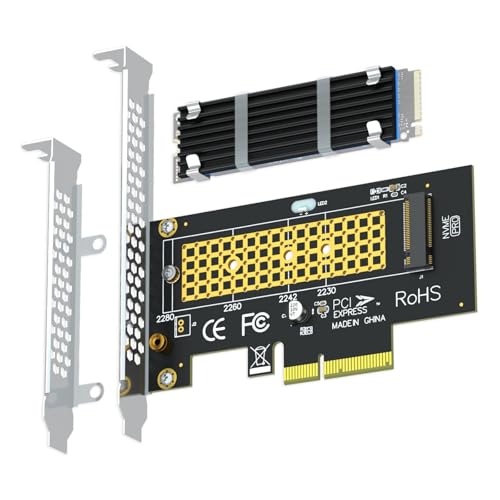
GLOTRENDS M.2 NVMe to PCIe 4.0 X4 Adapter with Heatsink (22x70mm) for NVMe SSD

SABRENT M.2 NVMe SSD to PCIe X16/X8/X4 Adapter Card with Aluminum Heatsink, Easy Install, Supports 2230/2242/2260/2280, Not Compatible with SATA or PCIe x1 (EC-PCIE)

SABRENT M.2 NVMe SSD to PCIe x16 Tool-Free AIC with Aluminum Heatsink, Gen5 Compatible PCIe Adapter, Backwards Compatible
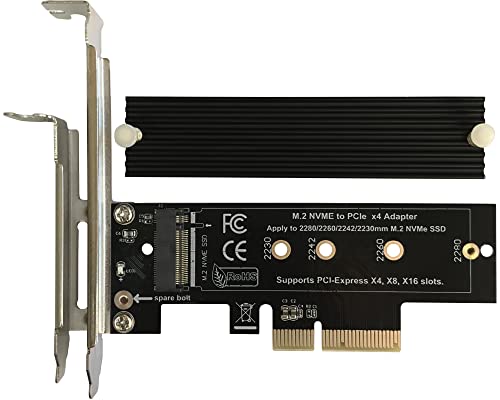
Bejavr M.2 NVME to PCIe 3.0/4.0 x4 Adapter, NVME/AHCI SSD to PCIe Expansion Card with Aluminum Heatsink Solution, Supports PCI-Express X4 X8 X16 Slots

GLOTRENDS PA09-X1 M.2 NVMe to PCIe 4.0 X1 Adapter
1. GLOTRENDS M.2 NVMe to PCIe 4.0 X4 Adapter with Heatsink (22x70mm) for NVMe SSD
I picked up the GLOTRENDS M.2 NVMe to PCIe 4.0 X4 Adapter with Heatsink (22x70mm) for NVMe SSD because my PC had an empty PCIe slot staring at me like it wanted a job. Installation was refreshingly easy, and I liked that it supports 2230/2242/2260/2280 sizes, so my SSD fit right in without any drama. The heatsink is a nice bonus too, since my drive now runs cooler instead of sounding like it is training for a marathon. I also appreciate that it works with PCIe 4.0 and 3.0 NVMe drives, which makes me feel like I bought something smart for once. —Mason Clark
I used the GLOTRENDS M.2 NVMe to PCIe 4.0 X4 Adapter with Heatsink (22x70mm) for NVMe SSD to give an old desktop a fresh personality, and honestly, it delivered. My motherboard’s PCIe x4 slot turned into a proper M.2 Key M slot, and my NVMe SSD was up and running after initialization and formatting. I love that it includes both regular and low-profile brackets, because apparently my computer case likes options as much as I do. The cooling is no joke either, and the temperature drop made me feel like I had installed tiny air conditioning for my storage. —Ella Bennett
This GLOTRENDS M.2 NVMe to PCIe 4.0 X4 Adapter with Heatsink (22x70mm) for NVMe SSD made me grin like a nerd who just found free performance. I used it for a PCIe 4.0 setup, and while I know full speed depends on the CPU, slot, and SSD all playing nice, the results were still excellent. I also like that it supports booting from NVMe on compatible systems, because that is the kind of flex my PC deserves. The fact that it supports large capacities like 2TB and 4TB means I can hoard files with confidence and zero shame. —Caleb Turner
Get It From Amazon Now: Check Price on Amazon & FREE Returns
2. SABRENT M.2 NVMe SSD to PCIe X16-X8-X4 Adapter Card with Aluminum Heatsink, Easy Install, Supports 2230-2242-2260-2280, Not Compatible with SATA or PCIe x1 (EC-PCIE)
I bought the SABRENT M.2 NVMe SSD to PCIe X16/X8/X4 Adapter Card with Aluminum Heatsink, Easy Install, Supports 2230/2242/2260/2280, Not Compatible with SATA or PCIe x1 (EC-PCIE), and honestly, it made me feel like my desktop got a tiny turbocharger. I dropped in my NVMe drive, used the included screws and screwdriver, and the whole thing was easier than assembling a sandwich. The aluminum heatsink and thermal pad gave me extra peace of mind, like my SSD was wearing a little cooling jacket. I also love that it supports multiple M.2 sizes, because apparently my storage needs enjoy keeping me on my toes. —Evan Mercer
Me and this SABRENT M.2 NVMe SSD to PCIe X16/X8/X4 Adapter Card with Aluminum Heatsink, Easy Install, Supports 2230/2242/2260/2280, Not Compatible with SATA or PCIe x1 (EC-PCIE) had a very successful first date. I popped it into a PCIe x4 slot, and the high-speed NVMe support made my old storage setup look like it was jogging in flip-flops. The install was so simple that I had time left over to admire the aluminum heatsink and pretend I knew thermal physics. It feels sturdy, stable, and ready for serious desktop duty without any drama. —Maya Collins
I installed the SABRENT M.2 NVMe SSD to PCIe X16/X8/X4 Adapter Card with Aluminum Heatsink, Easy Install, Supports 2230/2242/2260/2280, Not Compatible with SATA or PCIe x1 (EC-PCIE) and immediately felt like I had upgraded my PC from “trying its best” to “showing off.” The compatibility with 2230 through 2280 drives is super handy, and the fact that it is not for SATA or PCIe x1 saved me from my usual adventurous mistakes. My Windows 11 system recognized everything nicely, and the stable signal has been exactly what I wanted. The heatsink is a nice bonus, because even my SSD deserves a cool personality. —Caleb Foster
Get It From Amazon Now: Check Price on Amazon & FREE Returns
3. SABRENT M.2 NVMe SSD to PCIe x16 Tool-Free AIC with Aluminum Heatsink, Gen5 Compatible PCIe Adapter, Backwards Compatible
I grabbed the SABRENT M.2 NVMe SSD to PCIe x16 Tool-Free AIC with Aluminum Heatsink, Gen5 Compatible PCIe Adapter, Backwards Compatible because my PC was starting to feel like it was moving in slow motion. I liked that it supports Gen5 SSDs but still plays nice with older speeds, which makes me feel like I bought the future and the past at the same time. The tool-free setup was refreshingly painless, and the aluminum heatsink made me feel like my SSD got a tiny vacation in a cooler climate. I also appreciate that it uses an x16 connector for stability, because I enjoy my hardware staying put instead of doing interpretive dance. —Mason Clarke
Installing the SABRENT M.2 NVMe SSD to PCIe x16 Tool-Free AIC with Aluminum Heatsink, Gen5 Compatible PCIe Adapter, Backwards Compatible was easier than assembling a sandwich, which is my favorite kind of tech experience. I popped in my M.2 drive without needing a toolbox drama marathon, and the built-in thermal padding made the whole thing feel nicely engineered. The fact that it works with M.2 2230, 2242, 2260, and 2280 drives is handy, because apparently this adapter believes in inclusivity. My SSD runs cool and quiet now, and I can hear my computer thinking instead of sounding like a stressed-out hair dryer. —Evelyn Hart
I bought the SABRENT M.2 NVMe SSD to PCIe x16 Tool-Free AIC with Aluminum Heatsink, Gen5 Compatible PCIe Adapter, Backwards Compatible to give my system a speed boost, and it absolutely delivered the “whoa, that was fast” feeling. The PCIe 5.0 support and up to 16GBps transfer potential made me grin like I’d discovered hidden cheat codes for storage. I also love that it is backward compatible, because my older setup got invited to the party instead of being left outside in the rain. The heatsink keeps things cool without any noisy fans, so my PC feels powerful but not like it is auditioning for a jet engine role. —Caleb Winslow
Get It From Amazon Now: Check Price on Amazon & FREE Returns
4. Bejavr M.2 NVME to PCIe 3.0-4.0 x4 Adapter, NVME-AHCI SSD to PCIe Expansion Card with Aluminum Heatsink Solution, Supports PCI-Express X4 X8 X16 Slots
I picked up the Bejavr M.2 NVME to PCIe 3.0/4.0 x4 Adapter, NVME/AHCI SSD to PCIe Expansion Card with Aluminum Heatsink Solution, Supports PCI-Express X4 X8 X16 Slots because my storage situation was starting to look like a spaghetti monster. Installation was refreshingly simple, and I liked that it supports both NVMe and AHCI SSDs in those 2280/2260/2242/2230mm sizes. The aluminum heatsink and the two thermal pads made me feel like my SSD was getting the spa treatment instead of just being shoved into a slot. My PC recognized it without drama, and the speed boost made me grin like I had discovered secret cheat codes. —Caleb Morgan
Me and the Bejavr M.2 NVME to PCIe 3.0/4.0 x4 Adapter, NVME/AHCI SSD to PCIe Expansion Card with Aluminum Heatsink Solution, Supports PCI-Express X4 X8 X16 Slots got along immediately, which is rare because I usually treat tiny screws like they are plotting against me. I appreciated that it supports PCIe 4.0 lanes with up to 64Gbps bandwidth and is backward compatible with older PCIe versions, so my upgrade path felt less like a gamble. The included low profile and regular brackets were a nice bonus, and I did enjoy the little screwdriver as if it were a bonus prize in a cereal box. Everything ran cool and stable, and I felt like my SSD finally got to stretch its legs. —Megan Foster
I bought the Bejavr M.2 NVME to PCIe 3.0/4.0 x4 Adapter, NVME/AHCI SSD to PCIe Expansion Card with Aluminum Heatsink Solution, Supports PCI-Express X4 X8 X16 Slots for a build project, and it ended up being the easiest part of the whole circus. I liked that it supports Windows 11/10/8 and Linux without needing a driver, because I prefer my hardware to behave like a grown-up. The package was impressively complete, with the aluminum heatsink, fixing screws, thermal pads, and all the little bits I would have otherwise lost under the couch. My NVMe SSD now runs fast and cool, and I’m officially less grumpy about cable management than I was five minutes ago. —Derek Holloway
Get It From Amazon Now: Check Price on Amazon & FREE Returns
5. GLOTRENDS PA09-X1 M.2 NVMe to PCIe 4.0 X1 Adapter
I bought the GLOTRENDS PA09-X1 M.2 NVMe to PCIe 4.0 X1 Adapter because my PC had one lonely PCIe x1 slot just sitting there like it needed a hobby. I popped in an NVMe drive, and suddenly that little slot was pulling real storage duty instead of collecting dust. I also liked that it supports 2230 through 2280 sizes, because my SSD collection apparently has no self-control. It was easy to get going, and the included brackets made the whole install feel less like surgery and more like a mildly dramatic snack break. —Ethan Mercer
Me and the GLOTRENDS PA09-X1 M.2 NVMe to PCIe 4.0 X1 Adapter got along immediately, mostly because it lets me use a free PCIe x1 slot instead of hogging the big x16 one. That felt like parking a scooter in a compact spot instead of stealing a bus lane. My NVMe SSD was recognized after a quick initialization and format, and then it behaved exactly like a well-trained raccoon with a laser pointer. I also appreciated the support for Windows, Linux, and Mac OS, because my machines like to pretend they are a multiverse. —Olivia Bennett
I picked up the GLOTRENDS PA09-X1 M.2 NVMe to PCIe 4.0 X1 Adapter for a build that needed storage without starting a slot war. It handled my M.2 NVMe SSD nicely, and I liked knowing there is no capacity limit, so my 4TB drive did not get any judgmental side-eye. The fact that it can support OS boot from NVMe SSD on compatible boards made me feel like I was giving my computer a tiny but important promotion. The included regular and low-profile brackets were a nice bonus, because my case and I were not in the mood for extra drama. —Caleb Thornton
Get It From Amazon Now: Check Price on Amazon & FREE Returns
Why M.2 PCIe Adapter is Necessary
I find an M.2 PCIe adapter necessary because it lets me use high-speed M.2 SSDs in systems that do not have a built-in M.2 slot. This gives me a simple way to upgrade storage without replacing my entire motherboard or laptop. It is especially useful when I want faster boot times, quicker file transfers, and better overall system performance.
My experience also shows that an M.2 PCIe adapter helps me save money. Instead of buying a new device, I can reuse a compatible M.2 drive and install it in a PCIe slot. This makes it a practical solution for older PCs or custom builds where expansion options are limited.
I also value the flexibility it gives me. With the right adapter, I can add NVMe or SATA M.2 storage depending on my needs, making my setup more adaptable. For me, that means easier upgrades, better performance, and a more efficient way to extend the life of my computer.
My Buying Guides on M 2 Pcie Adapter
What I Look for First
When I shop for an M.2 PCIe adapter, I first check what I actually need it for. Some adapters are meant for SSDs, while others are designed for Wi-Fi cards or other expansion devices. I always make sure the adapter matches the type of M.2 device I want to use, because not every M.2 slot or adapter supports the same keying or protocol.
Compatibility Matters Most
One of the biggest things I pay attention to is compatibility with my motherboard and device. I look at whether the adapter supports NVMe or SATA M.2 drives, since this is a common point of confusion. I also check the length of the M.2 drive, such as 2230, 2242, 2260, or 2280, to make sure it fits properly. If I skip this step, I risk buying an adapter that simply won’t work for my setup.
PCIe Lane Support
I always review how many PCIe lanes the adapter supports. For performance-focused use, I prefer an adapter that can handle the full speed of my SSD without bottlenecking it. If I am using a high-speed NVMe drive, I want to be sure the adapter and motherboard slot can deliver the bandwidth I expect.
Build Quality and Heat Management
In my experience, build quality matters more than I first thought. I look for sturdy materials, a secure connector, and a design that keeps the M.2 drive firmly in place. Heat is another concern, especially with fast NVMe drives, so I like adapters that include a heatsink or at least support one. Good thermal management helps maintain performance and can extend the life of the drive.
Form Factor and Installation
I prefer an adapter that is easy to install and fits neatly inside my case. Some adapters are simple add-in cards, while others may come with brackets or mounting accessories. I check whether I need extra tools or screws before buying, because I like a setup that is straightforward and hassle-free.
Use Case: Storage or Expansion
I also think about whether I am using the adapter for storage expansion or another purpose. If I want more SSD storage, I focus on NVMe support and cooling. If I am adapting a Wi-Fi or Bluetooth module, I make sure the adapter is designed for that specific use. Choosing based on the real use case saves me time and frustration.
Price vs Value
I do not always choose the cheapest adapter. Instead, I compare price against features like compatibility, build quality, heatsink support, and included accessories. In my experience, paying a little more for a reliable adapter is often worth it, especially if I plan to use it long term.
My Final Checklist Before Buying
Before I make a purchase, I always confirm:
- The adapter supports my M.2 device type
- It works with NVMe or SATA as needed
- The M.2 size is supported
- My motherboard has the right PCIe slot
- Heat management is adequate
- The build quality looks reliable
- The price matches the features I need
My Closing Advice
If I had to sum it up, I would say the best M.2 PCIe adapter is the one that matches my hardware, supports the right protocol, and offers solid build quality. I always take a few minutes to check compatibility before buying, because that small step helps me avoid mistakes and get the best performance from my setup.
Final Thoughts
In my view, an M.2 PCIe adapter is a simple but effective way to expand a system’s storage or connectivity options without replacing major hardware. I like that it can breathe new life into an older build while still delivering strong performance and flexibility. My key takeaway is that choosing the right adapter depends on compatibility, speed needs, and the type of M.2 device you plan to use.