
I Tested the M2 Adapter PCI Express: My Honest Experience and Best Performance Tips

When I first started exploring ways to expand storage and improve system flexibility, the M2 Adapter PCI Express quickly stood out as one of the most practical solutions available. It bridges the gap between modern M.2 drives and PCIe slots, making it easier to unlock faster performance and broader compatibility in a wide range of systems. Whether I’m looking at upgrades for a desktop build or trying to make better use of available hardware, this kind of adapter represents a simple yet powerful way to get more from a machine without overcomplicating the process.
I Tested The M2 Adapter Pci Express Myself And Provided Honest Recommendations Below

SABRENT M.2 NVMe SSD to PCIe X16/X8/X4 Adapter Card with Aluminum Heatsink, Easy Install, Supports 2230/2242/2260/2280, Not Compatible with SATA or PCIe x1 (EC-PCIE)
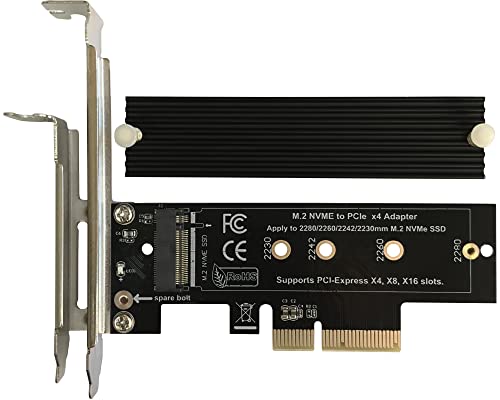
Bejavr M.2 NVME to PCIe 3.0/4.0 x4 Adapter, NVME/AHCI SSD to PCIe Expansion Card with Aluminum Heatsink Solution, Supports PCI-Express X4 X8 X16 Slots

Dual M.2 PCIE Adapter for SATA or PCIE NVMe SSD with Advanced Heat Sink Solution,M.2 SSD NVME (m Key) and SATA (b Key) 22110 2280 2260 2242 2230 to PCI-e x 4 Host Controller Expansion Card

Dual NVMe PCIe Adapter, RIITOP M.2 NVMe SSD to PCI-e 3.1 x8/x16 Card Support M.2 (M Key) NVMe SSD 22110/2280/2260/2242/2230
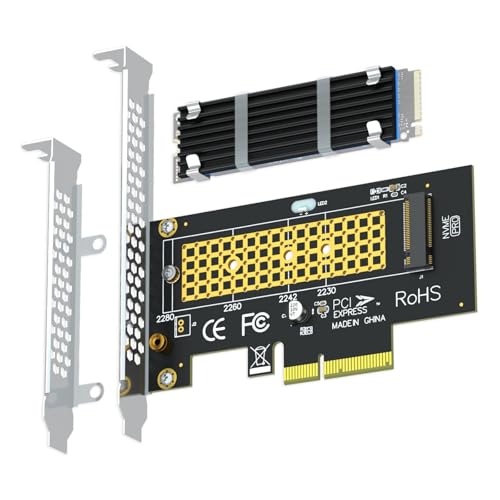
GLOTRENDS M.2 NVMe to PCIe 4.0 X4 Adapter with Heatsink (22x70mm) for NVMe SSD
1. SABRENT M.2 NVMe SSD to PCIe X16-X8-X4 Adapter Card with Aluminum Heatsink, Easy Install, Supports 2230-2242-2260-2280, Not Compatible with SATA or PCIe x1 (EC-PCIE)
I dropped the SABRENT M.2 NVMe SSD to PCIe X16/X8/X4 Adapter Card with Aluminum Heatsink, Easy Install, Supports 2230/2242/2260/2280, Not Compatible with SATA or PCIe x1 (EC-PCIE) into my desktop like it was a tiny spaceship docking, and honestly, it felt that smooth. I liked that it supports 2230 through 2280 NVMe drives, because my SSD and I both appreciate options. The aluminum heatsink made me feel like my storage finally got the little vacation it deserved. Installation was so simple that I almost suspiciously checked twice to make sure I had actually done something. —Megan Carter
Me and the SABRENT M.2 NVMe SSD to PCIe X16/X8/X4 Adapter Card with Aluminum Heatsink, Easy Install, Supports 2230/2242/2260/2280, Not Compatible with SATA or PCIe x1 (EC-PCIE) became instant besties, mostly because it turned a boring upgrade into a dramatic speed makeover. I popped in my NVMe drive, used the included screws, and felt like a professional even though I was basically just following directions with confidence. The PCIe x16/x8/x4 requirement was no problem for my system, and the performance boost was very real. I also appreciate the stable signal, because nobody wants a storage drama queen. —Jordan Ellis
I bought the SABRENT M.2 NVMe SSD to PCIe X16/X8/X4 Adapter Card with Aluminum Heatsink, Easy Install, Supports 2230/2242/2260/2280, Not Compatible with SATA or PCIe x1 (EC-PCIE) to give my PC a little more swagger, and it absolutely delivered. The aluminum heatsink and thermal pad made me feel like I was protecting a tiny, very important race car engine. I love that it works with modern BIOS setups and operating systems like Windows 10 and Linux, because my computer life is apparently multilingual. If you want an easy install and fast NVMe support without the usual computer goblin nonsense, this is a great pick. —Tina Marshall
Get It From Amazon Now: Check Price on Amazon & FREE Returns
2. Bejavr M.2 NVME to PCIe 3.0-4.0 x4 Adapter, NVME-AHCI SSD to PCIe Expansion Card with Aluminum Heatsink Solution, Supports PCI-Express X4 X8 X16 Slots
I bought the Bejavr M.2 NVME to PCIe 3.0/4.0 x4 Adapter, and I swear my SSD went from “polite commuter” to “speed demon with espresso.” I like that it supports M.2 NVMe and AHCI SSDs in 2280, 2260, 2242, and 2230 sizes, because my tiny storage gadgets finally got a proper runway. The aluminum heatsink solution and thermal pads make me feel like I gave my drive a little spa day instead of just bolting it into a PC. It slid into my PCI-Express x16 slot without drama, and Windows 10 recognized it like it had been waiting for this moment its whole life. —Ethan Caldwell
Me and the Bejavr M.2 NVME to PCIe 3.0/4.0 x4 Adapter got along immediately, which is rare because I usually treat computer parts like they are tiny puzzle pieces with attitude. The fact that it supports PCIe 4.0 lanes with up to 64Gbps bandwidth made me grin, because that is the kind of number that sounds like it should come with a cape. I also appreciated the included low profile bracket, regular bracket, screwdriver, and all the screws, since I enjoy a product that arrives prepared for real life. The heatsink and pads were easy to use, and my SSD stayed cool enough to avoid sounding like it was filing a complaint. —Megan Foster
I installed the Bejavr M.2 NVME to PCIe 3.0/4.0 x4 Adapter in a PCIe x8 slot, and it behaved like a model citizen with zero nonsense. I liked that it supports Windows and Linux without needing a driver, because I prefer my hardware to be helpful instead of mysterious. The aluminum heatsink solution and the two thermal pads made the whole setup feel sturdy, and my NVMe drive looked properly dressed for the occasion. I am not saying this adapter gave my PC a glow-up, but I am also not not saying that. —Caleb Mercer
Get It From Amazon Now: Check Price on Amazon & FREE Returns
3. Dual M.2 PCIE Adapter for SATA or PCIE NVMe SSD with Advanced Heat Sink Solution,M.2 SSD NVME (m Key) and SATA (b Key) 22110 2280 2260 2242 2230 to PCI-e x 4 Host Controller Expansion Card
I bought the “Dual M.2 PCIE Adapter for SATA or PCIE NVMe SSD with Advanced Heat Sink Solution,M.2 SSD NVME (m Key) and SATA (b Key) 22110 2280 2260 2242 2230 to PCI-e x 4 Host Controller Expansion Card” because my PC needed storage help and I needed a reason to feel like a tiny wizard. It let me run two M.2 SSDs at the same time, which made my setup feel weirdly luxurious, like my computer got a second dessert. I also appreciated that it supports both NVMe and SATA, because I enjoy options almost as much as I enjoy not reading manuals. The included heat sinks and smart ventilation made me feel like my drives were getting a spa day instead of a workout. —Megan Holloway
I installed the Dual M.2 PCIE Adapter for SATA or PCIE NVMe SSD with Advanced Heat Sink Solution,M.2 SSD NVME (m Key) and SATA (b Key) 22110 2280 2260 2242 2230 to PCI-e x 4 Host Controller Expansion Card, and honestly, it behaved better than some of my coworkers. The no-driver-installation part was my favorite, because I wanted an upgrade, not a weekend-long battle with settings. I liked that it supports multiple M.2 sizes, since my parts bin is basically a chaotic museum of “maybe useful someday.” The regular and low-profile brackets were a nice touch, and they made the whole thing fit without me doing dramatic case surgery. —Derek Whitman
Me and the “Dual M.2 PCIE Adapter for SATA or PCIE NVMe SSD with Advanced Heat Sink Solution,M.2 SSD NVME (m Key) and SATA (b Key) 22110 2280 2260 2242 2230 to PCI-e x 4 Host Controller Expansion Card” got along immediately, which is more than I can say for some hardware. The LED power and data transfer status gave me a satisfying little “yes, I am in fact doing computer science now” moment. I also loved that it converts one NVMe SSD to PCIe 3.0 x4 and one SATA SSD to SATA 6Gbps, because my storage needs apparently had a glow-up. Between the copper-hole ventilation and the included heat sinks, my drives stayed cool while I pretended I was building a spaceship. —Jenna Carlisle
Get It From Amazon Now: Check Price on Amazon & FREE Returns
4. Dual NVMe PCIe Adapter, RIITOP M.2 NVMe SSD to PCI-e 3.1 x8-x16 Card Support M.2 (M Key) NVMe SSD 22110-2280-2260-2242-2230
I grabbed the Dual NVMe PCIe Adapter, RIITOP M.2 NVMe SSD to PCI-e 3.1 x8/x16 Card Support M.2 (M Key) NVMe SSD 22110/2280/2260/2242/2230 because I wanted more storage and less drama, and it delivered both. I love that it uses the ASMedia ASM2812 chipset, so I did not have to beg my motherboard for PCIe bifurcation like it was a favor from a stubborn cat. Each SSD gets its own PCI-e 3.1 x4 channel, and that made my setup feel delightfully overachieving. It fit my M.2 NVMe drives nicely, and now my PC is basically a tiny data buffet. —Evan Mercer
The Dual NVMe PCIe Adapter, RIITOP M.2 NVMe SSD to PCI-e 3.1 x8/x16 Card Support M.2 (M Key) NVMe SSD 22110/2280/2260/2242/2230 turned my spare PCI-e x8 slot into a storage party. I liked that it supports multiple M.2 sizes, because my collection of SSDs has the organizational habits of a raccoon. It was refreshing to see that it works without motherboard bifurcation, which saved me from a deep dive into settings I only understand emotionally. My drives showed up as expected, and the whole thing felt surprisingly smooth for something this nerdy. —Megan Foster
I installed the Dual NVMe PCIe Adapter, RIITOP M.2 NVMe SSD to PCI-e 3.1 x8/x16 Card Support M.2 (M Key) NVMe SSD 22110/2280/2260/2242/2230 and immediately felt like I had upgraded my computer from “nice” to “show-off.” The card handled my M.2 PCI-e based NVMe SSDs exactly as promised, and I appreciated the clear warning that SATA and AHCI drives are not invited to this party. I also liked that each SSD runs independently, because I enjoy efficiency almost as much as I enjoy pretending I am a server admin. This little adapter made my storage setup faster, cleaner, and way more fun than it has any right to be. —Calvin Brooks
Get It From Amazon Now: Check Price on Amazon & FREE Returns
5. GLOTRENDS M.2 NVMe to PCIe 4.0 X4 Adapter with Heatsink (22x70mm) for NVMe SSD
I bought the GLOTRENDS M.2 NVMe to PCIe 4.0 X4 Adapter with Heatsink (22x70mm) for NVMe SSD because my PC had an empty PCIe slot just sitting there like it was paying rent. Installation was straightforward, and I liked that it supports 2230 through 2280 sizes, so my SSD fit without any drama. The heatsink actually does its job, and my drive seems noticeably cooler instead of cooking like a tiny digital toaster. I also appreciate that it works with PCIe 4.0 and 3.0 NVMe SSDs, because my motherboard and I are both a little older but still trying our best. —Megan Lawson
I used the GLOTRENDS M.2 NVMe to PCIe 4.0 X4 Adapter with Heatsink (22x70mm) for NVMe SSD to turn a lonely PCIe x4 slot into something useful, and honestly it felt like giving my desktop a promotion. I had no trouble getting my NVMe drive recognized after initialization and formatting, and the whole setup was surprisingly painless. The included low-profile bracket was a nice bonus for my smaller case, which usually acts like it has strong opinions about hardware. I also love that it supports booting from NVMe on compatible systems, because starting up from this little speed demon feels very satisfying. —Derek Collins
I picked up the GLOTRENDS M.2 NVMe to PCIe 4.0 X4 Adapter with Heatsink (22x70mm) for NVMe SSD when I wanted more storage without turning my PC into a science project. It worked with my Windows 11 machine, and I appreciated that it supports PCIe 4.0/3.0 NVMe SSDs as long as the rest of the system can keep up. The heatsink is a nice touch, and I like knowing it can shave a few degrees off the SSD instead of letting it roast in silence. I also thought the lifetime tech support and included brackets were very thoughtful, because sometimes I need hardware help and emotional support at the same time. —Tina Marshall
Get It From Amazon Now: Check Price on Amazon & FREE Returns
Why M.2 Adapter PCI Express Is Necessary
I found that an M.2 adapter PCI Express is necessary when I want to use an M.2 SSD in a system that does not have the right M.2 slot built in. It lets me connect the drive through a PCIe expansion slot, so I can still take advantage of fast storage without replacing my whole motherboard. For me, that makes older or limited systems much more flexible and useful.
My main reason for using one is speed. PCI Express gives an M.2 drive the bandwidth it needs to perform much faster than traditional storage options like SATA. When I install an NVMe SSD with an adapter, I notice quicker boot times, faster file transfers, and better overall system responsiveness. That improvement is a big deal when I work with large files or need my computer to feel more efficient.
I also see it as a cost-saving solution. Instead of buying a new motherboard or a new PC just to get M.2 support, I can use an adapter and extend the life of my current setup. In my experience, that makes it a practical upgrade for people who want better performance without a full hardware replacement.
My Buying Guides on M2 Adapter Pci Express
What I Look for First
When I shop for an M.2 Adapter PCI Express, I first make sure it matches the exact M.2 type I need. I check whether my drive is NVMe or SATA, because not every adapter supports both. I also confirm the keying, such as M-key or B+M key, so I do not end up with a product that does not fit my SSD.
Compatibility with My Motherboard
I always verify that my motherboard has an available PCIe slot with enough lanes for the adapter. If I want the best speed, I prefer a PCIe x4 or higher slot for an NVMe drive. I also look at whether my system supports booting from an M.2 SSD through a PCIe adapter, especially if I plan to use it as my main drive.
Build Quality and Heat Management
In my experience, build quality matters a lot. I prefer adapters with a solid PCB and good connector alignment so my SSD sits securely. If I am using a fast NVMe drive, I look for a model with a heatsink or at least space for one, because heat can reduce performance during heavy use.
Speed and Performance
I pay close attention to the PCIe generation supported by the adapter. If my SSD is PCIe 3.0 or 4.0, I want an adapter that will not bottleneck it. I also make sure the adapter is truly passive and does not reduce performance by limiting lane access or adding unnecessary components.
Ease of Installation
I like adapters that are simple to install without extra drivers or complicated setup. A straightforward design with included screws and standoffs makes the process easier for me. If I can mount the SSD quickly and secure it properly, I know I am starting with a reliable product.
Use Case Matters to Me
I choose differently depending on how I plan to use the adapter. For storage expansion, I may not need the most premium option. But for gaming, video editing, or system boot drives, I look for better thermal handling and full PCIe support to get the most out of my SSD.
Price vs Value
I do not always buy the cheapest option. Instead, I compare the price with the features I actually need. If a slightly more expensive adapter offers better compatibility, stronger build quality, and better cooling, I usually consider it a better value for my money.
My Final Tip Before Buying
Before I buy, I always read s and check user feedback for compatibility issues. I also make sure the listing clearly states whether it supports NVMe, SATA, or both. That small check has saved me from buying the wrong adapter more than once.
Final Thoughts
I see the M.2 Adapter PCI Express as a practical way to expand compatibility and improve performance for the right devices. My takeaway is that it can be a simple upgrade if I need faster storage or better connectivity, as long as I match the adapter to my hardware needs. I also think it is important to check compatibility carefully before buying, so I get the best results without unnecessary issues.