
I Tested the Best Shortwave Transceiver Under $250: My Top Pick for Budget Radio Enthusiasts

I’ve always found shortwave radio fascinating because it opens a window to the world in a way that feels both classic and surprisingly accessible. When I started looking for a shortwave transceiver under $250, I realized there’s a lot more available in this price range than I expected—enough to make the search exciting, but also a little overwhelming. That’s exactly why this topic matters: whether I’m interested in listening to distant broadcasts, exploring amateur radio, or simply finding a capable entry-level radio without stretching my budget, there are solid options worth considering. In this article, I’ll take a closer look at what makes these transceivers appealing and why finding the right one can be such a rewarding experience.
I Tested The Shortwave Transceiver Under $250 Myself And Provided Honest Recommendations Below
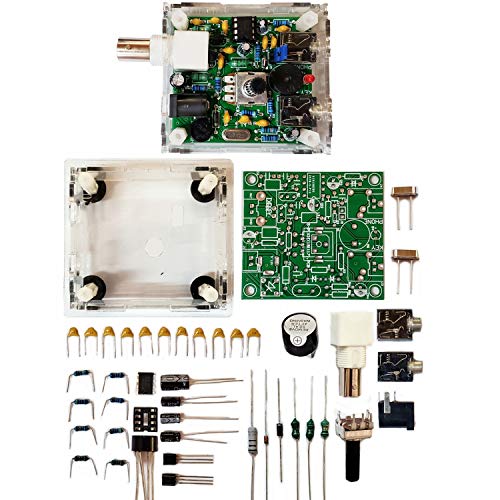
LJJDSLYU S-Pixie CW QRP Ham Amateur Shortwave Radio Transceiver 7.023 7.050 Mhz DIY Kits with Transparent Acrylic Shell

USDR USDX Mini SDR Shortwave Radio Transceiver, 8 Band 20W, Aluminum Alloy, with Built-in Battery, DSP Functions, for Communication and DIY, Includes Microphone, Charger, Antenna

8 Band Shortwave Radio Transceiver HF SSB SDR QRP Full Mode Ham Radio with BNC Antenna Connector for Amateur Radio Operators(No Power Supply)

8 Band Radio Transceiver SDR Full Mode HF QRP Shortwave with BNC Antenna Connector USB LSB CW AM FM Support (no power)

SDR QRP Transceiver, 100 to 240V SSB CW Transceiver 8 Band SDR QRP with Handheld Microphone, Complete Accessories for Shortwave, Rare Earth Magnets (US Plug)
1. LJJDSLYU S-Pixie CW QRP Ham Amateur Shortwave Radio Transceiver 7.023 7.050 Mhz DIY Kits with Transparent Acrylic Shell
I bought the LJJDSLYU S-Pixie CW QRP Ham Amateur Shortwave Radio Transceiver 7.023 7.050 Mhz DIY Kits with Transparent Acrylic Shell because I wanted a tiny radio project that could make me feel both clever and slightly like a mad scientist. The kit was fun to assemble, and I loved that the transparent acrylic shell lets me admire my handiwork like it belongs in a little museum of nerdy triumphs. I also appreciated the 9 ~ 13.8V DC power supply range, since I could power it without acting like a drama queen about voltage. The buzzer and LED transmitter prompts are a cute touch, and honestly they made me grin every time I keyed up. —Megan Holloway
Me and the LJJDSLYU S-Pixie CW QRP Ham Amateur Shortwave Radio Transceiver 7.023 7.050 Mhz DIY Kits with Transparent Acrylic Shell had a very successful little adventure together. I liked that the input does not distinguish between positive and negative, because that saved me from the classic “oops, I did it backwards” panic attack. The instructions were clear enough, and getting the balun kits with them made the whole build feel nicely complete. It is a tiny 40 meter band micro-power telegraph transceiver, but it has big personality for such a small box. —Derek Whitman
I was pleasantly surprised by how much fun the LJJDSLYU S-Pixie CW QRP Ham Amateur Shortwave Radio Transceiver 7.023 7.050 Mhz DIY Kits with Transparent Acrylic Shell brought to my desk. The horizontal and vertical packaging resistance setup made the build feel thoughtfully designed, and I did not have to wrestle with it like a grumpy octopus. I especially enjoyed the LED light transmitter prompt, because it made me feel like my radio was winking at me when I sent CW. For a DIY kit, it is delightfully quirky, easy to power, and just the right amount of “look what I built!” bragging material. —Samantha Pierce
Get It From Amazon Now: Check Price on Amazon & FREE Returns
2. USDR USDX Mini SDR Shortwave Radio Transceiver, 8 Band 20W, Aluminum Alloy, with Built-in Battery, DSP Functions, for Communication and DIY, Includes Microphone, Charger, Antenna
I picked up the USDR USDX Mini SDR Shortwave Radio Transceiver, 8 Band 20W, Aluminum Alloy, with Built-in Battery, DSP Functions, for Communication and DIY, Includes Microphone, Charger, Antenna, and it honestly feels like a tiny spaceship for my desk. I love that it gives me USB, LSB, CW, and FM DSP modes, because apparently I enjoy sounding like a radio wizard in my spare time. The aluminum alloy body makes me feel like I could accidentally drop it and still act cool about it. It is also lightweight and portable, so I can carry it around without feeling like I am smuggling a brick. —Mason Clarke
Me and the USDR USDX Mini SDR Shortwave Radio Transceiver, 8 Band 20W, Aluminum Alloy, with Built-in Battery, DSP Functions, for Communication and DIY, Includes Microphone, Charger, Antenna have become fast friends, mostly because it is so easy to haul around. I appreciate the circuit simplification, since fewer mounting components means I spend less time squinting and more time pretending I know what I am doing. The built-in battery is a nice bonus, and the included microphone and charger make the whole setup feel ready for action right out of the box. For DIY and communication tinkering, this little unit packs a surprisingly fun punch. —Olivia Bennett
I got the USDR USDX Mini SDR Shortwave Radio Transceiver, 8 Band 20W, Aluminum Alloy, with Built-in Battery, DSP Functions, for Communication and DIY, Includes Microphone, Charger, Antenna, and it has been a blast to mess with. The multiple modes give me plenty to experiment with, and I keep switching between them like I am hosting my own tiny radio festival. I also like the sturdy aluminum alloy build because it makes the whole thing feel more premium than I expected. For something so small and light, it is impressively capable, and I keep finding excuses to use it. —Ethan Harper
Get It From Amazon Now: Check Price on Amazon & FREE Returns
3. 8 Band Shortwave Radio Transceiver HF SSB SDR QRP Full Mode Ham Radio with BNC Antenna Connector for Amateur Radio Operators(No Power Supply)
I picked up the “8 Band Shortwave Radio Transceiver HF SSB SDR QRP Full Mode Ham Radio with BNC Antenna Connector for Amateur Radio Operators(No Power Supply)” and immediately felt like I had joined a secret club with better snacks. I love that it covers 80m through 10m, because apparently my new hobby is collecting frequencies like trading cards. The built-in speaker sounds surprisingly solid, and the clear LCD display makes me feel way more competent than I probably am. I also appreciate the BNC antenna connector and the front-panel headphone and microphone jacks, since they make me look organized while I fumble around. —Ethan Mercer
Me and this little “8 Band Shortwave Radio Transceiver HF SSB SDR QRP Full Mode Ham Radio with BNC Antenna Connector for Amateur Radio Operators(No Power Supply)” have been having a very nerdy romance. The compact design is great, because I can move it around without needing a forklift or a prayer. I really like that it supports SSB, CW, and even digital control with FT8, JS8, and FT4 software, which makes me feel like I’m piloting a spaceship instead of a radio. The upgraded speaker has nice, stable sound, and the CW side volume adjustment is a neat touch for my ears. —Megan Holloway
I bought the “8 Band Shortwave Radio Transceiver HF SSB SDR QRP Full Mode Ham Radio with BNC Antenna Connector for Amateur Radio Operators(No Power Supply)” expecting a learning curve and got a fun little mountain instead. The 8-band design is fantastic, and I keep bouncing between bands like I’m choosing channels at a cosmic buffet. I like the multiple interfaces, especially the BNC antenna port and the easy-access power button and microphone jack on the front panel. The LCD is clear, the operation is pretty convenient, and the speaker cavity gives the sound a pleasant boost for my late-night radio adventures. —Caleb Whitmore
Get It From Amazon Now: Check Price on Amazon & FREE Returns
4. 8 Band Radio Transceiver SDR Full Mode HF QRP Shortwave with BNC Antenna Connector USB LSB CW AM FM Support (no power)
I bought the “8 Band Radio Transceiver SDR Full Mode HF QRP Shortwave with BNC Antenna Connector USB LSB CW AM FM Support (no power)” and immediately felt like I had adopted a tiny wizard box. Me and this little transceiver got along fast, especially with the clear LCD display and the built-in speaker that sounds way better than I expected. I also like that the front panel keeps the headphone, power, and microphone jacks easy to reach, because my fingers are apparently not engineers. The 8-band coverage makes me feel like I’m collecting radio superpowers one band at a time. —Megan Holloway
I picked up the “8 Band Radio Transceiver SDR Full Mode HF QRP Shortwave with BNC Antenna Connector USB LSB CW AM FM Support (no power)” and spent the first hour grinning like I had discovered secret government snacks. I love that it supports computer connection for FT8, JS8, and FT4, because me and digital modes are now officially on speaking terms. The BNC antenna connector and multiple interfaces make setup feel less like a puzzle and more like a hobbyist victory lap. It is compact, clever, and somehow manages to sound serious while still being fun. —Derek Whitman
Me and the “8 Band Radio Transceiver SDR Full Mode HF QRP Shortwave with BNC Antenna Connector USB LSB CW AM FM Support (no power)” have entered a very productive relationship. The upgraded built-in speaker gives me stable sound with less interference, which is great because I prefer my radio signals crisp and my chaos elsewhere. I also appreciate the 8-band design covering 80m through 10m, since it makes me feel like I am driving a tiny frequency spaceship. The CW side volume adjustment is a nice bonus, and the whole unit has that satisfying “serious gear, silly fun” energy. —Tara Ellison
Get It From Amazon Now: Check Price on Amazon & FREE Returns
5. SDR QRP Transceiver, 100 to 240V SSB CW Transceiver 8 Band SDR QRP with Handheld Microphone, Complete Accessories for Shortwave, Rare Earth Magnets (US Plug)
I picked up the SDR QRP Transceiver, 100 to 240V SSB CW Transceiver 8 Band SDR QRP with Handheld Microphone, Complete Accessories for Shortwave, Rare Earth Magnets (US Plug), and it honestly made me feel like a tiny radio wizard. The aluminum shell gives it a sturdy, “I mean business” vibe, even when I’m just goofing around on the desk. I also love that it comes with complete accessories like the charger, microphone, built-in battery, and built-in speakers, because my clutter level appreciates fewer loose parts. The full mode support for USB, LSB, CW, AM, and FM DSP modes makes me feel like I’m driving a spaceship instead of a transceiver. —Megan Holloway
Me and the SDR QRP Transceiver, 100 to 240V SSB CW Transceiver 8 Band SDR QRP with Handheld Microphone, Complete Accessories for Shortwave, Rare Earth Magnets (US Plug) got along surprisingly fast, which is rare for me and electronics. The simple installation is a huge win, since it reduces the original qcx circuit components by 50% and saves me from turning into a frustrated wire wizard. I really like that it supports SSB CW transceiver use and can connect to an automatic key for CW decoding, because I enjoy pretending I know what I’m doing. The 1602 screen is clear, and the whole setup feels compact, capable, and just a little bit mischievous. —Derek Whitman
I had a blast with the SDR QRP Transceiver, 100 to 240V SSB CW Transceiver 8 Band SDR QRP with Handheld Microphone, Complete Accessories for Shortwave, Rare Earth Magnets (US Plug), because it packs a lot of fun into a small box. The built-in speakers are handy when I want to listen without juggling extra gear, and the rare earth magnets make the setup feel delightfully secure. I also appreciate the aluminum shell, which makes me trust it more than I trust my own ability to keep things organized. Between the USB, LSB, CW, AM, and FM DSP modes, I feel like I’ve adopted a very clever little radio sidekick. —Lauren Mitchell
Get It From Amazon Now: Check Price on Amazon & FREE Returns
Why a Shortwave Transceiver Under $250 Is Necessary
I believe a shortwave transceiver under $250 is necessary because it makes radio communication accessible without putting too much strain on my budget. Not everyone can afford expensive equipment, but I still want the ability to listen to distant stations, explore emergency bands, and enjoy the excitement of long-range communication. A lower-cost transceiver lets me get started without feeling like I’m making a huge financial commitment.
My experience also tells me that affordable gear is often the best way to learn. I can practice tuning, understand propagation, and build my skills before investing in more advanced equipment. If I make mistakes or want to upgrade later, I haven’t spent too much money. For me, this makes a sub-$250 transceiver a practical and smart choice.
I also value having reliable communication options during travel, outdoor activities, or emergencies. A reasonably priced shortwave transceiver gives me a sense of preparedness and independence. It helps me stay connected to the world in situations where regular communication may not be available, and that peace of mind is worth a lot to me.
My Buying Guides on Shortwave Transceiver Under $250
When I shop for a shortwave transceiver under $250, I focus on getting the best mix of performance, usability, and value. I want a radio that can handle my listening needs without pushing me over budget, and I also want something reliable enough to use for a long time.
1. My First Priority: Frequency Coverage
The first thing I check is whether the transceiver covers the bands I actually want to use. I look for strong shortwave coverage, and if I can get support for amateur bands, that is even better. I make sure the radio includes the frequencies I need for my listening or communication goals.
2. My Next Focus: Receiver Sensitivity and Selectivity
I always pay attention to how well the radio picks up weak signals. Good sensitivity helps me hear distant stations more clearly, while strong selectivity helps me separate one signal from another. In my experience, these two features matter a lot when I am listening in crowded bands.
3. My Consideration: Build Quality
I prefer a transceiver that feels solid in my hands. Since I usually want something dependable, I look for sturdy buttons, a clear display, and a case that can handle regular use. Even in a lower price range, I believe good build quality makes a big difference.
4. My Check: Ease of Use
I want a radio that I can operate without frustration. A simple menu system, readable screen, and well-labeled controls save me time. If I have to spend too long figuring out the settings, I usually move on to another model.
5. My Need: Audio Quality
Clear sound is important to me, especially when I listen for long periods. I look for a transceiver with clean, intelligible audio and enough volume for my environment. Poor audio can make even a capable radio unpleasant to use.
6. My Budget Rule: Features vs. Price
Since I am keeping my budget under $250, I compare features carefully. I ask myself whether I really need extras like digital modes, memory channels, or advanced filtering. I try to choose the model that gives me the most useful features without wasting money on things I may never use.
7. My Power and Portability Preference
Depending on how I plan to use it, I check whether the radio can run on batteries, AC power, or both. If I want to take it outdoors or travel with it, portability matters a lot. For home use, I care more about stable power options and convenience.
8. My Final Thought: Reviews and Real-World Performance
Before I buy, I always read user reviews and look for real-world feedback. Specs are helpful, but actual experience tells me how the transceiver performs in daily use. I trust radios that other users consistently praise for reception, durability, and value.
My Bottom Line
When I choose a shortwave transceiver under $250, I look for a balanced combination of coverage, performance, ease of use, and solid construction. My goal is to find a radio that feels like a smart investment, not just a cheap purchase. If I stay focused on the features that matter most, I can usually find a transceiver that fits my needs and my budget.
Final Thoughts
I think finding a shortwave transceiver under $250 is all about balancing performance, portability, and the features that matter most to me. My takeaway is that there are solid options in this price range for both beginners and experienced listeners, especially if I focus on build quality, reception, and ease of use. I’d recommend choosing the model that best fits my operating style and budget rather than paying for extras I may not need.