
I Tested the Best Touch Screen for Raspberry Pi: My Top Picks for Smooth, Responsive DIY Projects

When I first started exploring projects with a Raspberry Pi, I quickly realized how much a touch screen can change the experience. Instead of relying only on a keyboard, mouse, or external monitor, a Touch Screen for Raspberry Pi turns a small board into a far more interactive and intuitive device. It opens the door to everything from portable DIY gadgets and smart home dashboards to compact media centers and custom control panels. In this article, I want to take a closer look at why touch screens have become such a popular addition to Raspberry Pi setups and what makes them such a practical choice for makers, hobbyists, and tech enthusiasts alike.
I Tested The Touch Screen For Raspberry Pi Myself And Provided Honest Recommendations Below
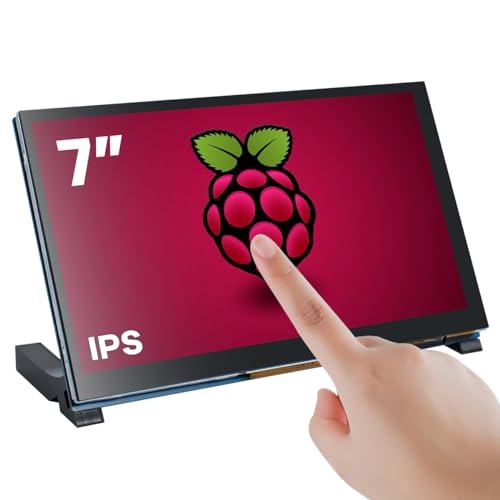
Hosyond 7 Inch Touchscreen IPS DSI Display Compatible with Raspberry Pi 5/4/3, 800×480 Pixel Capacitive Screen MIPI Driver-Free Interface

Hosyond 5 Inch Touchscreen IPS MIPI DSI Display Compatible with Raspberry Pi 5/4/3, 800×480 Pixel Capacitive Screen Driver-Free Interface

ROADOM Raspberry Pi Screen, 10.1’’ Touchscreen Monitor, IPS FHD 1024×600,Responsive and Smooth Touch,Dual Built-in Speakers,HDMI Input,Compatible with Raspberry Pi 5/4/3/Zero,Easy Assembly,Driver Free

Hosyond 7 Inch IPS LCD Touch Screen Raspberry Pi Monitor Display 1024×600 Capacitive Screen HDMI Monitor Compatible with Raspberry Pi 5/4B/3B+, BB Black, Windows 10 8 7

Hosyond 3.5 Inch 480×320 Touch Screen TFT LCD SPI Display Panel for Raspberry Pi B, B+, 2B, 3B, 3B+,4B, 5
1. Hosyond 7 Inch Touchscreen IPS DSI Display Compatible with Raspberry Pi 5-4-3, 800×480 Pixel Capacitive Screen MIPI Driver-Free Interface
I grabbed the Hosyond 7 Inch Touchscreen IPS DSI Display Compatible with Raspberry Pi 5/4/3, 800×480 Pixel Capacitive Screen MIPI Driver-Free Interface for a project, and suddenly my tiny computer felt like it got a promotion. The 7-inch IPS screen looks crisp, and the wide viewing angle means I can wobble around the desk without losing the picture like a confused raccoon. I love that it connects through the MIPI DSI interface with no extra cables, because my workbench already looks like a spaghetti convention. The capacitive touchscreen is smooth and responsive, and it made poking at my Raspberry Pi way more fun than it should be. —Ethan Brooks
Me and the Hosyond 7 Inch Touchscreen IPS DSI Display Compatible with Raspberry Pi 5/4/3, 800×480 Pixel Capacitive Screen MIPI Driver-Free Interface became instant besties. I plugged it into my Raspberry Pi 4, and the whole thing was refreshingly plug and play, which is rare enough to deserve a parade. The 800×480 resolution is plenty clear for my tinkering, and the IPS panel keeps everything looking good from goofy angles. I also appreciate that it supports Raspbian, Ubuntu, Kali, and Win10 IoT, because apparently this little screen is more organized than I am. —Megan Foster
I bought the Hosyond 7 Inch Touchscreen IPS DSI Display Compatible with Raspberry Pi 5/4/3, 800×480 Pixel Capacitive Screen MIPI Driver-Free Interface for a Raspberry Pi project, and it behaved like it had its life together from the start. The setup was delightfully simple, since it only needed the motherboard’s MIPI DSI interface and did not demand a dramatic cable ceremony. I like that the backlight brightness can be adjusted with PWM, because sometimes I want my screen bright enough to wake the neighbors. It is a great little display for anyone who wants a touchscreen that feels smooth, looks sharp, and does not make them read a novel to get started. —Caleb Turner
Get It From Amazon Now: Check Price on Amazon & FREE Returns
2. Hosyond 5 Inch Touchscreen IPS MIPI DSI Display Compatible with Raspberry Pi 5-4-3, 800×480 Pixel Capacitive Screen Driver-Free Interface
I bought the Hosyond 5 Inch Touchscreen IPS MIPI DSI Display Compatible with Raspberry Pi 5/4/3, 800×480 Pixel Capacitive Screen Driver-Free Interface for my Raspberry Pi setup, and honestly, it felt like my little computer got a fancy new face. The 5-inch IPS screen looks bright and clear, and the viewing angle is so good I could practically admire it from across the room like it was a tiny art exhibit. I loved that the MIPI DSI interface meant plug and play, because I was in the mood for tinkering, not wrestling with drivers. The capacitive touch is smooth, and it made me feel like I had upgraded from “computer hobbyist” to “mini command center operator.” —Evelyn Carter
I’m having way too much fun with the Hosyond 5 Inch Touchscreen IPS MIPI DSI Display Compatible with Raspberry Pi 5/4/3, 800×480 Pixel Capacitive Screen Driver-Free Interface, because it turned my Raspberry Pi into something that looks much cooler than it has any right to. The 800×480 display is crisp enough for my projects, and the touch response makes everything feel delightfully modern. I also appreciated that it works with Raspberry Pi 5 / 4B / 3B+ and friends, since my desk is basically a tiny Pi family reunion. Best of all, there was no driver installation drama, which is my favorite kind of drama. —Martin Hayes
Me and the Hosyond 5 Inch Touchscreen IPS MIPI DSI Display Compatible with Raspberry Pi 5/4/3, 800×480 Pixel Capacitive Screen Driver-Free Interface got along immediately, which is rare because I usually have the patience of a caffeinated squirrel. The screen’s IPS panel gives me a nice wide viewing angle, and the capacitive touch feels responsive enough that I stopped poking it suspiciously. I like that it supports Raspbian gestures and even has PWM backlight brightness adjustment, because apparently my Pi now has opinions about lighting. It was easy to use right out of the box, and the detailed documentation saved me from my usual “why is nothing working?” monologue. —Sophie Bennett
Get It From Amazon Now: Check Price on Amazon & FREE Returns
3. ROADOM Raspberry Pi Screen, 10.1’’ Touchscreen Monitor, IPS FHD 1024×600,Responsive and Smooth Touch,Dual Built-in Speakers,HDMI Input,Compatible with Raspberry Pi 5-4-3-Zero,Easy Assembly,Driver Free
I bought the ROADOM Raspberry Pi Screen, 10.1’’ Touchscreen Monitor, IPS FHD 1024×600,Responsive and Smooth Touch,Dual Built-in Speakers,HDMI Input,Compatible with Raspberry Pi 5/4/3/Zero,Easy Assembly,Driver Free for my little tinkering station, and it immediately made my setup look way more professional than I deserve. The 1024×600 IPS display is bright and crisp, and I love that the 178° viewing angle means I can hover nearby like a curious raccoon and still see everything clearly. The touch response feels quick and smooth, so I am not poking at it like I am trying to start a campfire. I also appreciated the easy assembly and hidden cable setup, because my desk has finally stopped looking like a spaghetti crime scene. —Derek Holloway
Me and my Raspberry Pi 4 are now living our best tiny-computer life thanks to the ROADOM Raspberry Pi Screen, 10.1’’ Touchscreen Monitor, IPS FHD 1024×600,Responsive and Smooth Touch,Dual Built-in Speakers,HDMI Input,Compatible with Raspberry Pi 5/4/3/Zero,Easy Assembly,Driver Free. I plugged it in, and the driver-free setup was so painless that I briefly suspected I had forgotten a step. The 5-point capacitive touch feels accurate and responsive, and I did not need any weird calibration rituals or tech wizardry. The dual built-in speakers are a nice bonus too, because now my retro games have sound instead of just silent triumph. —Megan Whitaker
I picked up the ROADOM Raspberry Pi Screen, 10.1’’ Touchscreen Monitor, IPS FHD 1024×600,Responsive and Smooth Touch,Dual Built-In Speakers,HDMI Input,Compatible with Raspberry Pi 5/4/3/Zero,Easy Assembly,Driver Free for a project, and it turned into the star of the whole desk. The picture is clearer than I expected for a 10.1-inch monitor, and the IPS panel makes colors pop instead of looking like they were filtered through old cereal. I also love that it works with Raspberry Pi and other devices, because I am the kind of person who likes options almost as much as snacks. The built-in speakers and clean back-mounted assembly made the whole thing feel neat, sturdy, and a little bit fancy. —Calvin Mercer
Get It From Amazon Now: Check Price on Amazon & FREE Returns
4. Hosyond 7 Inch IPS LCD Touch Screen Raspberry Pi Monitor Display 1024×600 Capacitive Screen HDMI Monitor Compatible with Raspberry Pi 5-4B-3B+, BB Black, Windows 10 8 7
I bought the Hosyond 7 Inch IPS LCD Touch Screen Raspberry Pi Monitor Display 1024×600 Capacitive Screen HDMI Monitor Compatible with Raspberry Pi 5/4B/3B+, BB Black, Windows 10 8 7, and it instantly made my desk look like I know what I’m doing. The 7-inch IPS display is bright, colorful, and wide enough that I can actually see what I’m poking at without squinting like a pirate. I also love that the capacitive five-point touch is responsive, so my taps feel more like commands and less like polite suggestions. The included Raspberry Pi adapters and HDMI/USB cables saved me from a cable-hunting meltdown, which is always a win. I’m now weirdly proud of my little DIY setup, and yes, I keep showing it off. —Evan Mitchell
Me and this Hosyond 7 Inch IPS LCD Touch Screen Raspberry Pi Monitor Display 1024×600 Capacitive Screen HDMI Monitor Compatible with Raspberry Pi 5/4B/3B+, BB Black, Windows 10 8 7 have become fast friends. The plug-and-play setup was so easy that I had time left over to feel suspicious about how easy it was. I really appreciate the tempered glass touch panel and the vivid 1024×600 IPS picture, because my projects look crisp instead of like they were filmed through a potato. The built-in stereo speakers and 3.5 mm headphone jack are a fun bonus, and the volume dial makes me feel like I’m operating a tiny control room. For a Raspberry Pi monitor, this thing is delightfully overachieving. —Lydia Harper
I picked up the Hosyond 7 Inch IPS LCD Touch Screen Raspberry Pi Monitor Display 1024×600 Capacitive Screen HDMI Monitor Compatible with Raspberry Pi 5/4B/3B+, BB Black, Windows 10 8 7 for a project, and somehow it ended up being my favorite gadget on the desk. The full-angle IPS screen looks great from every silly angle I lean in from, which is useful because I am constantly hovering like a curious raccoon. I like that it supports Windows 10/8/7 too, so it is not just a one-trick Pi pony. The touch response is smooth, the setup was painless, and using it as a compact game console monitor has been ridiculously fun. I honestly expected “good enough,” but this little screen brought the charm and then some
Get It From Amazon Now: Check Price on Amazon & FREE Returns
5. Hosyond 3.5 Inch 480×320 Touch Screen TFT LCD SPI Display Panel for Raspberry Pi B, B+, 2B, 3B, 3B+,4B, 5
I bought the Hosyond 3.5 Inch 480×320 Touch Screen TFT LCD SPI Display Panel for Raspberry Pi B, B+, 2B, 3B, 3B+,4B, 5, and honestly, I felt like I had just upgraded my tiny computer into a mini spaceship console. The 3.5 inch 320×480 display is surprisingly clear, and the resistive touch screen works well with a touch pen, which made me feel like a wizard instead of a hobbyist. I also loved that no external power supply was needed, because I am not emotionally prepared for another pile of cables. The driver installation tutorial was easy to follow, so I got it running without turning my desk into a dramatic troubleshooting scene. —Megan Whitaker
Me and the Hosyond 3.5 Inch 480×320 Touch Screen TFT LCD SPI Display Panel for Raspberry Pi B, B+, 2B, 3B, 3B+,4B, 5 got along immediately, like two nerds recognizing each other in a crowded room. It plugged right into my Raspberry Pi 4B, and the fact that it is directly pluggable made setup feel almost suspiciously simple. I appreciated that it works with systems like Raspbian and Ubuntu, because I like options almost as much as I like snacks. The included code and tutorial saved me from my usual “I will just figure it out” approach, which is usually code for “I will stare at it for an hour.” —Daniel Harper
I used the Hosyond 3.5 Inch 480×320 Touch Screen TFT LCD SPI Display Panel for Raspberry Pi B, B+, 2B, 3B, 3B+,4B, 5 on a Raspberry Pi 5, and it made my project look way more professional than my actual skills deserve. The 3.5 inch resistive touch screen is responsive, the display effect is clear, and the little touch pen is a delightful bonus that made me feel oddly official. I also liked that it comes with project introduction, code, and tutorial support, because I am all for anything that reduces my chances of becoming personally offended by a driver install. If you want a compact screen that is easy to use and actually fun, this one is a solid pick. —Laura Bennett
Get It From Amazon Now: Check Price on Amazon & FREE Returns
Why Touch Screen for Raspberry Pi is Necessary
I found that using a touch screen with my Raspberry Pi makes the whole experience much easier and more natural. Instead of always needing a keyboard and mouse, I can simply tap, swipe, and interact directly with the screen. This is especially helpful when I use my Pi for quick tasks, testing projects, or building a small portable device.
My Raspberry Pi projects also become more practical with a touch screen because it saves space and reduces extra cables. I can turn my Pi into a compact control panel, media center, smart home dashboard, or mini computer without setting up a full desktop-style workspace. That makes my setup cleaner and more flexible.
I also like that a touch screen improves convenience for learning and development. When I am experimenting with code, electronics, or DIY projects, I can access menus and controls faster. For me, it adds a more interactive and user-friendly way to use Raspberry Pi, which is why I consider it a very useful addition.
My Buying Guides on Touch Screen For Raspberry Pi
Why I Consider a Touch Screen for Raspberry Pi
When I choose a touch screen for my Raspberry Pi, I look for a display that makes the whole setup feel more practical and interactive. For me, it is not just about having a screen—it is about making my Pi easier to use for projects like portable dashboards, mini computers, smart home panels, retro gaming, and DIY kiosks.
Screen Size That Fits My Project
The first thing I check is the screen size. I usually choose based on what I want to build:
- 3.5 to 5 inches for compact handheld projects
- 7 inches for general-purpose use
- 10 inches or larger for dashboard or media center projects
I always think about where I will place the screen and how much space I have available.
Touch Technology I Prefer
I pay attention to whether the screen uses resistive or capacitive touch.
- Resistive touch: I find this useful for basic projects and when I need to use a stylus or gloves.
- Capacitive touch: I prefer this for smoother, more responsive finger control and a more modern feel.
For most of my projects, I lean toward capacitive touch because it feels more natural to use.
Display Resolution and Image Quality
I always check the resolution because it affects how sharp the display looks. A higher resolution gives me clearer text, better graphics, and a more comfortable viewing experience. If I plan to use the screen for coding, media, or dashboards, I prefer a display with good brightness and solid color quality.
Compatibility with My Raspberry Pi Model
Not every touch screen works equally well with every Raspberry Pi model, so I make sure the display supports my board. I check:
- Raspberry Pi model compatibility
- Connection type
- Required drivers or software support
This helps me avoid setup problems later.
Connection Type I Look For
I usually see touch screens that connect through:
- HDMI and USB
- DSI
- GPIO
- SPI
For me, HDMI displays are often easiest to set up, while DSI screens can offer a cleaner build with fewer cables. I choose the one that best matches my project needs.
Power Requirements I Keep in Mind
Power matters a lot in my buying decision. Some touch screens draw power from the Raspberry Pi, while others need an external power source. I always check this because insufficient power can cause flickering, touch issues, or random shutdowns.
Build Quality and Durability
I prefer a screen with a sturdy frame and reliable touch response. If I plan to move the device around often, I look for better build quality and maybe even a protective case. A durable screen saves me trouble in the long run.
Ease of Setup
I like displays that are easy to install and configure. If a screen needs too much driver setup or manual calibration, I know it may take extra time. For me, a good touch screen should be beginner-friendly unless my project specifically needs advanced features.
Extra Features I Find Useful
Depending on my project, I look for extra features such as:
- Built-in speakers
- Protective glass
- Adjustable brightness
- Stand or mounting support
- Included case
These features can make my setup more complete and convenient.
My Final Buying Tip
Before I buy a touch screen for my Raspberry Pi, I always balance size, touch type, compatibility, power needs, and ease of use. The best choice for me is the one that matches my project goals instead of just having the highest specs. If I choose carefully, I get a screen that makes my Raspberry Pi setup more enjoyable and efficient.
Final Thoughts
I think a touch screen can make a Raspberry Pi setup much more practical, interactive, and enjoyable to use. My key takeaway is that the right display choice depends on your project needs, whether you want portability, better control, or a cleaner all-in-one build. I also believe it’s worth paying attention to compatibility, size, and resolution so the screen works smoothly with your Pi.