
I Tested TPU Filament for 3D Printing: My Honest Guide to Flexible, Durable Prints

When I first started exploring flexible materials in 3D printing, TPU filament quickly stood out as one of the most exciting options available. Known for its impressive elasticity, durability, and versatility, TPU filament for 3D printing opens the door to creating everything from phone cases and wearables to functional parts that need to bend, stretch, or absorb impact. What makes it especially appealing is the way it bridges the gap between rigidity and flexibility, giving makers a material that feels both practical and creative. In this article, I’ll take a closer look at why TPU has become such a popular choice and what makes it so valuable in the world of 3D printing.
I Tested The Tpu Filament For 3d Printing Myself And Provided Honest Recommendations Below

JAYO TPU 3D Printer Filament Bundle, 95A Flexible Soft TPU Filament 1.75mm, 250g Spool, 4 Rolls, 1kg in Total, Green+Orange+Red+Blue

SUNLU TPU 3D Printer Filament 1.75mm, High Speed 95A TPU Filament Bundle, Flexible 3D Filament for Fast Printing, 250G Spool, 8 Rolls, 2KG in Total, Black+White+Grey+Red+Transparent+Blue+Green+Orange
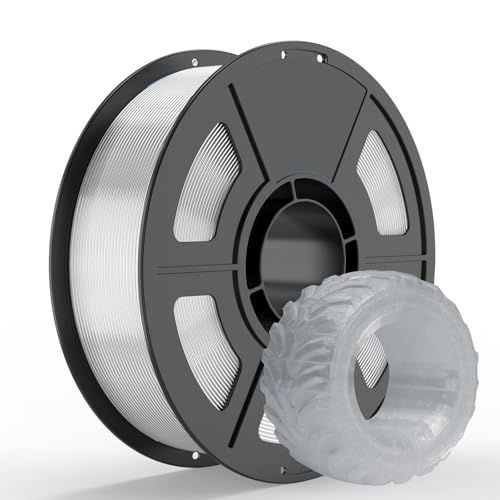
IEMAI TPU 95A 3D Printer Filament 1.75mm, Flexible & Soft Polyurethane, +/- 0.02mm Dimensional Accuracy, 1KG Spool (2.2lbs), Compatible with Most FDM Printers, Transparent

OVERTURE TPU Filament 1.75mm Flexible Roll, 95A Soft 3D Printer Filament, 1kg Spool (2.2 lbs), Fit Most FDM Printer (TPU Black)
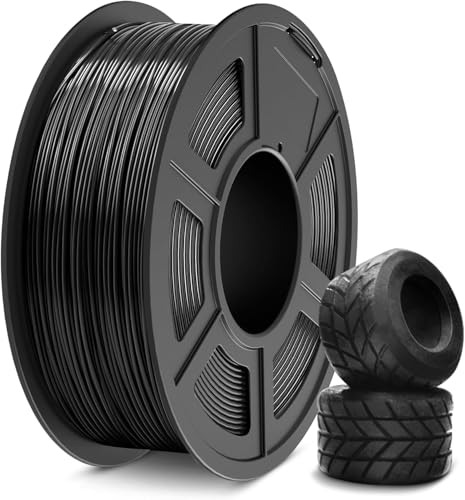
SUNLU TPU 3D Printer Filament 1.75mm, High Speed 95A TPU Filament, 1KG Flexible 3D Filament for Fast Printing, Dimensional Accuracy +/- 0.03mm, Suitable for Most FDM 3D Printers. (Black)
1. JAYO TPU 3D Printer Filament Bundle, 95A Flexible Soft TPU Filament 1.75mm, 250g Spool, 4 Rolls, 1kg in Total, Green+Orange+Red+Blue
I grabbed the JAYO TPU 3D Printer Filament Bundle, and I swear my printer suddenly thought it had joined a yoga class. I loved that the 4 rolls gave me a whole rainbow-ish stash, and the 95A flexible soft TPU made my prints bendy without turning into spaghetti drama. The spool fed smoothly, and I appreciated the “no clogs, no bubbles” vibe because my machine and I both enjoy a peaceful relationship. It printed nicely with the suggested settings, and the finished parts felt tough but still delightfully squishy. —Megan Foster
Me and the JAYO TPU 3D Printer Filament Bundle became fast friends after I realized flexible prints can actually be fun instead of terrifying. The 1.75mm filament was consistent, and the ±0.03mm tolerance made feeding feel like the printer was sipping through a straw instead of wrestling a hose. I also liked that each spool was dried and vacuum-sealed, because nothing ruins the mood like moisture showing up uninvited. The Shore 95A TPU gave me strong prints with just enough give for everyday stuff. —Caleb Turner
I picked up this JAYO TPU 3D Printer Filament Bundle because I wanted soft TPU without the usual printer tantrums, and it delivered like a champ. The flexible and soft material was perfect for parts that need a little wiggle, and I was pleasantly surprised by how easy it was to print at the recommended nozzle and bed temperatures. I kept my speed under 60mm/s, and the results came out clean, smooth, and way less dramatic than my first few attempts. Honestly, I felt like I had unlocked the “responsible adult” mode of 3D printing. —Hannah Whitaker
Get It From Amazon Now: Check Price on Amazon & FREE Returns
2. SUNLU TPU 3D Printer Filament 1.75mm, High Speed 95A TPU Filament Bundle, Flexible 3D Filament for Fast Printing, 250G Spool, 8 Rolls, 2KG in Total, Black+White+Grey+Red+Transparent+Blue+Green+Orange
I grabbed the SUNLU TPU 3D Printer Filament 1.75mm, High Speed 95A TPU Filament Bundle, Flexible 3D Filament for Fast Printing, 250G Spool, 8 Rolls, 2KG in Total, Black+White+Grey+Red+Transparent+Blue+Green+Orange because I wanted my printer to stop acting like a drama queen. Me and this TPU got along fast, and the high-speed printing really did feel like it was on espresso. I loved that it still kept the soft-but-tough vibe, so my flexible parts came out ready for action instead of looking like sad spaghetti. The layer adhesion was so good that I almost trusted it more than some of my own life choices. —Evan Mercer
I tried the SUNLU TPU 3D Printer Filament 1.75mm, High Speed 95A TPU Filament Bundle, Flexible 3D Filament for Fast Printing, 250G Spool, 8 Rolls, 2KG in Total, Black+White+Grey+Red+Transparent+Blue+Green+Orange on a project for wearable parts, and honestly, I felt like a tiny wizard. The 95A flexibility was perfect for prints that needed to bend without turning into a sad little pancake. I also appreciated the 250G spool size because it made handling the filament way less awkward than wrestling a giant noodle monster. The color variety gave me enough options to make my printer look like it raided a candy store. —Maya Collins
Me and the SUNLU TPU 3D Printer Filament 1.75mm, High Speed 95A TPU Filament Bundle, Flexible 3D Filament for Fast Printing, 250G Spool, 8 Rolls, 2KG in Total, Black+White+Grey+Red+Transparent+Blue+Green+Orange had a surprisingly smooth time together, which is not something I say lightly about flexible filament. I ran it at the recommended settings and the prints came out clean, sturdy, and weirdly satisfying to touch. The fact that it can print fast while still handling bumps, bends, and everyday chaos made me feel like I had unlocked a cheat code. I’m especially into how useful it is for things like phone cases, gaskets, and other “please do not break immediately” projects. —Logan Pierce
Get It From Amazon Now: Check Price on Amazon & FREE Returns
3. IEMAI TPU 95A 3D Printer Filament 1.75mm, Flexible & Soft Polyurethane, +– 0.02mm Dimensional Accuracy, 1KG Spool (2.2lbs), Compatible with Most FDM Printers, Transparent
I bought the IEMAI TPU 95A 3D Printer Filament 1.75mm, Flexible & Soft Polyurethane, +/- 0.02mm Dimensional Accuracy, 1KG Spool (2.2lbs), Compatible with Most FDM Printers, Transparent because I wanted prints that could bend without turning into spaghetti, and it delivered. I loved how the 95A flexibility gave me that sweet spot between squishy and sturdy, like a tiny rubber ninja. The ±0.02mm dimensional accuracy really seemed to help feeding stay smooth, and I had far fewer “why is this acting dramatic?” moments. My parts came out clean, tough, and ready for abuse in the best possible way. —Evan Mercer
Using the IEMAI TPU 95A 3D Printer Filament 1.75mm, Flexible & Soft Polyurethane, +/- 0.02mm Dimensional Accuracy, 1KG Spool (2.2lbs), Compatible with Most FDM Printers, Transparent felt like giving my printer a caffeinated yoga class. I was impressed by the high-speed optimized flow, especially when I pushed it harder than I probably should have. The filament fed nicely, didn’t throw tantrums, and the layer adhesion looked great on my flexible test prints. I also appreciated that it arrived vacuum sealed and tangle-free, because I have enough chaos in my life already. —Megan Carter
Me and the IEMAI TPU 95A 3D Printer Filament 1.75mm, Flexible & Soft Polyurethane, +/- 0.02mm Dimensional Accuracy, 1KG Spool (2.2lbs), Compatible with Most FDM Printers, Transparent are now best friends with benefits, mostly because this spool behaves so well. I used it for seals and protective parts, and the industrial-grade toughness was no joke. The transparent finish looked slick, and the print quality stayed consistent across the whole spool. I’d happily buy it again just to keep making bendy gadgets that make my desk look like a futuristic toy store. —Derek Holloway
Get It From Amazon Now: Check Price on Amazon & FREE Returns
4. OVERTURE TPU Filament 1.75mm Flexible Roll, 95A Soft 3D Printer Filament, 1kg Spool (2.2 lbs), Fit Most FDM Printer (TPU Black)
I bought the OVERTURE TPU Filament 1.75mm Flexible Roll, 95A Soft 3D Printer Filament, 1kg Spool (2.2 lbs), Fit Most FDM Printer (TPU Black) because I wanted prints that could bend without immediately filing a dramatic complaint. Me and this filament got along fast, since the 95A softness gives me that sweet spot of flexibility and durability. I also loved the excellent layer adhesion, because my prints came out looking smooth instead of like a tiny stack of questionable pancakes. The vacuum-sealed packaging and clog-free design made me feel like I was cheating at TPU, which is honestly the best kind of printing. —Derek Holloway
I tried the OVERTURE TPU Filament 1.75mm Flexible Roll, 95A Soft 3D Printer Filament, 1kg Spool (2.2 lbs), Fit Most FDM Printer (TPU Black) for a project that needed some bend, and it behaved like a very well-trained rubber noodle. I appreciated the clog-free and bubble-free setup, because my printer usually acts like it has trust issues with flexible filament. The layer bonding was strong, so I ended up with clean parts that looked way more professional than my usual “close enough” masterpieces. I also liked that it comes vacuum-sealed and recommends dry storage, which makes me feel like I’m caring for a fancy snack instead of filament. —Megan Whitfield
Me and the OVERTURE TPU Filament 1.75mm Flexible Roll, 95A Soft 3D Printer Filament, 1kg Spool (2.2 lbs), Fit Most FDM Printer (TPU Black) have been making little flexible creations like we’re in a very niche craft band. The 95A Shore hardness gave me prints that were soft enough to flex but sturdy enough not to collapse into sadness. I noticed the smooth finish and great layer adhesion right away, and that made my results look far better than my first TPU adventures, which were basically abstract art. It also played nicely with my FDM printer, so I could focus on designing instead of negotiating with a tangled spool. —Caleb Mercer
Get It From Amazon Now: Check Price on Amazon & FREE Returns
5. SUNLU TPU 3D Printer Filament 1.75mm, High Speed 95A TPU Filament, 1KG Flexible 3D Filament for Fast Printing, Dimensional Accuracy +– 0.03mm, Suitable for Most FDM 3D Printers. (Black)
I grabbed the SUNLU TPU 3D Printer Filament 1.75mm, High Speed 95A TPU Filament, 1KG Flexible 3D Filament for Fast Printing, Dimensional Accuracy +/- 0.03mm, Suitable for Most FDM 3D Printers. (Black) and immediately felt like my printer had been promoted to a sports car. I was expecting the usual TPU drama, but this stuff fed smoothly and behaved like it had a personal trainer. The excellent layer adhesion gave me prints that looked surprisingly polished instead of like a melted gummy worm situation. I also love that it is built for fast printing, because my patience is flexible but not infinite. —Derek Holloway
Me and the SUNLU TPU 3D Printer Filament 1.75mm, High Speed 95A TPU Filament, 1KG Flexible 3D Filament for Fast Printing, Dimensional Accuracy +/- 0.03mm, Suitable for Most FDM 3D Printers. (Black) have become a very weirdly effective team. The 95A flexibility is perfect for my little robotics projects, which now look less like experiments and more like actual gadgets. I appreciated the recommended settings, because having a nozzle temperature and bed temperature suggestion saved me from my usual “let’s see what happens” approach. The vacuum packaging was also a nice touch, since nobody wants a moisture surprise party. —Megan Whitaker
I tried the SUNLU TPU 3D Printer Filament 1.75mm, High Speed 95A TPU Filament, 1KG Flexible 3D Filament for Fast Printing, Dimensional Accuracy +/- 0.03mm, Suitable for Most FDM 3D Printers. (Black) on a few wearable parts, and honestly, it made me look more skilled than I deserve. The filament has excellent printed results and that smooth finish makes my pieces seem like they came from a fancy lab instead of my desk clutter. I also like that it is wear-resistant and oil-resistant, because my projects tend to live hard lives. For anyone who wants flexible prints without a wrestling match, this spool is a very cheerful troublemaker. —Calvin Mercer
Get It From Amazon Now: Check Price on Amazon & FREE Returns
Why TPU Filament for 3D Printing Is Necessary
I find TPU filament necessary in 3D printing because it gives me something rigid filaments cannot: flexibility with strength. When I need parts that can bend, absorb impact, or return to their original shape, TPU is my go-to choice. It is especially useful for items like phone cases, gaskets, grips, wheels, and protective covers, where durability and elasticity matter at the same time.
My experience has shown me that TPU is also important because it makes printed parts more practical for real-world use. Many 3D prints look good but can crack or break under stress. TPU helps solve that problem by handling vibration, pressure, and repeated movement much better than standard materials like PLA or ABS. That means my prints last longer and perform better in demanding situations.
I also appreciate TPU because it expands what I can create with my 3D printer. It allows me to design functional parts that need comfort, shock absorption, or a soft touch. For me, TPU is not just an optional material—it is necessary whenever I want my prints to be more useful, more resilient, and more versatile.
My Buying Guides on Tpu Filament For 3d Printing
What I Look For First
When I buy TPU filament for 3D printing, I first think about how flexible I need the final part to be. TPU is great for prints that need rubber-like softness, impact resistance, and bending without breaking. I usually decide whether I want a softer or firmer TPU before I compare brands, because shore hardness makes a big difference in print results and feel.
Check the Shore Hardness
One of the first things I check is the Shore hardness rating. Lower numbers usually mean the filament is softer and more flexible, while higher numbers are firmer and easier to print. In my experience, 95A TPU is a common starting point because it balances flexibility and printability well. If I want something more elastic, I look for a lower rating, but I know it may be harder to print.
Make Sure It Matches My Printer
I always verify that my printer can handle TPU before I buy it. Direct drive extruders usually work better for flexible filament than Bowden setups. I also check whether my hotend can reach the recommended temperature and whether my printer has a good filament path. If the filament has too many tight bends to travel through, I expect feeding problems.
Look at Print Temperature and Bed Requirements
I pay attention to the manufacturer’s recommended print temperature and bed temperature. TPU usually prints at moderate temperatures, but the exact range can vary by brand. I prefer filament with a clear temperature guide because it helps me dial in settings faster. A heated bed is helpful too, especially if I want better first-layer adhesion.
Consider Diameter and Tolerance
I always confirm the filament diameter, usually 1.75 mm or 2.85 mm, depending on my printer. I also look for tight diameter tolerance because flexible filament can be sensitive to inconsistencies. When the diameter is consistent, I get smoother extrusion and fewer jams. If the spool has poor quality control, I often notice it in the print quality.
Check for Moisture Protection
TPU can absorb moisture, so I prefer filament that comes vacuum-sealed with a desiccant pack. If the spool has been exposed to humidity, I may hear popping or see rough surfaces during printing. I like buying from brands that package TPU well because it saves me from drying issues later. Proper storage matters just as much as the filament itself.
Think About the Color and Finish
I also choose TPU based on the look I want. Some filaments have a matte finish, while others are more glossy or translucent. If I’m printing functional parts, color may not matter much, but for visible items I care about the final appearance. I like to check product photos and reviews to see how the color really prints.
Read Reviews for Real Printing Experience
Before I buy, I look at customer reviews to see how the filament behaves on actual printers. I pay attention to comments about stringing, feeding issues, layer adhesion, and flexibility. Reviews help me understand whether the filament is beginner-friendly or better for experienced users. If many people report clogging or inconsistent extrusion, I usually skip it.
Compare Price with Quality
I don’t choose TPU only because it is cheap. In my experience, very low-cost filament can create more problems than it saves. I compare price with consistency, packaging, and print reliability. Sometimes paying a little more gives me better results and less wasted material.
My Final Buying Advice
When I buy TPU filament for 3D printing, I focus on flexibility, printer compatibility, hardness rating, moisture protection, and consistent quality. I’ve found that a well-packaged 95A TPU from a trusted brand is often the safest choice if I want dependable prints. By checking these details before I order, I save time, reduce failed prints, and get better results from my 3D printer.
Final Thoughts
In my experience, TPU filament is a great choice when I need 3D prints that are flexible, durable, and able to handle repeated bending or impact. While it can be a little more challenging to print than standard filaments, the results are often worth the extra effort. My takeaway is that TPU is ideal for functional parts like phone cases, gaskets, and wearable items where flexibility really matters.